Hành trình Mekong cao cấp qua Việt Nam và Campuchia


Wanwisa Puengsawang
Giám đốc điều hành, Pai Dai DMC
Khi ghép Việt Nam với Campuchia, công ty lữ hành cần chốt bốn việc: nước nào đi trước, nối hai nước bằng đường bay và đường bộ hay bằng du thuyền trên sông Mekong, chuyến đi cần bao nhiêu đêm, và đi vào mùa nào. Một tuyến có thể đi qua Sài Gòn, đồng bằng sông Cửu Long, Phnom Penh và các đền Angkor ở Siem Reap.
Nếu khách cần một chuyến đi riêng, xem những hành trình Thái Lan và Việt Nam hạng sang, thiết kế theo yêu cầu.
Vì sao Việt Nam và Campuchia dễ ghép với nhau
Hai nước bổ sung cho nhau chứ không lặp lại. Campuchia có Angkor và phần lịch sử cận đại nặng nề của Phnom Penh; chặng Việt Nam có đô thị, phố cổ, kinh thành và vịnh đá vôi. Ngoài đường bay, sông Mekong cho thêm một cách nối hai nước: các chuyến du thuyền chạy tuyến giữa vùng đồng bằng và Phnom Penh, ngược dòng vào đất Khmer. Hành trình mẫu Campuchia và Việt Nam dựng trên chính sự tương phản này.
Hành trình mẫu đã công bố mở đầu ở Campuchia, với ba đêm ở Siem Reap và một đêm ở Phnom Penh, rồi bay sang TP. Hồ Chí Minh và đi dần ra bắc tới vịnh Hạ Long. Đi theo chiều ngược lại cũng được; chuyến bay đến và mùa đi sẽ quyết định chiều nào hợp hơn. Nếu đi theo sông, thứ tự tự nhiên là ngược dòng, từ đồng bằng lên Phnom Penh rồi Siem Reap.
Lộ trình, từng chặng một
Các chặng dưới đây xếp theo dòng sông, từ phía Việt Nam ngược lên; hành trình mẫu đi chiều ngược lại, bằng đường bộ và đường bay.
TP. Hồ Chí Minh là cửa ngõ phía nam. Hai đêm đủ cho khu trung tâm mà nhiều người vẫn quen gọi là Quận 1, địa đạo Củ Chi và Bảo tàng Chứng tích Chiến tranh.
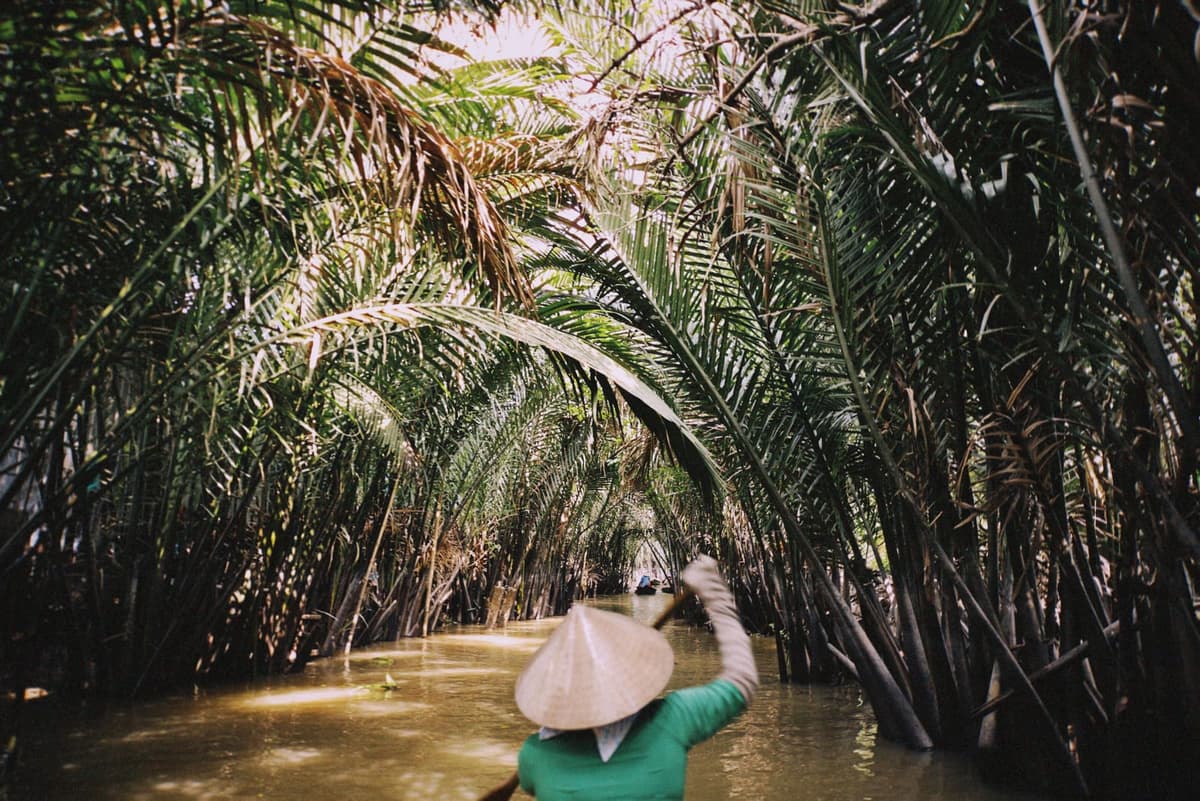
Đồng bằng sông Cửu Long cần ít nhất một ngày riêng. Từ Sài Gòn, Mỹ Tho và Bến Tre đều là trọn một ngày, còn Cái Răng phải ngủ lại một đêm; bài đi đồng bằng trong ngày từ Sài Gòn có thời gian đi lại cho từng nơi. Đồng bằng cũng có thể là chặng đầu của một chuyến du thuyền đi tiếp sang Campuchia.
Phnom Penh nằm nơi Mekong gặp Tonle Sap. Một đến hai đêm đủ cho Cung điện Hoàng gia và Chùa Bạc, cùng phần lịch sử nặng nề nhưng không thể bỏ qua của những năm Khmer Đỏ tại Tuol Sleng và khu tưởng niệm Choeung Ek, với một hướng dẫn viên biết kể phần này một cách đúng mực. Chuyến bay tới Phnom Penh nay hạ cánh ở sân bay quốc tế Techo, hoạt động từ ngày 9/9/2025.
Siem Reap và Angkor là cao trào. Siem Reap là nơi ở để đi các đền và đáng ba đêm. Từ Phnom Penh lên Siem Reap khoảng 315 km đường bộ, chừng năm đến sáu giờ kể cả các điểm dừng. Khách bay thẳng tới Siem Reap hạ cánh ở sân bay quốc tế Siem Reap Angkor (SAI), cách trung tâm khoảng một giờ xe, vì vậy ngày đến nên xếp nhẹ.
Lịch Angkor thường mở đầu bằng bình minh ở Angkor Wat, công trình tôn giáo lớn nhất từng được xây dựng, khi những ngọn tháp soi bóng xuống hồ sen. Tiếp theo là kinh thành Angkor Thom có tường bao, với đền Bayon ở trung tâm, nơi hơn hai trăm khuôn mặt đá nhìn ra từ các ngọn tháp. Rồi đến Ta Prohm, ngôi đền mà các nhà trùng tu để nguyên trong vòng ôm của rừng, nơi rễ cây gòn và cây đa bóp cổ đã mọc xuyên qua đá. Xa hơn là đền nhỏ Banteay Srei từ thế kỷ thứ mười, tạc bằng sa thạch hồng, với những hình chạm khắc tinh xảo nhất ở Angkor.

Trong hành trình mẫu, Angkor là chặng mở đầu chứ không phải điểm kết: sau Phnom Penh, đoàn bay sang TP. Hồ Chí Minh rồi đi dần ra bắc qua Hội An, Huế và Hà Nội tới vịnh Hạ Long, trước khi về lại Hà Nội.

Phương án du thuyền trên sông
Cách đi khác hẳn để nối Việt Nam với Campuchia là theo dòng Mekong trên mặt nước thay vì bằng đường bay. Các hãng du thuyền sông cao cấp chạy tuyến giữa vùng đồng bằng và Phnom Penh trên những con tàu nhỏ, đáy nông, đóng riêng cho sông nước, với nhịp đi thong thả qua các điểm dừng ở làng quê, chợ nổi và chùa ven sông. Aqua Mekong, kể tên để minh họa, có lịch khởi hành quanh năm và đang bán các chuyến từ năm 2026 đến 2028, dài ba, bốn hoặc bảy đêm, bắt đầu và kết thúc ở TP. Hồ Chí Minh, Phnom Penh và Siem Reap. Điểm hấp dẫn là nhịp chậm: bản thân dòng sông là chuyến đi, không chỉ là đoạn nối giữa hai chặng đường bộ.
Cái giá phải trả là thời gian. Du thuyền thêm những ngày thong thả mà một chặng bay ngắn không cần, nên hợp với khách muốn đi chính dòng sông hơn là khách đang tính từng đêm. Tàu cũng chạy theo lịch và chiều đi cố định, vì vậy các chặng còn lại phải xếp theo lịch tàu. Hành trình mẫu Campuchia và Việt Nam đi theo cách khác: Ngày 4 là chặng đường bộ từ Siem Reap tới Phnom Penh, khoảng năm đến sáu giờ kể cả các điểm dừng; Ngày 5 bay từ Phnom Penh sang TP. Hồ Chí Minh; Ngày 6 là Củ Chi và Bảo tàng Chứng tích Chiến tranh. Hành trình mẫu không có ngày ở đồng bằng; muốn khách đi đồng bằng thì thêm một ngày hoặc chọn du thuyền.
Khi nào nên đi, và vì sao mực nước quan trọng
Miền Nam Việt Nam và Campuchia có chung kiểu khí hậu hai mùa, nên chọn thời điểm cho tuyến này đơn giản hơn chọn cho cả nước Việt Nam. Mùa khô, khoảng tháng Mười Một đến tháng Tư, hợp cho cả đồng bằng lẫn các đền: Angkor dễ chịu nhất từ tháng Mười Một đến tháng Hai, rồi nóng dần trong tháng Ba và tháng Tư. Nếu chương trình đi tiếp ra miền Trung và miền Bắc, xem thêm cẩm nang thời điểm tốt nhất để đến Việt Nam.
Với du thuyền, yếu tố quyết định là mực nước, điều mà chuyến đi đường bộ không phải lo, vì Mekong lên xuống rất mạnh trong năm. Vào mùa nước cạn, tàu không ngược lên được xa, và các hãng đổi lộ trình, thêm một chặng bay hoặc đường bộ tới Siem Reap. Aqua Mekong tính mùa nước cạn là khoảng từ tháng Mười Hai đến giữa tháng Tám, và trong mùa này thêm chuyến bay tới Siem Reap. Mỗi hãng tự đặt bến theo mực nước, nên hãy xác nhận bến đón và bến trả cho đúng ngày khởi hành trước khi chốt các chặng đường bộ ở hai đầu.
| Khung thời gian | Đồng bằng và Campuchia | Du thuyền trên sông |
|---|---|---|
| Tháng 11 đến tháng 2 | Khô và mát nhất; Angkor dễ chịu nhất | Mùa nước cạn bắt đầu khoảng tháng 12; xác nhận bến theo ngày khởi hành |
| Tháng 3 đến tháng 4 | Khô nhưng nóng dần, nóng nhất trước mùa mưa | Mùa nước cạn; có thể thêm chặng bay hoặc đường bộ tới Siem Reap |
| Tháng 5 đến tháng 8 | Mùa mưa, mưa rào buổi chiều; các đền vẫn mở cửa, cây cối xanh hơn | Mùa nước cạn kéo dài tới khoảng giữa tháng 8 |
| Tháng 9 đến tháng 11 | Cuối mùa mưa, nước sông lên cao | Ngoài mùa nước cạn; vẫn xác nhận bến theo ngày khởi hành |
Thực sự cần bao nhiêu đêm
Ghép Việt Nam và Campuchia không phải một chuyến ngắn, nên đừng cố nén lịch. Để đi đủ cả hai nước, hãy dự trù khoảng 12 đến 16 đêm hoặc hơn. Hành trình mẫu nằm ở mức thấp của khoảng này, 13 đêm, 14 ngày: ba đêm Siem Reap, một đêm Phnom Penh, hai đêm TP. Hồ Chí Minh, hai đêm Hội An, một đêm Huế, hai đêm Hà Nội, một đêm trên vịnh Hạ Long và một đêm cuối ở Hà Nội, nhờ các chuyến bay nội địa rút ngắn những chặng dài. Mức cao có chỗ cho một ngày ở đồng bằng, nhịp chậm hơn dọc chặng Việt Nam, hoặc chặng du thuyền.
Khách đi du thuyền thì số đêm trên sông phải cộng thêm vào lộ trình đường bộ, không nằm sẵn trong đó. Nếu khách muốn nối thêm một chặng Thái Lan, bài chặng Thái Lan cần bao nhiêu đêm tính phần đó.
Phần cao cấp nằm ở đâu
Ở tuyến này, phần cao cấp ít nằm ở khách sạn mà nằm ở cách xử lý những phần khó; ở Angkor, đó là hướng dẫn viên riêng và thứ tự tham quan trong ngày. Ngắm bình minh ở Angkor Wat vẫn là cách mở đầu kinh điển, nhưng đó cũng là lúc nơi này đông nhất, nên hãy nói trước với khách. Sau đó, xếp lộ trình qua Bayon và Ta Prohm theo ánh sáng và dòng người, với một hướng dẫn viên có giấy phép đọc được các bức phù điêu chứ không chỉ kể niên đại.
Khách sạn lo phần tiện nghi. Ở Siem Reap, Raffles Grand Hotel d'Angkor và Amansara là hai cái tên tiêu biểu cho nơi ở gần đền; ở Phnom Penh, Raffles Hotel Le Royal mang dáng dấp thời thuộc địa là một địa chỉ cổ điển; còn trên sông, các hãng du thuyền Mekong cao cấp lo chặng đường nước. Những cái tên này cho biết mức tiêu chuẩn, chưa phải là đặt chỗ: khách sạn cụ thể được chọn theo từng đoàn, ngày đi và phòng còn trống.
Hành trình hai nước nào cũng có chỗ nối, và lịch xê dịch thường gây chuyện ở đó. Dù đặt thành một chương trình hay hai, giấy tờ đặt dịch vụ phải cho thấy ai chịu trách nhiệm từng chặng và ai lo chỗ nối. Trong hành trình mẫu, một hướng dẫn viên Campuchia phụ trách Siem Reap, các đền Angkor và Phnom Penh, rồi một hướng dẫn viên Việt Nam có giấy phép nhận đoàn cho trọn chặng Việt Nam; điểm bàn giao là chuyến bay Phnom Penh đi TP. Hồ Chí Minh.
Pai Dai kinh doanh qua hai công ty, mỗi nước một công ty: PAIDAI ONLINE CO., LTD. tại Thái Lan và PAIDAI VIETNAM COMPANY LIMITED tại Việt Nam. Campuchia, gồm Siem Reap, Angkor và Phnom Penh, chỉ được nhận như phần mở rộng của một chương trình Việt Nam: ai vận hành chặng đó và bàn giao ra sao được xác nhận theo ngày đi, và báo giá cần ghi tên bên cung cấp dịch vụ ở Campuchia cùng công ty anh chị ký hợp đồng cho từng chặng. Nếu anh chị đang tính một đoàn hay một chuyến khởi hành riêng trên tuyến này, có hoặc không có chặng sông, hãy gửi brief cho chúng tôi. Trang cách chúng tôi làm việc với công ty lữ hành nói rõ việc đăng ký và giá net, tức giá mua dành cho đối tác trong nghề.
Câu hỏi thường gặp
Có thể ghép Việt Nam và Campuchia trong một chuyến đi không?
Có, và đây là một trong những tuyến hai nước dễ ghép nhất trong khu vực: một chuyến có thể đi từ Sài Gòn và đồng bằng tới Phnom Penh và các đền Angkor ở Siem Reap, theo chiều nào cũng được. Dù đặt thành một chương trình hay hai, giấy tờ đặt dịch vụ phải cho thấy ai chịu trách nhiệm từng chặng và ai lo chỗ nối. Với Pai Dai, Campuchia là phần mở rộng của một chương trình Việt Nam, và bên vận hành chặng đó cùng cách bàn giao được xác nhận theo ngày đi.
Cần bao nhiêu đêm cho Việt Nam và Campuchia?
Hãy dự trù khoảng 12 đến 16 đêm hoặc hơn. Hành trình mẫu đã công bố nằm ở mức thấp, 13 đêm, 14 ngày, từ Siem Reap tới Hà Nội và vịnh Hạ Long. Mức cao có chỗ cho một ngày ở đồng bằng, nhịp chậm hơn dọc chặng Việt Nam, hoặc một chặng du thuyền.
Khi nào là thời điểm tốt nhất cho một chuyến du thuyền sông Mekong?
Aqua Mekong, kể tên để minh họa, có lịch khởi hành quanh năm, nên câu hỏi chính là mực nước chứ không phải có tàu hay không. Hãng tính mùa nước cạn là khoảng từ tháng Mười Hai đến giữa tháng Tám; lúc này tàu không ngược lên được xa và hãng thêm một chuyến bay tới Siem Reap. Các chặng đường bộ ở hai đầu dễ đi nhất vào mùa khô, khoảng tháng Mười Một đến tháng Tư. Mỗi hãng tự đặt bến theo mực nước, nên hãy xác nhận bến cho đúng ngày khởi hành.
Đi từ Việt Nam sang Campuchia bằng cách nào?
Cách nhanh là chặng bay ngắn giữa Sài Gòn và Phnom Penh, nơi chuyến bay nay hạ cánh ở sân bay quốc tế Techo, hoạt động từ ngày 9/9/2025. Cách chậm là du thuyền Mekong, chẳng hạn Aqua Mekong với các chuyến ba, bốn hoặc bảy đêm bắt đầu và kết thúc ở Sài Gòn, Phnom Penh hoặc Siem Reap. Hành trình mẫu đã công bố dùng chặng bay và không có ngày ở đồng bằng, nên muốn khách đi đồng bằng thì thêm một ngày hoặc chọn du thuyền.
Nên đi Campuchia trước hay sau Việt Nam?
Chiều nào cũng được; chuyến bay đến, mùa đi và việc khách muốn kết thúc bằng Angkor hay bằng vịnh Hạ Long sẽ quyết định. Hành trình mẫu đã công bố mở đầu ở Campuchia với ba đêm Siem Reap và một đêm Phnom Penh, rồi bay sang TP. Hồ Chí Minh và đi dần ra bắc tới vịnh Hạ Long. Nếu đi theo dòng Mekong, thứ tự tự nhiên lại là ngược dòng, từ đồng bằng lên Phnom Penh rồi Siem Reap.
Về tác giả
Wanwisa Puengsawang
Giám đốc điều hành, Pai Dai DMC
Wanwisa Puengsawang, hay còn gọi là Sally, là Giám đốc điều hành của Pai Dai DMC. Bà dẫn dắt hoạt động mặt đất của công ty tại Thái Lan và Việt Nam, làm việc trực tiếp với các nhà điều hành tour bán sỉ, đơn vị tổ chức MICE và khách hàng cá nhân.
Tìm hiểu thêm về Pai Dai DMCDành cho công ty lữ hành
Đang lên chương trình Thái Lan hoặc Việt Nam?
Sau khi nhận được brief đầy đủ thông tin, chúng tôi gửi báo giá chậm nhất vào cùng thời điểm trong ngày làm việc tiếp theo. Yêu cầu báo giá cho hành trình nhiều quốc gia phức tạp hoặc chuyến đi vào mùa cao điểm có thể cần thêm thời gian; chúng tôi thông báo thời hạn mới ngay khi xác nhận đã nhận yêu cầu.