What are the best things to see in Phuket?
The essential first-timer list mixes the island's landmark temple and Buddha with the heritage Old Town, a sunset cape, and the best of the beaches, plus one big boat day to Phang Nga Bay. Temples ask only modest dress, covered shoulders and knees, as these are active places of worship. Here is the Top 5.
The Big Buddha (Phra Puttamingmongkol) is the island's defining landmark, a 45 metre white-marble figure on Nakkerd Hill, visible for miles and looking out over Kata, Karon, and Chalong Bay. Closed since a fatal 2024 landslide and reopened on 3 March 2026 after a lengthy safety review, the hilltop terrace is again one of the best free viewpoints on the island. Practical note: free to enter with donations welcome, open daily, roughly 9am to 6pm, though hours have fluctuated since the 2026 reopening - worth a same-day check before building it into a fixed slot. A sarong is provided if your shoulders or knees are bare.
Old Phuket Town is the historic capital, where late nineteenth-century Sino-Portuguese shophouses line Thalang, Dibuk, and Phang Nga roads and the photogenic lane of Soi Rommanee. It is the heart of the island's food culture and best explored slowly on foot. Practical note: free to wander any time; on Sundays Thalang Road closes to traffic for the Lard Yai walking street from about 4pm until late.
Wat Chalong is Phuket's largest and most revered temple, honouring two monks who helped calm a nineteenth-century rebellion, and centred on the ornate Grand Pagoda that holds a relic of the Buddha. Practical note: free to enter with donations welcome, open daily roughly 7am to 5pm, in Chalong in the south of the island.
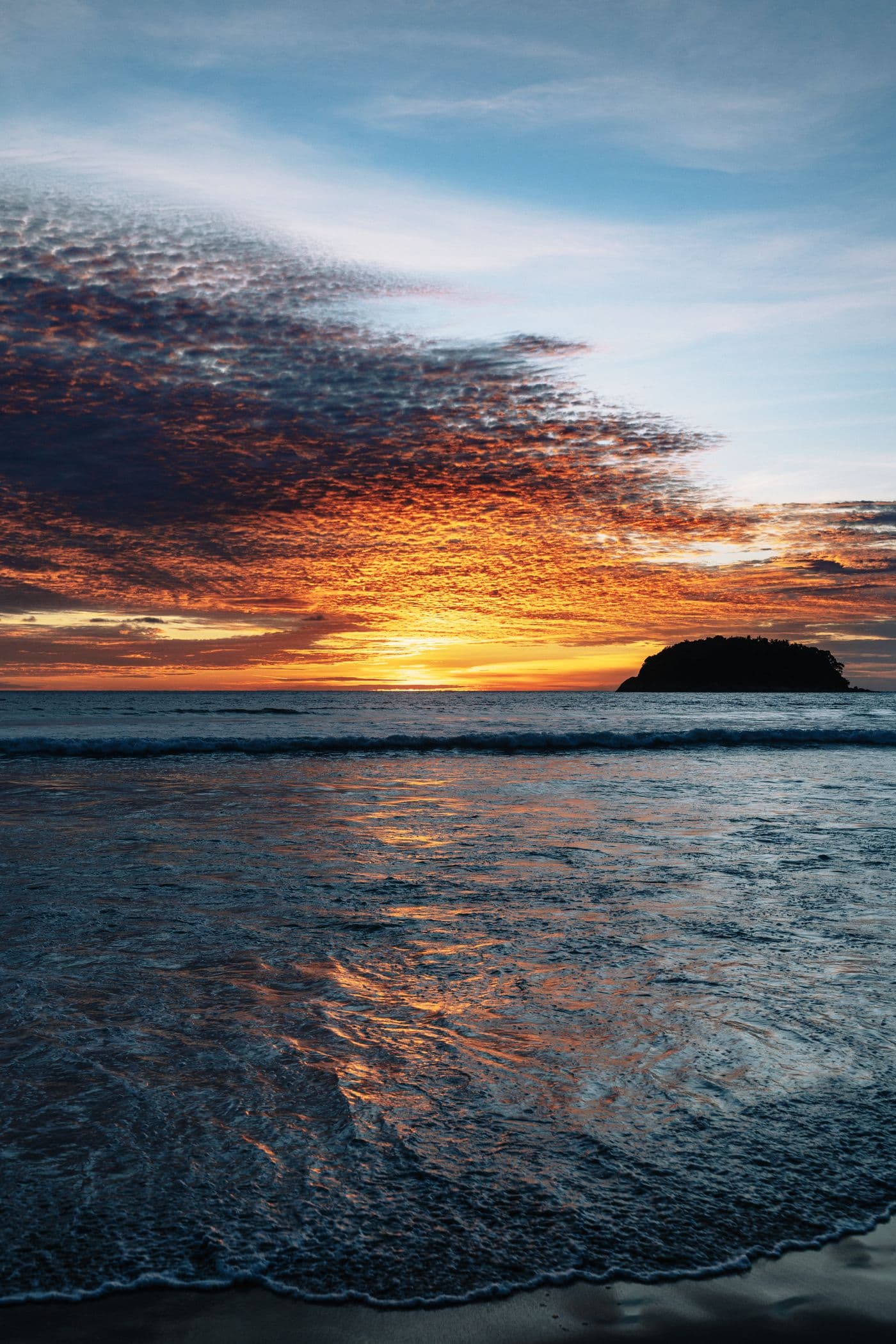
Promthep Cape is the island's southernmost headland and its most celebrated sunset spot, with a lighthouse, an elephant shrine, and a wide view of the Andaman Sea. Practical note: free and open air, busiest at sunset, so arrive by around 5pm to claim a spot near the point, in the far south near Rawai.
Karon Viewpoint is the roadside Three Beaches lookout on the hill between Kata Noi and Karon, taking in three turquoise bays in a single sweep, the classic Phuket coastline photograph. Practical note: free and always open, with just a little shade and a drink stall, best combined with a run down to Promthep Cape for the sunset.
Also worth your time:
- Phang Nga Bay, the limestone-karst seascape an hour northeast, is the island's signature day trip, with sea-cave kayaking, a floating village, and James Bond Island. Group boat tours run roughly THB 1,400 to 3,500 per person, and the national park entry of THB 300 for adults is usually included.
- The Similan Islands, around 70 km northwest in Phang Nga province, offer some of Thailand's finest snorkelling and diving, but they open only from mid-October to mid-May and must be pre-booked. Park entry is THB 500 for adults.
- The beaches themselves. Beyond Kata and Karon, seek out laid-back Nai Harn in the south, the long quiet sands of Bang Tao and Nai Yang in the north, and tiny, longtail-access Freedom Beach near Patong. Each has a different character, so it is worth sampling two or three.
- A note on Krabi. The famous Phi Phi Islands and Railay Beach are in Krabi province next door, not in Phuket, but both make excellent speedboat day trips from the island and are easy to add to a Phuket base.
Where should you eat in Phuket?
The thing to chase in Phuket is Peranakan food, the Baba-Nyonya cooking that blends Hokkien Chinese technique with Southern Thai ingredients, the tradition that earned the island its UNESCO Gastronomy title. Start with mee Hokkien, stir-fried egg noodles in a dark, savoury gravy, then widen out to moo hong, a deeply braised black-pepper-and-soy pork belly; oh aew, a refreshing shaved-ice dessert set with a local jelly; and the island's morning institution, Phuket-style dim sum.
For the noodles, Mee Ton Poe on Phuket Road (near the clock circle) has been the reference address since 1946, and it is inexpensive. For a sit-down Peranakan meal in a restored shophouse, Tu Kab Khao in the Old Town is the polished choice, with a celebrated moo hong and crab curry, while One Chun nearby is the homely, Bib Gourmand favourite for the same southern repertoire at lower prices. For breadth in one stop, the Lock Tien food court gathers oh aew, Hokkien noodles, and fresh spring rolls under one roof.
Beyond the Old Town, the beach towns deliver everything from fresh seafood grills to international menus, and the Sunday Lard Yai market is an open-air food court in its own right. Expect to eat very well for very little: a market or food-court meal runs well under THB 150, and even a sit-down Old Town dinner rarely climbs far.
What does a perfect 3-day Phuket itinerary look like?
A perfect first-timer plan gives Phuket three days: one for the southern beaches, the Big Buddha, and a sunset at Promthep Cape; one for the Old Town and its food; and one big boat day to Phang Nga Bay. Three days covers the essentials without rushing, and a fourth lets you add a second beach or a Krabi day trip. Here is the shape we use most.
Day 1, beaches and the Big Buddha. Base near Kata or Karon. Take a morning swim while the sand is quiet, then drive up to the Big Buddha for the panorama before the heat builds, and on to Wat Chalong for an hour. Spend the afternoon back on the beach, then time the day to end at Promthep Cape for sunset, with dinner in Rawai or Chalong.
Day 2, the Old Town. Start with a dim sum breakfast in Phuket Town, then walk Thalang Road, Soi Rommanee, and Dibuk Road for the shophouses and street art, with a stop at the Thai Hua Museum. Lunch at One Chun or Lock Tien, take in the Karon Viewpoint on the way back, and if it is a Sunday, return to Thalang Road in the evening for the Lard Yai market.
Day 3, Phang Nga Bay. Take a full-day boat trip into Phang Nga Bay: sea-cave kayaking among the karsts, the floating village, and James Bond Island, returning in the late afternoon. It is the day people remember most, and the calm water inside the bay makes it a smart choice even in the rough season.
This unhurried three-day rhythm is the backbone of our Thailand Beach Extension, which pairs Phuket with the wider Andaman, and it slots naturally onto a Bangkok and southern-islands itinerary if you want to see more of the country first.