Skip to content
Hanoi Travel Guide for First-Timers
City Guide

Hanoi Travel Guide for First-Timers

Last updated June 2026

Why visit Hanoi, and who is it for?

Hanoi suits first-timers who want Vietnam at its most atmospheric and unfiltered: a thousand-year-old capital of lakes and tree-lined boulevards wrapped around a chaotic, intoxicating Old Quarter, with some of the country's best street food and easy access to Halong Bay. Plan three full days. It rewards curiosity and a slow pace.

Founded in 1010 as Thang Long, the "ascending dragon", Hanoi wears a millennium of history openly: imperial citadel, Confucian temples, a French colonial quarter, and a lake at its heart that locals circle morning and night. It suits couples, culture-minded travellers, food lovers, and anyone arriving on a direct flight from Europe. If you have one stop in the north, this is the one we send people to, and it pairs naturally with a Halong Bay cruise.

Hoan Kiem and the scarlet Huc Bridge
The lake at the heart

Hoan Kiem and the scarlet Huc Bridge

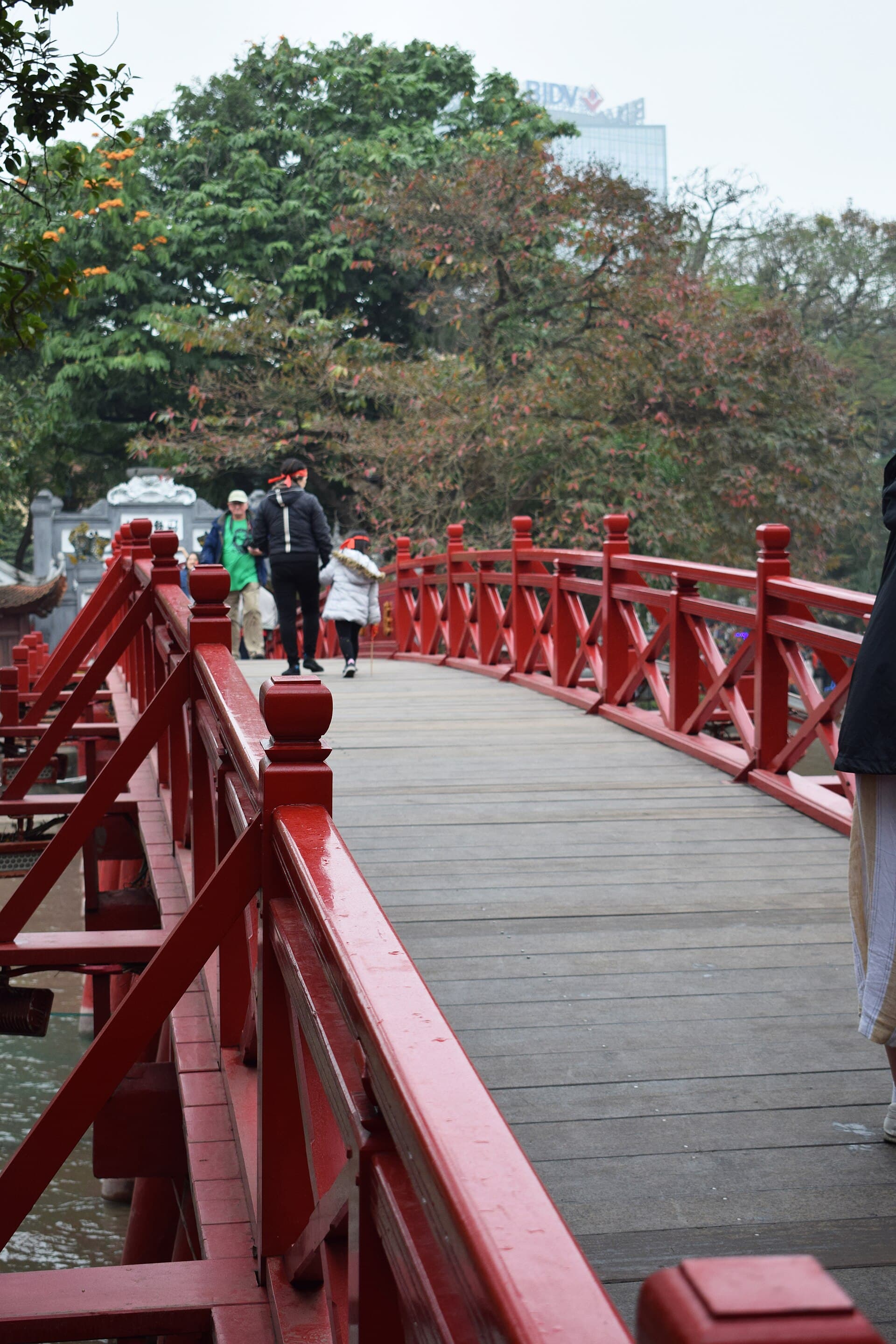
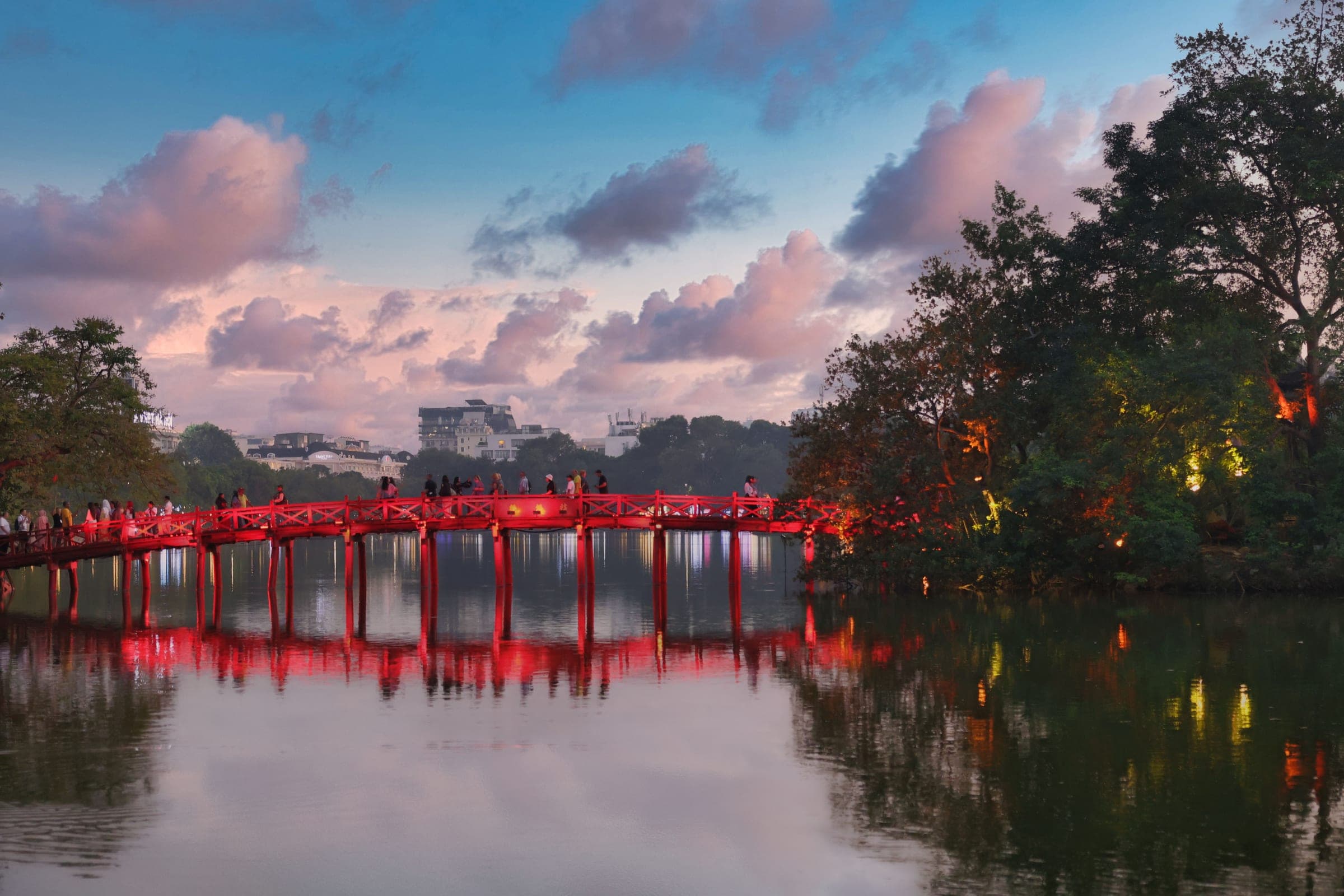
Hanoi circles Hoan Kiem Lake the way a village circles its well. Locals loop it at dawn and dusk, the bright red Huc Bridge arches across to the little island temple of Ngoc Son, and on weekend evenings the surrounding streets close to traffic. It is the calm centre of a fast, intoxicating city, and the place to start.

Don't miss

Cross the Huc Bridge to Ngoc Son just before sunset, then circle back along the water as the lamps and the Turtle Tower light up.

Thirty-six streets of controlled chaos
The Old Quarter

Thirty-six streets of controlled chaos

North of the lake, the Old Quarter is a thousand-year maze where each lane was once named for the trade it sold. It is best wandered without a map: shophouses and street kitchens, motorbikes flowing around you, an egg coffee on a kerbside stool. Come hungry and let the rhythm pull you in.

Don't miss

Pull up a plastic stool for a bowl of pho or bun cha, then find Cafe Giang for the egg coffee invented there in 1946.

An overnight on Halong Bay
Out to the bay

An overnight on Halong Bay

Hanoi is the gateway to Halong Bay, the limestone seascape two and a half to three hours east. An overnight cruise beats a rushed day trip, threading between karst islands and floating villages, with the water turning to glass at dawn. It is the classic add-on to a first northern trip.

Don't miss

Choose a one-night cruise over a day tour. A day trip spends most of its hours in the car; a night on the water is the point.

Top sights

Hanoi's essential sights

  • Hoan Kiem Lake and Ngoc Son

    Hoan Kiem Lake and Ngoc Son

    The city's heart, with the scarlet Huc Bridge crossing to the island temple of Ngoc Son.

    Central Hanoi1 to 2 hours
  • Hanoi Old Quarter

    Hanoi Old Quarter

    The dense maze of 36 trade streets, best simply wandered, the city's beating heart.

    North of the lakeHalf a day
  • Temple of Literature

    Temple of Literature

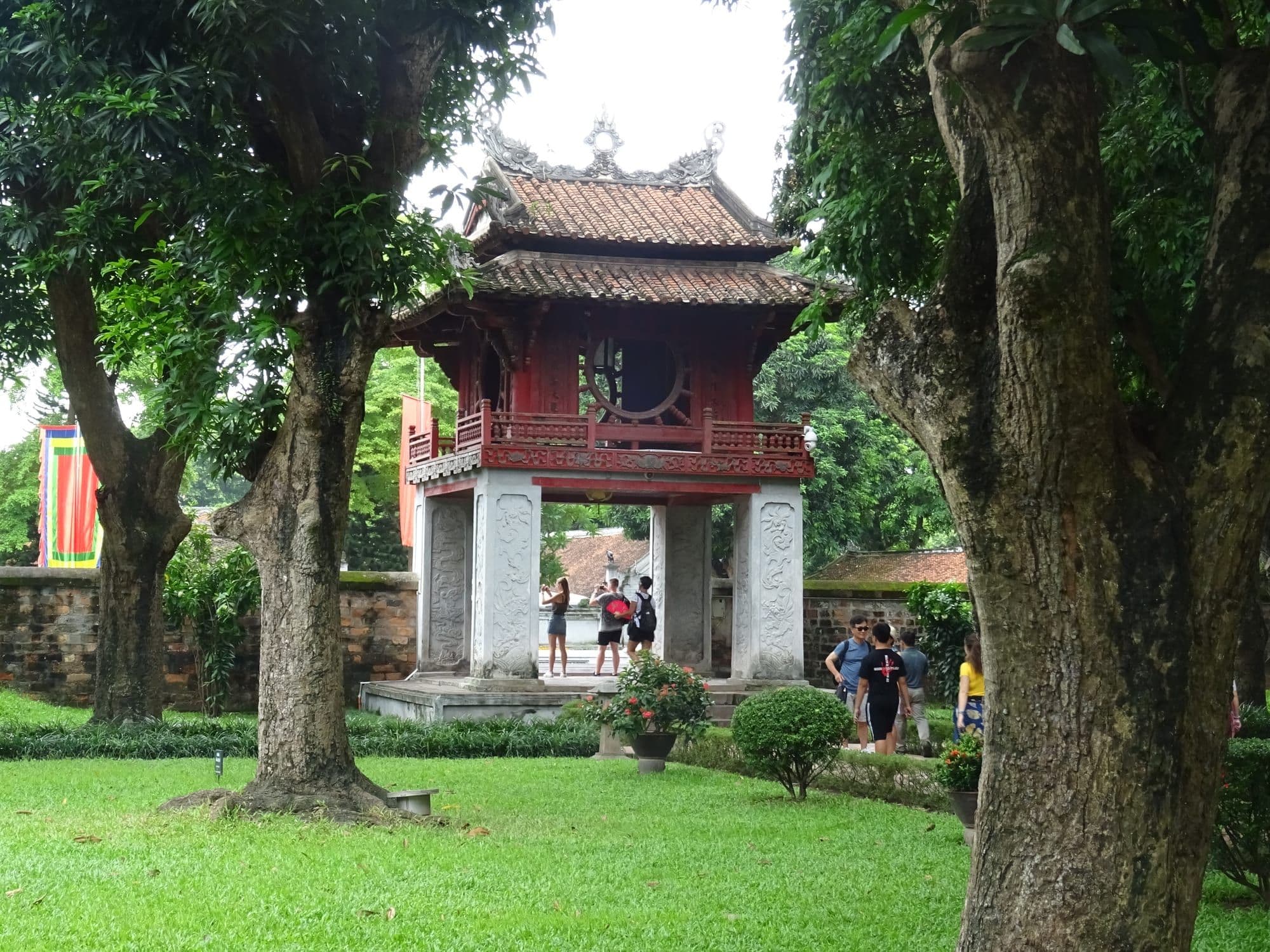
    Founded as a temple in 1070, with Vietnam's first national university added in 1076, the calmest courtyards in the city centre.

    West of centre1 to 2 hours
  • Ho Chi Minh Mausoleum

    Ho Chi Minh Mausoleum

    The solemn resting place of Vietnam's founding leader in Ba Dinh Square (closed Mon and Fri).

    Ba Dinh1 hour
  • Imperial Citadel of Thang Long

    Imperial Citadel of Thang Long

    The UNESCO core of the old imperial capital, a thousand years of layered history.

    Ba Dinh1 to 2 hours
  • Thang Long Water Puppets

    Thang Long Water Puppets

    The centuries-old northern art of puppets dancing on water to live folk music.

    LakesideAn hour
  • Hanoi Train Street

    Hanoi Train Street

    The narrow lane where trains pass within arm's reach of the trackside cafes.

    Old Quarter edge30 minutes
  • Halong Bay

    Halong Bay

    The limestone seascape a few hours east, the classic overnight cruise add-on.

    About 165 km eastOvernight

What should you know before visiting Hanoi?

Visit in autumn (October to November) or spring (March to April) for the kindest weather: cool, drier air, clearer skies, and comfortable days on foot. The summer (June to August) is hot, humid, and prone to heavy rain. The surprise for most first-timers is winter (December to February), which is genuinely cool, often grey, and damp, with temperatures that can sit around 10 to 20 degrees Celsius, persistent drizzle, and foggy skies. Pack a light jacket and do not expect tropical sunshine.

Here is how the year breaks down so you can pick your window.

Season Months Weather Verdict
Autumn Oct to Nov Cool, drier, clear skies, low humidity Best time. The classic Hanoi window.
Winter Dec to Feb Cool, grey, damp, drizzly, 10 to 20 C Atmospheric but bring a jacket. Expect grey.
Spring Mar to Apr Mild and pleasant, some light rain Excellent. Warm without the summer heat.
Summer Jun to Aug Hot, very humid, heavy downpours Hardest going. Plan indoor breaks and early starts.

Getting there. Hanoi's Noi Bai International Airport (HAN) is the gateway, about 27 to 30 km north of the centre, a 35 to 60 minute drive. Vietnam Airlines flies direct from several European cities, including London, Paris, Frankfurt, and Amsterdam, making Hanoi a comfortable first landing for European travellers. From the airport, a Grab car typically runs about 250,000 to 350,000 VND (USD 10 to 14) and a metered taxi about 300,000 to 400,000 VND. Use the app rather than accept a tout's flat quote.

Getting around. The Old Quarter is compact and walkable, so most of your first day or two is on foot. For longer hops, the Grab app is the easy default: a GrabBike (motorbike taxi) starts from a small base fare and runs roughly 12,000 to 14,000 VND per km, and a GrabCar a little more, so most in-city rides land between about 30,000 and 70,000 VND (USD 1 to 3). Cyclos (pedal trishaws) still ply the Old Quarter for a slow, touristy loop, agree the price first. The famous traffic looks lawless but has its own rhythm, and crossing on foot is a knack you pick up within a day (the technique is in the FAQ below).

Where to stay

Where to base yourself

  • Old Quarter

    Best for

    First-timers who want to be in the thick of it

    Chaotic, central, and on foot to everything, the famous 36 streets. The default first choice.

  • French Quarter

    Best for

    Couples, finer hotels, a calmer base

    Boulevards, colonial villas, and a quieter, more refined feel just south of the lake.

  • Hoan Kiem and Ba Dinh

    Best for

    Sightseeing on foot, mornings by the water

    Lakeside and near the monuments, central but calmer than the Old Quarter.

  • Tay Ho (West Lake)

    Best for

    Longer stays, lake views, cafes and brunch

    Leafy, lakeside, and slower, with space and views, though further from the centre.

What are the best things to see in Hanoi?

The essential first-timer list pairs the lake and Old Quarter you can walk between with the Ba Dinh monuments and one or two ticketed sights. One fee clarification that trips people up: there is no single city pass, so each major site charges its own admission, while the lake, the Old Quarter, and Ba Dinh Square are free to wander. Here is the Top 5.

Hoan Kiem Lake, Ngoc Son Temple, and The Huc Bridge is the heart of Hanoi and the natural place to start. Walk the lakeside loop, then cross the bright red Huc Bridge (our cover photo) to the small island temple of Ngoc Son. Practical note: circling the lake is free and always open; entry to Ngoc Son Temple is about 30,000 VND for adults (students 15,000 VND; under-15 free), open daily roughly 8am to 6pm, at the northern edge of the lake. On Friday evenings through Sunday the surrounding streets close to traffic for a lively pedestrian zone. Hanoi Old Quarter is the dense maze of "36 streets", each historically named for the trade once sold there, and the city's beating heart. It is free, open-air, and best simply wandered, ideally without a map. Practical note: no admission, always accessible, immediately north of Hoan Kiem Lake. Come for the street food, the shophouses, and the controlled chaos; mornings and early evenings are the most atmospheric.

Temple of Literature (Van Mieu) was founded as a temple in 1070, with Vietnam's first national university added in 1076, dedicated to Confucius, a serene set of walled courtyards and the calmest place in the city centre. Practical note: day admission is 70,000 VND (about USD 2.75) per the official site, open daily from around 8am, west of the centre. Bring cash, as the ticket office does not take cards.

Ho Chi Minh Mausoleum in Ba Dinh Square holds the embalmed body of Vietnam's founding leader and is the country's most solemn site. Practical note, and this is the one to plan around: it is free, but closed on Mondays and Fridays, open only in the mornings (roughly 7:30am to 10:30am (Apr to Oct), 8am to 11am (Nov to Mar)), and it shuts entirely for about two months of maintenance each year. A strict dress code applies, with shoulders and knees covered. Arrive early; queues are long.

Imperial Citadel of Thang Long is the UNESCO World Heritage core of Vietnam's old imperial capital, a thousand years of layered history a short walk from the mausoleum. Practical note: admission is 100,000 VND for adult visitors, open Tuesday to Sunday roughly 8am to 5pm, and closed on Mondays. The archaeological excavations and old gates reward an hour or two.

Also worth your time:

  • Thang Long Water Puppet Theatre, beside Hoan Kiem Lake, stages the centuries-old northern art of puppets dancing on water to live folk music. Tickets start from about 100,000 VND, with several shows daily; the early-evening slots and weekends sell out, so book ahead.
  • Hanoi Train Street, the narrow lane where trains pass within arm's reach of the cafes, is one of Hanoi's most photographed spots. Its access keeps changing: as of 2026 you visit as an individual through a licensed trackside cafe, with organised group tours banned (see the FAQ for the full current rules).
  • An overnight Halong Bay cruise. The limestone seascape of Halong Bay is about 2.5 to 3 hours by road from Hanoi (130 to 200 km), and it is the classic add-on. An overnight cruise beats a rushed day trip, since a day tour spends most of its hours in the car.

Where should you eat in Hanoi?

The dish to chase in Hanoi is pho, the clear, aromatic beef or chicken noodle soup that the north claims as its own: subtler and less herb-piled than its southern cousin, all about a long-simmered broth. Eat that first, then work through the city's other signatures. Seek out bun cha, the Hanoi lunch of grilled pork patties and slices in a sweet-savoury dipping broth with cold rice noodles and herbs; cha ca, turmeric-and-dill grilled fish sizzled at your table; banh mi, the crisp colonial-era baguette sandwich; and egg coffee, a warm, custard-like cup of whipped egg yolk over strong coffee that tastes like liquid tiramisu.

For bun cha, Bun Cha Huong Lien in the Hai Ba Trung district is the famous one, where Barack Obama and Anthony Bourdain shared a meal now preserved under glass; it is open daily about 10am to 9pm, with a standard bun cha around 60,000 VND and the "Combo Obama" (bun cha, a seafood roll, and a Hanoi beer) at 130,000 VND, and it carries a MICHELIN Guide listing. For egg coffee, go to its birthplace, Cafe Giang at 39 Nguyen Huu Huan in the Old Quarter, where Nguyen Van Giang invented the drink in 1946; a cup runs roughly 25,000 to 45,000 VND. For the table-side theatre of cha ca, the long-running Cha Ca La Vong at 14 Cha Ca Street serves one dish and one dish only, with a meal around 350,000 to 500,000 VND.

Beyond the famous names, the Old Quarter is one giant open-air kitchen: pull up a plastic stool for pho or bun cha, grab a banh mi from a cart, and graze the weekend night market. Expect to eat extremely well for very little, a street bowl often well under 80,000 VND.

What does a perfect 3-day Hanoi itinerary look like?

A perfect first-timer plan gives Hanoi three days: day one for the lake, the Old Quarter, and street food on foot, day two for the Ba Dinh monuments and the Temple of Literature, and day three for an overnight Halong Bay cruise or a slower lakeside finish. Three days covers the essentials without rushing. Here is the shape we use most.

Day 1, the lake and the Old Quarter on foot. Start with a loop of Hoan Kiem Lake and cross to Ngoc Son Temple while it is cool, then lose yourself in the Old Quarter's 36 streets. Lunch on pho or bun cha at a streetside stool, rest through the warm middle of the day, and end with an egg coffee at Cafe Giang and an evening water puppet show by the lake.

Day 2, the monuments and the imperial city. Go early to the Ho Chi Minh Mausoleum (remember it closes Mondays and Fridays), then walk to the UNESCO Imperial Citadel of Thang Long. After lunch, visit the serene Temple of Literature, and spend the late afternoon in the French Quarter's boulevards and cafes.

Day 3, Halong Bay or a slow lakeside finish. For most first-timers this is the day to head out to Halong Bay on an overnight cruise and return the next morning, or, if you are short on time, keep it gentle with West Lake, a pagoda or two, and a final Old Quarter dinner.

This unhurried Hanoi rhythm, paired with a cruise on Halong Bay, is the backbone of our Vietnam Express journey, and threads naturally onward to Hoi An and the centre on our wider Vietnam heritage route if you have more time.

Hoan Kiem Lake
Hoan Kiem Lake
At dusk the lake turns to glass, the Turtle Tower glows, and the whole city seems to slow for a moment by the water.
Gallery

FAQ

When is the best time to visit Hanoi?

The best times are autumn (October to November) and spring (March to April), with cooler, drier air, clearer skies, and comfortable days for walking. Summer (June to August) is hot, humid, and rainy. Winter (December to February) is cool, grey, and damp rather than tropical, so pack a light jacket if you come then.

How many days do you need in Hanoi?

Three full days is the sweet spot for a first visit. That gives you two days for the lake, the Old Quarter, the food, and the Ba Dinh monuments, plus one day for a day trip or, better, an overnight Halong Bay cruise. Two days feels rushed; four lets you slow down or add a second day trip.

Is Hanoi worth visiting for first-timers?

Yes, emphatically. Hanoi is one of Asia's most atmospheric capitals: a thousand-year-old city of lakes, a chaotic and characterful Old Quarter, French colonial streets, outstanding and inexpensive street food, and easy access to Halong Bay. It is intense at first, but it rewards a slow pace and is an unforgettable introduction to northern Vietnam.

How do you get from Noi Bai Airport to central Hanoi, and how do you get around?

Noi Bai Airport is about 27 to 30 km north of the centre, a 35 to 60 minute drive. A Grab car runs roughly 250,000 to 350,000 VND and a metered taxi about 300,000 to 400,000 VND. In the city, the Old Quarter is walkable, and the Grab app (car or motorbike) is the easy choice for longer hops, with most rides between about 30,000 and 70,000 VND.

Is Hanoi safe, and how do you cross the road?

Hanoi is generally a safe city for tourists, with violent crime against visitors rare and a 2026 safety rating that compares well regionally; the main risks are petty theft, scams, and traffic. The traffic is the real learning curve. To cross, do not wait for a gap. Step off slowly, walk at a steady, predictable pace, and let the motorbikes flow around you. Sudden stops are what cause accidents.

Which days is the Ho Chi Minh Mausoleum closed?

The Ho Chi Minh Mausoleum is closed on Mondays and Fridays, and opens only in the mornings on the other days (roughly 7:30am to 10:30am (Apr to Oct), 8am to 11am (Nov to Mar)). It also shuts entirely for about two months each year for maintenance, with dates that vary. Entry is free, a strict dress code applies, and queues are long, so arrive early.

Is Hanoi Train Street still open?

Partly. Hanoi Train Street has been periodically shut for safety, and as of 2026 it is accessible only to individual visitors through a licensed trackside cafe; organised group tours were banned in 2025. There is no fixed daily train timetable, so confirm the day's train times with your cafe on arrival and stay seated and back from the rails whenever a train approaches.

How many days do you need for Halong Bay from Hanoi?

Plan at least one overnight. Halong Bay is about 2.5 to 3 hours by road from Hanoi (130 to 200 km), so a day trip burns most of its hours in transit. A one-night cruise is the most popular choice and lets you see the bay properly, while a two-night cruise reaches quieter waters. Most first-timers fold it in as days three and four of a Hanoi trip.

Hanoi or Ho Chi Minh City, and how does it compare to Hoi An?

For a first northern stop, Hanoi is the more historic and atmospheric capital, all lakes, the Old Quarter, and colonial streets, while Ho Chi Minh City in the south is faster, hotter, more modern and commercial. Hoi An, in the centre, is the lantern-lit, walkable old town that complements Hanoi beautifully, which is why many first trips thread Hanoi, the centre, and the south together.

Ready to experience Hanoi for real?

Tell us how you like to travel and our ground team will shape the trip around it.