What are the best things to see in Hanoi?
The essential first-timer list pairs the lake and Old Quarter you can walk between with the Ba Dinh monuments and one or two ticketed sights. One fee clarification that trips people up: there is no single city pass, so each major site charges its own admission, while the lake, the Old Quarter, and Ba Dinh Square are free to wander. Here is the Top 5.
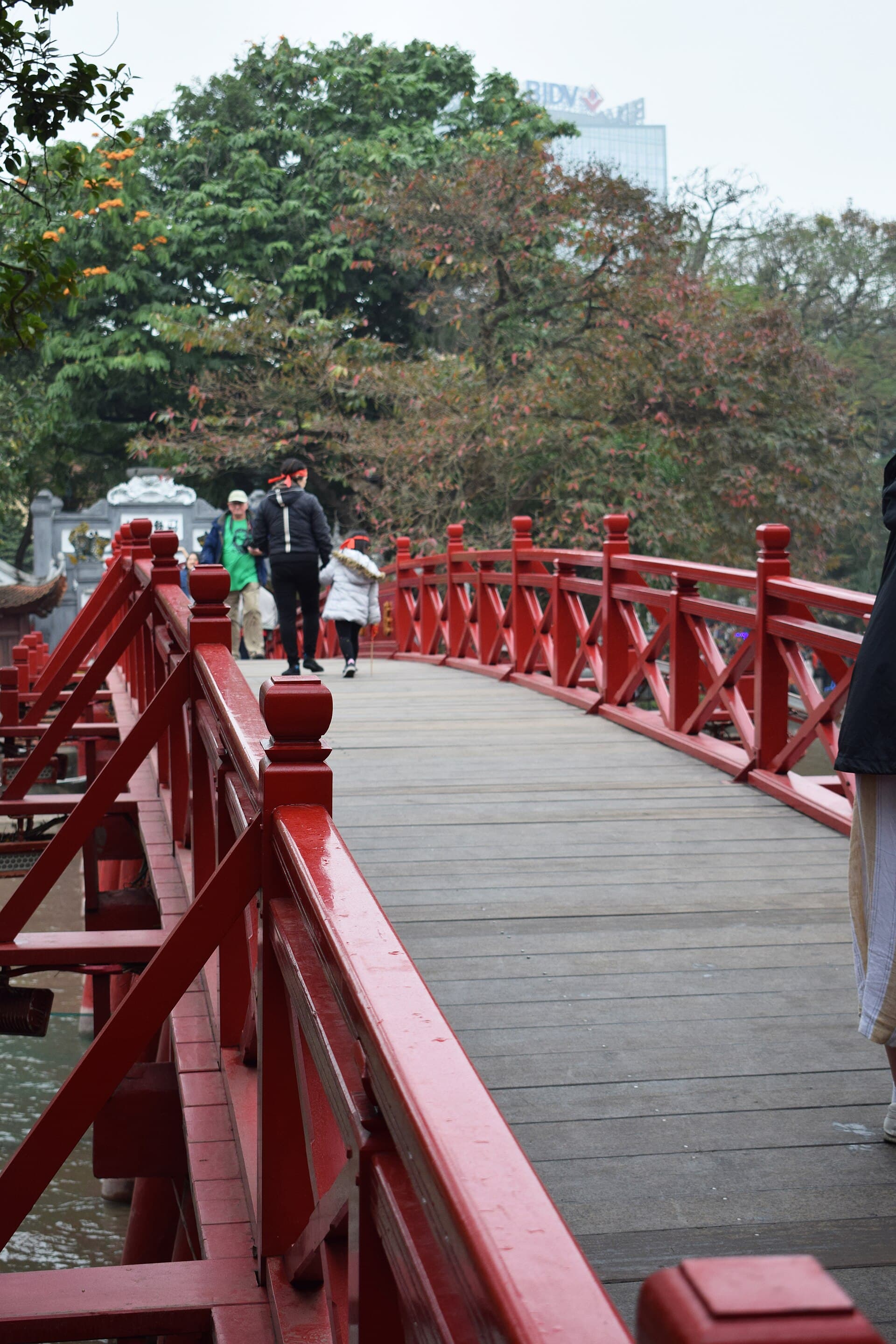
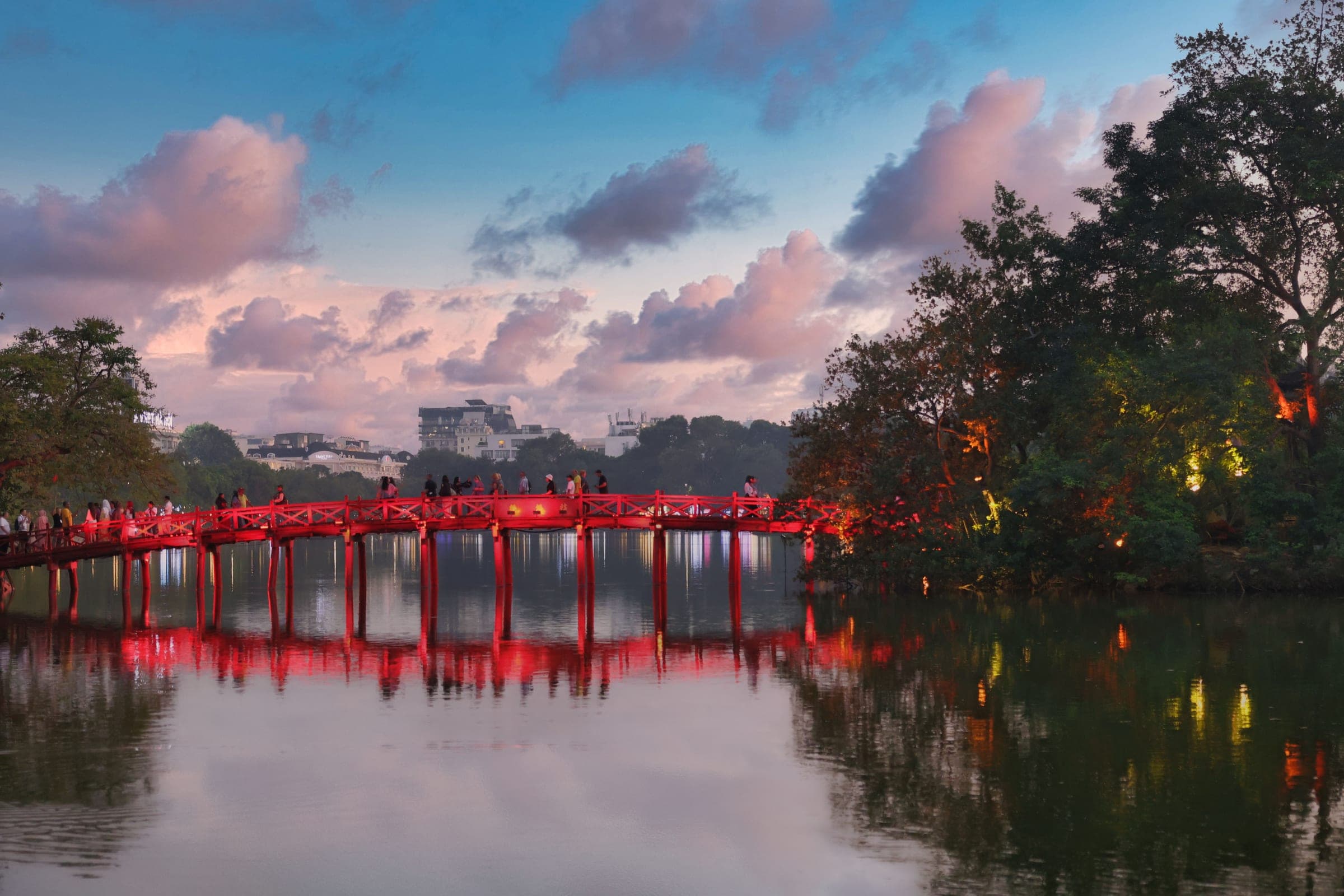
Hoan Kiem Lake, Ngoc Son Temple, and The Huc Bridge is the heart of Hanoi and the natural place to start. Walk the lakeside loop, then cross the bright red Huc Bridge (our cover photo) to the small island temple of Ngoc Son. Practical note: circling the lake is free and always open; entry to Ngoc Son Temple is about 30,000 VND for adults (students 15,000 VND; under-15 free), open daily roughly 8am to 6pm, at the northern edge of the lake. On Friday evenings through Sunday the surrounding streets close to traffic for a lively pedestrian zone.
Hanoi Old Quarter is the dense maze of "36 streets", each historically named for the trade once sold there, and the city's beating heart. It is free, open-air, and best simply wandered, ideally without a map. Practical note: no admission, always accessible, immediately north of Hoan Kiem Lake. Come for the street food, the shophouses, and the controlled chaos; mornings and early evenings are the most atmospheric.
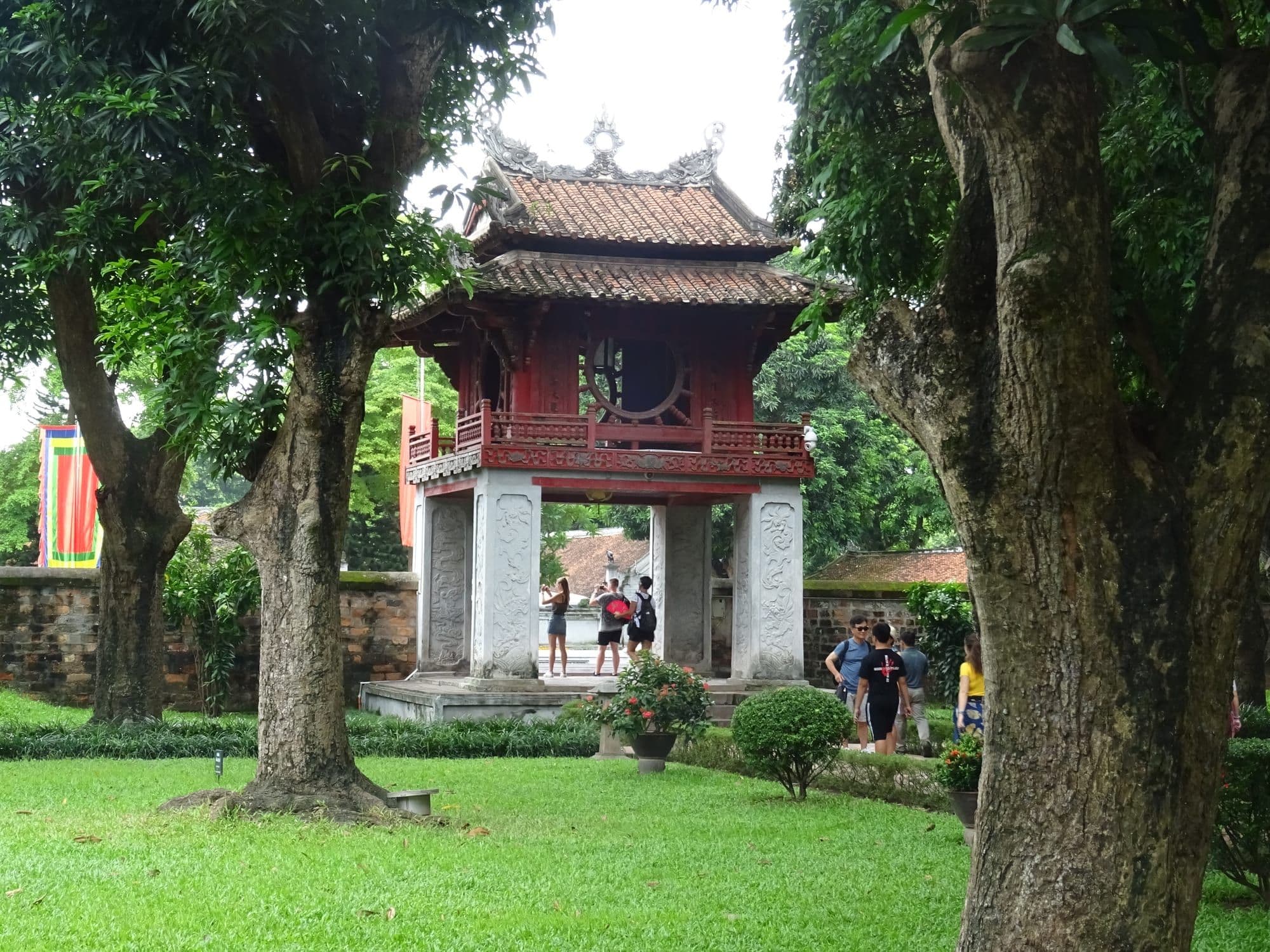
Temple of Literature (Van Mieu) was founded as a temple in 1070, with Vietnam's first national university added in 1076, dedicated to Confucius, a serene set of walled courtyards and the calmest place in the city centre. Practical note: day admission is 70,000 VND (about USD 2.75) per the official site, open daily from around 8am, west of the centre. Bring cash, as the ticket office does not take cards.
Ho Chi Minh Mausoleum in Ba Dinh Square holds the embalmed body of Vietnam's founding leader and is the country's most solemn site. Practical note, and this is the one to plan around: it is free, but closed on Mondays and Fridays, open only in the mornings (roughly 7:30am to 10:30am (Apr to Oct), 8am to 11am (Nov to Mar)), and it shuts entirely for about two months of maintenance each year. A strict dress code applies, with shoulders and knees covered. Arrive early; queues are long.
Imperial Citadel of Thang Long is the UNESCO World Heritage core of Vietnam's old imperial capital, a thousand years of layered history a short walk from the mausoleum. Practical note: admission is 100,000 VND for adult visitors, open Tuesday to Sunday roughly 8am to 5pm, and closed on Mondays. The archaeological excavations and old gates reward an hour or two.
Also worth your time:
- Thang Long Water Puppet Theatre, beside Hoan Kiem Lake, stages the centuries-old northern art of puppets dancing on water to live folk music. Tickets start from about 100,000 VND, with several shows daily; the early-evening slots and weekends sell out, so book ahead.
- Hanoi Train Street, the narrow lane where trains pass within arm's reach of the cafes, is one of Hanoi's most photographed spots. Its access keeps changing: as of 2026 you visit as an individual through a licensed trackside cafe, with organised group tours banned (see the FAQ for the full current rules).
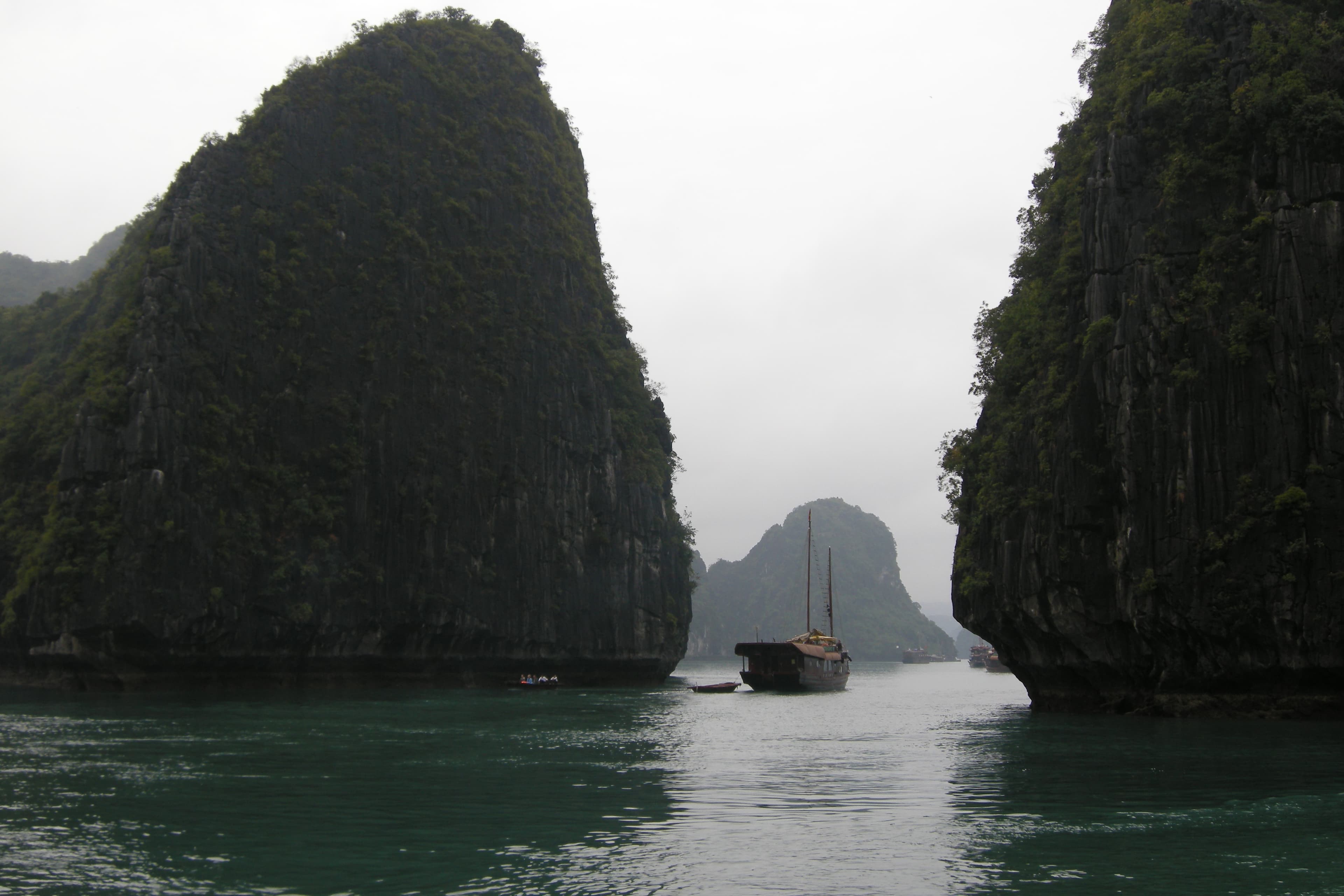
- An overnight Halong Bay cruise. The limestone seascape of Halong Bay is about 2.5 to 3 hours by road from Hanoi (130 to 200 km), and it is the classic add-on. An overnight cruise beats a rushed day trip, since a day tour spends most of its hours in the car.
Where should you eat in Hanoi?
The dish to chase in Hanoi is pho, the clear, aromatic beef or chicken noodle soup that the north claims as its own: subtler and less herb-piled than its southern cousin, all about a long-simmered broth. Eat that first, then work through the city's other signatures. Seek out bun cha, the Hanoi lunch of grilled pork patties and slices in a sweet-savoury dipping broth with cold rice noodles and herbs; cha ca, turmeric-and-dill grilled fish sizzled at your table; banh mi, the crisp colonial-era baguette sandwich; and egg coffee, a warm, custard-like cup of whipped egg yolk over strong coffee that tastes like liquid tiramisu.
For bun cha, Bun Cha Huong Lien in the Hai Ba Trung district is the famous one, where Barack Obama and Anthony Bourdain shared a meal now preserved under glass; it is open daily about 10am to 9pm, with a standard bun cha around 60,000 VND and the "Combo Obama" (bun cha, a seafood roll, and a Hanoi beer) at 130,000 VND, and it carries a MICHELIN Guide listing. For egg coffee, go to its birthplace, Cafe Giang at 39 Nguyen Huu Huan in the Old Quarter, where Nguyen Van Giang invented the drink in 1946; a cup runs roughly 25,000 to 45,000 VND. For the table-side theatre of cha ca, the long-running Cha Ca La Vong at 14 Cha Ca Street serves one dish and one dish only, with a meal around 350,000 to 500,000 VND.
Beyond the famous names, the Old Quarter is one giant open-air kitchen: pull up a plastic stool for pho or bun cha, grab a banh mi from a cart, and graze the weekend night market. Expect to eat extremely well for very little, a street bowl often well under 80,000 VND.
What does a perfect 3-day Hanoi itinerary look like?
A perfect first-timer plan gives Hanoi three days: day one for the lake, the Old Quarter, and street food on foot, day two for the Ba Dinh monuments and the Temple of Literature, and day three for an overnight Halong Bay cruise or a slower lakeside finish. Three days covers the essentials without rushing. Here is the shape we use most.
Day 1, the lake and the Old Quarter on foot. Start with a loop of Hoan Kiem Lake and cross to Ngoc Son Temple while it is cool, then lose yourself in the Old Quarter's 36 streets. Lunch on pho or bun cha at a streetside stool, rest through the warm middle of the day, and end with an egg coffee at Cafe Giang and an evening water puppet show by the lake.
Day 2, the monuments and the imperial city. Go early to the Ho Chi Minh Mausoleum (remember it closes Mondays and Fridays), then walk to the UNESCO Imperial Citadel of Thang Long. After lunch, visit the serene Temple of Literature, and spend the late afternoon in the French Quarter's boulevards and cafes.
Day 3, Halong Bay or a slow lakeside finish. For most first-timers this is the day to head out to Halong Bay on an overnight cruise and return the next morning, or, if you are short on time, keep it gentle with West Lake, a pagoda or two, and a final Old Quarter dinner.
This unhurried Hanoi rhythm, paired with a cruise on Halong Bay, is the backbone of our Vietnam Express journey, and threads naturally onward to Hoi An and the centre on our wider Vietnam heritage route if you have more time.