Skip to content
Bangkok Travel Guide for First-Timers (2026)
City Guide

Bangkok Travel Guide for First-Timers (2026)

Last updated June 2026

Why visit Bangkok, and who is it for?

Bangkok suits almost every first-timer to Thailand: it is the high-energy capital where gilded riverside temples, world-class street food, sky-bars, and frantic markets all sit within a short boat or Skytrain ride of each other. Plan at least three days. It rewards travellers who lean in rather than tick boxes.

This is the country's gateway, so most trips begin here, and it pairs naturally with the beaches of the south or the calmer north. It works for couples, families, solo travellers, and food obsessives alike. The trick is to treat the chaos as part of the experience: ride the river, eat at the busiest stalls, and let the energy carry you.

Gold spires above the river
The old city

Gold spires above the river

Rattanakosin is Bangkok's sacred heart. The Grand Palace, the reclining Buddha at Wat Pho, and the porcelain spire of Wat Arun all sit within a short walk or cross river ferry of one another. Start early, dress for the temples, and let the gilded skyline set the tone for the whole trip.

Don't miss

Take the 5 baht ferry across to Wat Arun late in the day. The climb up its central prang frames the river best at dusk.

A city that moves by water
The Chao Phraya

A city that moves by water

Skip the famous traffic the way locals do, on the river. The Chao Phraya express boats stitch the riverside temples, markets, and grand hotels together, and after dark the water turns to a ribbon of light beneath the floodlit shrines and dinner cruises.

Don't miss

Ride the orange flag express boat one stop past your hotel at sunset, then walk back along the bank as the temples light up.

Where Bangkok really eats
Markets, day and night

Where Bangkok really eats

The markets are the city's pulse. Weekend crowds haul through the fifteen thousand stalls of Chatuchak, trains nose between produce baskets at Maeklong, and after dark Yaowarat becomes one long open air kitchen. Come hungry and follow the longest queues.

Don't miss

Reach Yaowarat around 7pm and graze your way down the side sois. The crab omelette and grilled seafood stalls hit their stride after sunset.

Top sights

Bangkok's essential sights

  • Wat Arun

    Wat Arun

    The porcelain Temple of Dawn, best seen glowing at sunset from across the river.

    Thonburi, west bank1 to 2 hours
  • Wat Pho

    Wat Pho

    Home to the 46 metre gold reclining Buddha and the birthplace of Thai massage.

    Rattanakosin1 to 2 hours
  • The Grand Palace

    The Grand Palace

    The dazzling former royal residence and shrine of the Emerald Buddha.

    Rattanakosin2 to 3 hours
  • Yaowarat (Chinatown)

    Yaowarat (Chinatown)

    A 200 year old maze of gold shops and temples that turns into the city's best street food after dark.

    SamphanthawongAn evening
  • Chao Phraya River

    Chao Phraya River

    The city's liquid highway, lined with temples, markets, and grand riverside hotels.

    Central BangkokHalf a day
  • Maeklong Railway Market

    Maeklong Railway Market

    A market that folds away as the train rolls straight through the stalls, then reopens behind it.

    Samut SongkhramHalf day trip
  • Floating market

    Floating market

    Wooden boats heaped with fruit and noodles along the canals southwest of the city.

    Southwest of BangkokHalf day trip
  • Ayutthaya

    Ayutthaya

    The UNESCO listed former capital, a sprawl of temple ruins about 80 km north.

    80 km northDay trip

What should you know before visiting Bangkok?

Visit between November and February for the coolest, driest, most comfortable weather of the year. The hot season runs March to May and is genuinely punishing, with temperatures often above 35C. The southwest monsoon from June to October brings heavy afternoon and evening downpours and, in the wettest months, occasional street flooding. None of it ruins a trip, but the cool season is the one to aim for.

Here is how the year breaks down so you can pick your window.

Season Months Weather Verdict
Cool dry Nov to Feb Warm days, lower humidity, little rain Best time. Book ahead for December and January.
Hot Mar to May Very hot and humid, often above 35C Doable but draining. Plan indoor breaks at midday.
Green monsoon Jun to Oct Heavy afternoon downpours, occasional flooding Fewer crowds and lower prices. Carry an umbrella and keep plans flexible.

Getting there. Bangkok has two airports: Suvarnabhumi (BKK), the main international hub to the east, and Don Muang (DMK), used mostly by budget airlines to the north. From Suvarnabhumi, the Airport Rail Link is the fastest, cheapest way into town, about THB 45 to Phaya Thai station where it meets the BTS Skytrain. A metered taxi from the airport typically runs THB 280 to 420 plus tolls.

Getting around. Skip the famous traffic by combining trains and boats. The BTS Skytrain and MRT metro are clean, cheap, and air-conditioned, with fares roughly THB 17 to 65 per ride (a 20-baht flat-fare cap applies for Thai ID holders; foreign visitors pay the standard distance-based fare). The Chao Phraya express boats run up and down the river past the main temples, and the cross-river ferries cost about THB 5 to 7. Off the rail and river network, use the Grab app for upfront pricing, or hail a metered taxi (flagfall THB 35, and insist on the meter). Tuk-tuks are fun for short hops but tourist-priced, so agree the fare first.

Where to stay

Where to base yourself

  • Rattanakosin (Old City)

    Best for

    Temples and sightseeing on foot

    Historic, temple dense, and riverside. The Grand Palace and Wat Pho are on the doorstep, though it is quieter after dark.

  • Riverside

    Best for

    Couples and a relaxed upscale stay

    Grand hotels and river views, calmer than the centre, with the express boats for easy access to the old city.

  • Sukhumvit

    Best for

    First timers who want convenience

    Modern malls, dining, and nightlife strung along the BTS Skytrain. The easiest all round base in the city.

  • Silom and Sathorn

    Best for

    Rooftop bars and central transit

    Business by day and lively by night, with rooftop bars, good transport links, and strong value hotels.

What are the best things to see in Bangkok?

The first-timer shortlist runs along the Chao Phraya river: the Grand Palace, Wat Pho, and Wat Arun within a short boat ride of each other, plus a market and Chinatown. Temples share a dress code, so cover shoulders and knees. Here is the Top 5.

The Grand Palace and Wat Phra Kaew is the country's most dazzling complex, the former royal residence and home of the Emerald Buddha, Thailand's most sacred image. It is the one unmissable sight. Practical note: admission is THB 500 (covering Wat Phra Kaew), open daily 08:30 to 16:30, in Rattanakosin. The dress code is strictly enforced, with shoulders and knees covered; free sarongs are lent at the gate, but dressing correctly saves a queue.

Wat Pho sits just south of the palace and holds the colossal gold-plated Reclining Buddha, 46 metres long, along with the birthplace of traditional Thai massage. It is calmer than the palace and just as rewarding. Practical note: admission is THB 300, open daily from 08:00 (main halls close around 18:30), a short walk from the Grand Palace.

Wat Arun, the Temple of Dawn (and our cover photo), is the spire-topped temple on the river's west bank, encrusted with porcelain and best seen glowing at sunset. Practical note: admission is THB 200, open daily 08:00 to 18:00. Reach it on the cross-river ferry (about THB 5 to 7) from Tha Tien pier beside Wat Pho, which is half the fun.

Chatuchak Weekend Market is one of the world's largest markets, with some 15,000 stalls selling everything from crafts and clothing to plants and street food. Practical note: it is free to enter and open Saturday and Sunday only, roughly 09:00 to 18:00, in northern Bangkok at Mo Chit BTS or Chatuchak Park MRT. Go early to beat the heat and crowds, and be ready to haggle.

Jim Thompson House is the teak-house museum of the American who revived the Thai silk industry, a tranquil compound of traditional houses and Asian art near busy Siam. Practical note: admission is THB 250 for adults, visits are by guided tour only with the last tour around 17:00, open daily from 10:00, near National Stadium BTS.

Also worth your time:

  • Yaowarat (Chinatown) is a 200-year-old district of gold shops, temples, and neon that becomes Bangkok's best street-food destination after dark. Come hungry around dinnertime and graze your way down Yaowarat Road and its side sois.
  • Khao San Road, the backpacker artery near the Old City, is worth one loud evening for the people-watching, cheap eats, and street bars, even if you are not staying there.
  • A rooftop sky-bar. Bangkok's skyline is made for sundowners; the Silom and riverside high-rises host the famous rooftop bars, with smart-casual dress codes and prices to match the view.
  • A day trip to Ayutthaya. The UNESCO-listed former capital, about 80 km north, makes an easy day of temple ruins by train or minivan. See the FAQ for how to get there.

Where should you eat in Bangkok?

The dishes to chase first in Bangkok are pad thai (stir-fried rice noodles with egg, tamarind, and peanuts), boat noodles (tiny, intense bowls of dark, herb-rich broth), and mango sticky rice (sweet coconut rice with ripe mango), with Yaowarat the city's street-food heartland after dark. Eat those, then widen out. Also seek out khao man gai (Hainanese chicken rice), som tam (green papaya salad), and the crab omelette that made street stalls famous.

For pad thai, Thip Samai near the Old City has been frying its signature egg-wrapped noodles since 1939; expect a queue and a modest bill. For boat noodles, head to the Boat Noodle Alley by Victory Monument, where canal-side stalls serve bowls so small that locals stack a dozen at a time. For a Michelin-starred street splurge, Jay Fai in the Old Town serves its famous crab omelette (around THB 1,000 to 1,800) Wednesday to Saturday (closed Sun-Tue), cash only, with a long queue, so arrive early or mid-afternoon.

For everything else, Yaowarat (Chinatown) is your open-air food court: oyster omelettes, dim sum, grilled seafood, and dessert stalls, best after sunset. Expect to eat very well for very little, with street-food dishes typically THB 40 to 80 each.

What does a perfect 3-day Bangkok itinerary look like?

A perfect first-timer plan gives Bangkok three days: day one for the riverside temples, day two for markets and Chinatown, and day three for shopping, a sky-bar, or an Ayutthaya day trip. Three days covers the essentials without exhausting you in the heat. Here is the shape we use most.

Day 1, the river and the temples. Start early at the Grand Palace before the heat and crowds, walk to Wat Pho for the Reclining Buddha, then take the cross-river ferry to Wat Arun. Lunch by the river, rest through the hot midday, and finish with sunset drinks and the lights along the Chao Phraya.

Day 2, markets and Chinatown. If it is a weekend, spend the morning at Chatuchak Weekend Market; midweek, swap in Jim Thompson House and a mall around Siam. Keep the afternoon loose, then head to Yaowarat after dark for the city's best street-food crawl.

Day 3, your choice. Pick a big finish: a day trip to the ruins of Ayutthaya, a deep dive into Bangkok's shopping and spas, or a slow river day with a long lunch and a rooftop sundowner.

This three-day rhythm is the backbone of our Thailand Cultural Circuit, which threads Bangkok's temples and river together with the wider country and pairs naturally with the southern beaches if you have more time.

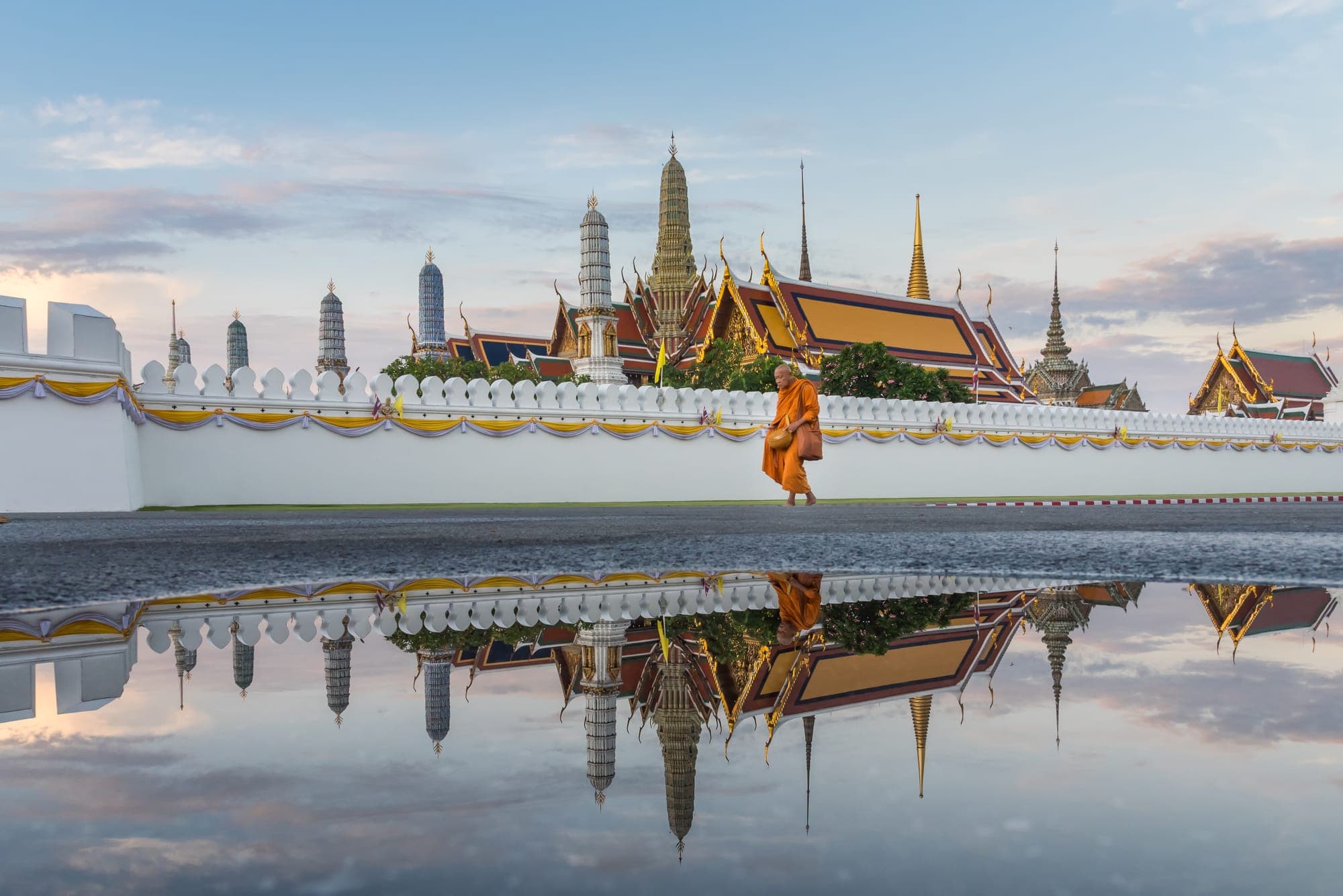
The Temple of Dawn
The Temple of Dawn
At dusk the porcelain spire of Wat Arun catches the last light, and the whole river seems to glow.
Gallery

FAQ

When is the best time to visit Bangkok?

November to February is the best time, with the coolest, driest weather and the lowest humidity of the year, which makes long days of temple-hopping far more comfortable. March to May is very hot, often above 35C, and the green monsoon from June to October brings heavy afternoon downpours and the occasional flood, though prices and crowds drop in those months.

How many days do you need in Bangkok?

Three full days is the sweet spot for a first visit. That gives you one day for the riverside temples, one for markets and Chinatown's street food, and one for shopping, a sky-bar, or a day trip to Ayutthaya. Two days feels rushed in the traffic and heat; four lets you add a cooking class, a spa day, or a slower pace.

Is Bangkok safe for first-timers?

Yes. Bangkok is one of Southeast Asia's safer big cities, and violent crime against tourists is rare. The real risks are scams and petty theft, not danger. Sidestep the classic tuk-tuk "the temple is closed today" scam, agree fares before you ride, keep an eye on your drink in nightlife zones, and use Grab late at night rather than hailing random taxis.

How do you get around Bangkok, and is the BTS enough?

The BTS Skytrain and MRT metro cover most modern districts and are the best way to beat the traffic, with fares roughly THB 17 to 65 (a 20-baht flat-fare cap applies for Thai ID holders; foreign visitors pay the standard distance-based fare). They do not reach the Old City temples, though, so pair them with the Chao Phraya express boats and the cross-river ferries (about THB 5 to 7) for the riverside sights. Fill the gaps with Grab or metered taxis. That combination, rather than the BTS alone, is what makes Bangkok easy.

What is the Grand Palace dress code?

Strict, and enforced at the gate. Both men and women must cover shoulders and knees: no vests, no shorts above the knee, no see-through clothing, and no bare midriffs. Closed or covered footwear is best. Free sarongs and shawls are lent at the entrance if you arrive underdressed, but the queue for them can be long, so it is far easier to dress correctly from the start.

How much does a day in Bangkok cost?

Bangkok scales to your budget. A budget traveller using street food, trains, and free or cheap temples can manage on roughly THB 1,420 a day (about USD 40) including a hostel bed. A comfortable mid-range day with a three-star hotel, mixed dining, and paid attractions runs around THB 4,620 (about USD 132). Street-food dishes are THB 40 to 80, and train fares are tiny, so transport and food are rarely the big costs.

Is Bangkok worth visiting, and what is it known for?

Yes, emphatically. Bangkok is known for its glittering temples, the Grand Palace, an electric street-food scene, lively markets, riverside life on the Chao Phraya, rooftop sky-bars, and famously good shopping and massage. It is loud and intense, which is the point: as a first stop in Thailand it sets the tempo, and most travellers leave wishing they had given it an extra day.

Should I go to Chiang Mai or the islands after Bangkok?

Both are excellent, and the right choice depends on what you want next. For calmer culture, mountains, and northern food, fly an hour north to Chiang Mai. For beaches, snorkelling, and island-hopping, head south to the Andaman or Gulf coasts. A classic first trip pairs Bangkok with one of each: the capital, then the north or the islands, which is exactly how we build many of our Thailand itineraries.

What is the best day trip from Bangkok?

Ayutthaya, the UNESCO-listed former capital about 80 km north, is the standout day trip, a sprawl of temple ruins and reclining Buddhas you can tour in a few hours. The third-class train from Krung Thep Aphiwat is the cheapest option at around THB 15 to 20, while an air-conditioned minivan from Mo Chit costs roughly THB 60 to 100. Leave by 8am for a comfortable round trip.

Ready to experience Bangkok for real?

Tell us how you like to travel and our ground team will shape the trip around it.