Vòng cung Hà Giang: mấy ngày, xe máy hay jeep, và đi khi nào


Alice
Trưởng phòng điều hành, Pai Dai DMC Việt Nam
Hãy dự trù ba hoặc bốn ngày cho riêng cung đường, cộng thêm một chặng đường bộ khoảng sáu đến bảy giờ mỗi chiều từ Hà Nội, và với hầu hết khách cao cấp hãy chọn xe 4WD riêng có tài xế thay vì tự lái xe máy. Lựa chọn cuối cùng đó không chỉ là chuyện an toàn. Một tỷ lệ lớn khách hàng hoàn toàn không được phép cầm lái hợp pháp ở đây, và đó là phần đáng đọc lại hai lần nhất trên trang này.
Vòng cung Hà Giang là cung đường đèo núi ngoạn mục nhất Việt Nam, một vòng khép kín dài khoảng 350 km xuyên Cao nguyên đá Đồng Văn ở vùng cực bắc đất nước. Nó kết hợp tự nhiên với chương trình miền Bắc theo lịch trình cố định của chúng tôi, vốn lên vùng núi Sa Pa chứ không lên Hà Giang. Cung đường đền đáp những ai chọn đúng thời điểm, vì vậy hãy đọc cùng các cẩm nang thời điểm lý tưởng để đến Việt Nam và rủi ro theo mùa của chúng tôi trước khi chốt ngày. Đây là tư vấn của nhà điều hành dành cho đối tác lữ hành đang xây dựng chuyến đi cho khách, không phải cẩm nang dành cho dân phượt.
Vòng cung Hà Giang là gì và nằm ở đâu
Hà Giang nằm ở vùng cực bắc Việt Nam, có đường biên giới dài chung với Trung Quốc. Hà Giang không còn là một tỉnh riêng. Nghị quyết 202/2025/QH15 của Quốc hội, thông qua ngày 12 tháng 6 năm 2025, đã hợp nhất Hà Giang và Tuyên Quang thành một tỉnh mới mang tên Tuyên Quang, và các đơn vị hành chính mới bắt đầu hoạt động từ ngày 1 tháng 7 năm 2025. Đô thị tỉnh lỵ Hà Giang trước đây nay được tổ chức thành phường Hà Giang 1 và phường Hà Giang 2, và đó là các đơn vị mà giấy tờ phía Việt Nam căn cứ vào. Điểm đến, cung đường và tên gọi thương mại thì vẫn là Hà Giang.
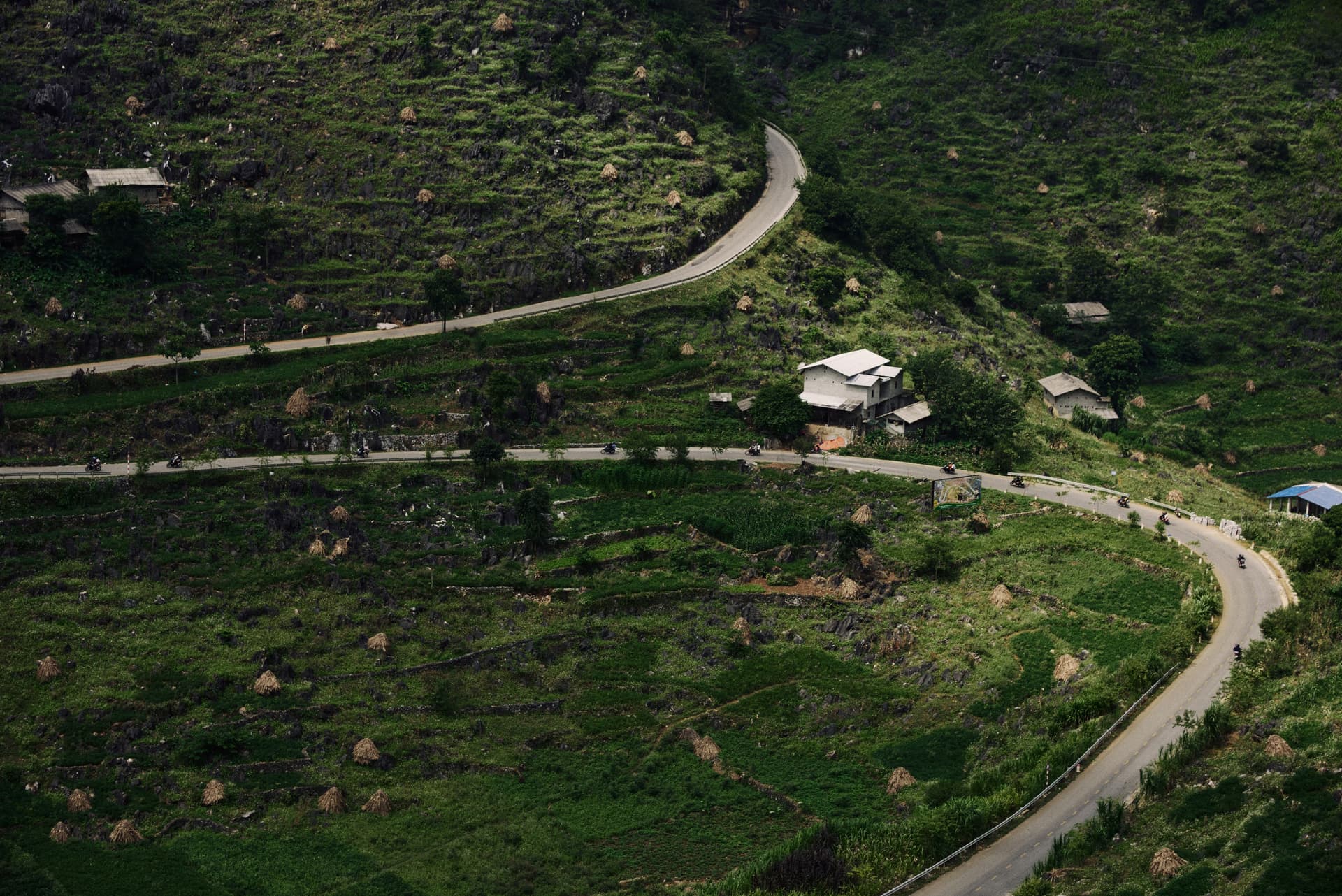
Vòng cung là cung đường khép kín leo từ Hà Giang lên Cao nguyên đá Đồng Văn, một Công viên địa chất toàn cầu UNESCO với những chóp đá vôi, thung lũng ruộng bậc thang và bản làng của các dân tộc thiểu số. Tuyến kinh điển đi qua Quản Bạ, Yên Minh, Đồng Văn và Mèo Vạc. Điểm cao nhất, theo mọi nghĩa, là đèo Mã Pì Lèng, một con đường sắc như lưỡi dao khắc trên hẻm vực sông Nho Quế màu xanh ngọc. Đây không phải là một điểm đến nghỉ dưỡng bóng bẩy. Sức hút nằm ở cảnh quan nguyên sơ và văn hóa đang sống, và đó chính xác là lý do vì sao một dịch vụ điều hành tại điểm đến được vận hành tốt lại quan trọng. Cảnh quan là sản phẩm, và con đường là cách khách hàng đến được với nó.
Mấy ngày: ba hay bốn
Ba ngày trên cung đường là hình thức kinh điển và phù hợp với hầu hết các đoàn. Nó bao trọn từ Quản Bạ đến Đồng Văn, đèo Mã Pì Lèng và Mèo Vạc ở một nhịp độ cho phép dừng chân thực sự chứ không phải ngắm cảnh qua kính chắn gió. Bốn ngày là lựa chọn tốt hơn cho những du khách muốn đi chậm lại, thêm thung lũng Du Già hoặc một kỳ lưu trú sâu hơn tại bản làng, và tránh những buổi chiều ngồi xe dài, và đó là điều chúng tôi thường gợi ý cho khách lớn tuổi hoặc bất kỳ ai xem cung đường là tâm điểm của chuyến đi Việt Nam. Có một phiên bản rút gọn hai ngày nhưng chúng tôi hiếm khi khuyên dùng, bởi nó biến một trải nghiệm cảnh quan thành một bài tập di chuyển. Hãy nhớ tính thêm chặng đưa đón đường bộ từ Hà Nội. Một vòng cung ba ngày trên thực tế là một cam kết năm ngày tính từ cửa đến cửa.
Xe máy, easy-rider, hay xe 4WD riêng
Đây là quyết định định hình cả chuyến đi. Tự lái xe máy là cách đi Hà Giang mang tính biểu tượng, nhưng đường núi hẹp, thời tiết đổi thay nhanh, và những tai nạn nghiêm trọng xảy ra mỗi mùa, nên chúng tôi nói thẳng với đối tác rằng cách này mang rủi ro thật sự và chỉ phù hợp với những tay lái dày dạn, có giấy phép đầy đủ. Lựa chọn easy-rider, ngồi sau xe máy do một tài xế địa phương lành nghề điều khiển, vẫn giữ được cảm giác phóng khoáng giữa thiên nhiên trong khi loại bỏ phần khó nhất, và đây là một phương án trung gian thực thụ. Với hầu hết khách cao cấp, các cặp đôi, gia đình và khách lớn tuổi, một chiếc xe 4WD riêng có tài xế chuyên nghiệp là câu trả lời đúng đắn: nó thoải mái, an toàn hơn nhiều, vận hành được trong thời tiết xấu, và để khách ngắm cảnh thay vì căng mắt với những khúc cua tay áo. Chúng tôi đo lựa chọn theo đoàn khách, không bao giờ ngược lại. Muốn có câu trả lời cho một đoàn cụ thể, hãy gửi thành phần đoàn và ngày đi.
"Có giấy phép" nghĩa là gì với một người tự lái
Cầm lái hợp pháp ở đây khó hơn vẻ ngoài của nó, và với nhiều khách thì hoàn toàn không thể.
Việt Nam gia nhập Công ước Viên 1968 về Giao thông đường bộ vào tháng 8 năm 2014. Một du khách cầm lái bằng giấy phép nước ngoài phải mang theo giấy phép lái xe quốc tế do một quốc gia thành viên của công ước đó cấp, kèm theo chính giấy phép lái xe quốc gia mà nó được cấp dựa trên, và giấy phép quốc gia ấy phải có hạng mô tô tương ứng với loại xe sẽ điều khiển. Giấy phép lái xe quốc tế cấp theo Công ước Genève 1949 là một loại giấy tờ khác. Việt Nam không công nhận loại giấy phép này để điều khiển phương tiện.
Sự phân biệt này mang tính thương mại chứ không hàn lâm. Vương quốc Anh, Đức và Pháp cấp giấy phép theo Công ước 1968. Hoa Kỳ, Úc, Canada, New Zealand, Nhật Bản, Ireland và Tây Ban Nha cấp giấy phép theo Công ước 1949. Một khách đến từ thị trường 1949 không thể có được giấy tờ lái xe được công nhận trước khi khởi hành, còn con đường xin giấy phép lái xe Việt Nam đòi hỏi giấy tờ cư trú từ ba tháng trở lên, thứ mà một du khách không có. Cũng có những lối đi hẹp hơn, bởi Việt Nam công nhận giấy phép lái xe của những nước mà Việt Nam có thỏa thuận công nhận lẫn nhau. Hãy kiểm tra từng hộ chiếu cụ thể thay vì suy đoán từ quốc tịch.
Hệ quả về bảo hiểm là phần các đối tác hay bỏ sót. Khi người lái không có giấy phép đúng với loại xe đang điều khiển, bảo hiểm bắt buộc trách nhiệm dân sự của chủ xe cơ giới tại Việt Nam không chi trả, và mọi thiệt hại gây ra cho người thứ ba sẽ do chính khách hàng gánh. Hãy kiểm tra giấy tờ trước khi bán một hình thức tự lái. Hình thức easy-rider và xe 4WD riêng hoàn toàn không đặt ra yêu cầu nào về giấy phép cho khách.
Đến đó từ Hà Nội
Hà Giang không có sân bay, nên mọi chuyến đi đều bắt đầu bằng một chặng đường bộ từ Hà Nội dài khoảng 300 km, mất chừng sáu đến bảy giờ tùy tuyến đường và công trình sửa đường gần đây. Các lựa chọn thông thường là xe riêng có tài xế, xe van limousine tiện nghi, hoặc xe khách giường nằm chạy đêm, và những đoạn cao tốc đang được nâng cấp ở phía bắc Hà Nội đã rút ngắn thời gian lái xe trong những năm gần đây. Với khách cao cấp, chúng tôi khuyên nên đi chặng đưa đón bằng xe riêng, có một điểm dừng dọc đường, và tính giờ sao cho khách đến Hà Giang trong trạng thái nghỉ ngơi đầy đủ cho cung đường thay vì bắt đầu đường núi khi đã mệt. Hãy xác nhận thời gian lái xe hiện tại khi lên kế hoạch, vì điều kiện và công trình sửa đường thay đổi. Chặng đưa đón là một phần của trải nghiệm cần quản lý, không phải chi tiết để mặc cho may rủi.
Giấy phép đi lại Hà Giang
Một chi tiết vận hành khiến khách đi tự túc vấp phải và hầu như không bao giờ xuất hiện trong lời quảng cáo của brochure: khách nước ngoài cần giấy phép đi lại Hà Giang để vào các khu vực biên giới mà cung đường đi qua. Một nhà điều hành tại điểm đến lo liệu việc này như lẽ đương nhiên, cùng khoản phí nhỏ đi kèm, nên khách không bao giờ phải bận tâm. Những du khách đặt lẻ từng phần thường chỉ phát hiện ra yêu cầu này khi đã đến nơi, và điều đó có thể làm mất cả một buổi sáng. Đây là một ví dụ nhỏ nhưng nói lên nhiều điều về tri thức mà một nhà điều hành nắm giữ, và nó gắn với bức tranh nhập cảnh và thị thực rộng hơn trong cẩm nang quy định nhập cảnh 2026 của chúng tôi. Khi tư vấn cho khách về Hà Giang, hãy lưu ý rằng giấy phép và đúng loại xe, chứ không phải thị thực, mới là những trở ngại thực tế.
Thời điểm nên đi cung đường
Hà Giang vận hành theo lịch núi rừng riêng. Khoảng thời gian đẹp nhất là tháng Chín đến tháng Mười Một, khi những thửa ruộng bậc thang chuyển vàng và, vào cuối tháng Mười cùng tháng Mười Một, hoa tam giác mạch nở rộ khắp cao nguyên, và tháng Ba đến tháng Năm, khi lúa mới xanh biếc rực rỡ và không khí trong lành.
Giữa mùa đông là quãng đầu tiên cần lên kế hoạch để né. Từ tháng Mười Hai đến tháng Hai, cái lạnh và sương mù dai dẳng có thể che khuất chính những cảnh quan mà khách đến để chiêm ngưỡng.
Quãng thứ hai là mưa, và ở đây lời khuyên thông thường gọn gàng quá mức. Mưa nặng hạt nhất rơi vào tháng Sáu đến tháng Tám. Nguy cơ sạt lở không dừng lại cùng với nó. Tháng 9 năm 2024, mưa kéo dài đã chia cắt nhiều tuyến đường trên khắp địa bàn tỉnh Hà Giang khi đó, và ngày 1 tháng 10 năm 2024 một vụ sạt lở đã làm tắc QL4C tại Mã Pì Lèng và khiến các chuyến thuyền trên sông Nho Quế phải dừng. Hãy xem tháng Chín và đầu tháng Mười là mùa chuyển tiếp mang theo rủi ro thời tiết, chứ không phải mùa quang đãng. Hãy tính một ngày dự phòng vào giá của những chuyến khởi hành đó, và giữ sự linh hoạt quanh thời tiết, đúng như chúng tôi mô tả trong cẩm nang rủi ro theo mùa.
Cách chúng tôi lập kế hoạch cho các đoàn cao cấp
Chúng tôi xây dựng cung đường quanh khách hàng chứ không phải ngược lại: đúng loại xe cho đoàn, một tài xế chuyên nghiệp thông thạo các con đèo, giấy phép đi lại được lo liệu, các điểm dừng ở bản làng và homestay được thẩm định cả về tiện nghi lẫn tính chân thực, và một ngày dự phòng được giữ lại khi mùa vụ đòi hỏi. Đối tác giữ quan hệ với khách của mình, và báo giá ghi rõ những giấy tờ nào do chúng tôi chuẩn bị và ai liên hệ với khách trong chuyến đi. Hãy gửi cho chúng tôi hồ sơ đoàn, ngày đi và hình thức đi mong muốn, và chúng tôi sẽ trả về một dạng chuyến đi phù hợp với một tay lái tự tin, một cặp đôi ưu tiên sự thoải mái, hay một gia đình nhiều thế hệ.
Câu hỏi thường gặp
Cần mấy ngày cho vòng cung Hà Giang?
Hãy dự trù ba hoặc bốn ngày cho riêng cung đường. Ba ngày bao trọn tuyến đường thiết yếu từ Quản Bạ qua Đồng Văn, đèo Mã Pì Lèng và Mèo Vạc ở một nhịp độ cho phép dừng chân thực sự. Bốn ngày thêm thung lũng Du Già hoặc một kỳ lưu trú sâu hơn tại bản làng và phù hợp với những du khách muốn một chuyến đi chậm rãi hơn. Bên cạnh cung đường, hãy tính thêm chặng đưa đón đường bộ đến và đi từ Hà Nội, khoảng sáu đến bảy giờ mỗi chiều, nên một vòng cung ba ngày trên thực tế là một cam kết năm ngày tính từ cửa đến cửa.
Khách nên đi vòng cung Hà Giang bằng xe máy hay ô tô?
Điều đó tùy thuộc vào du khách, và vào loại giấy phép họ đang cầm. Tự lái xe máy mang tính biểu tượng nhưng thực sự rủi ro trên những con đường núi hẹp, và chỉ hợp pháp với người lái mang giấy phép lái xe quốc tế cấp theo Công ước Viên 1968 cùng hạng mô tô tương ứng trên giấy phép lái xe quốc gia của họ. Giấy phép cấp theo Công ước Genève 1949 không được công nhận tại Việt Nam, điều này loại phần lớn khách đến từ Hoa Kỳ, Úc, Canada, New Zealand, Nhật Bản, Ireland và Tây Ban Nha. Hãy kiểm tra từng hộ chiếu cụ thể, bởi một số ít quốc gia có thỏa thuận công nhận lẫn nhau với Việt Nam. Ngồi sau xe máy kiểu easy-rider do tài xế địa phương cầm lái vẫn giữ được cảm giác phóng khoáng với rủi ro thấp hơn nhiều và không đòi hỏi gì ở giấy phép của khách. Với hầu hết khách cao cấp, gia đình và khách lớn tuổi, một chiếc xe 4WD riêng có tài xế chuyên nghiệp là lựa chọn đúng đắn: thoải mái, an toàn hơn nhiều, và đáng tin cậy trong thời tiết xấu.
Vòng cung Hà Giang có an toàn không?
Vòng cung Hà Giang an toàn khi được vận hành tốt, và rủi ro khi không được như vậy. Bản thân con đường đòi hỏi cao, với những đoạn hẹp, vực sâu và thời tiết đổi thay nhanh, và hình thức tự lái là nơi rủi ro dồn lại. Còn có một khía cạnh pháp lý nữa. Người lái không có giấy phép đúng với loại xe đang điều khiển nằm ngoài phạm vi bảo hiểm bắt buộc trách nhiệm dân sự của chủ xe cơ giới tại Việt Nam, nên thiệt hại gây ra cho người khác trở thành trách nhiệm cá nhân của khách. Việc chọn một tài xế chuyên nghiệp và một chiếc xe phù hợp, bố trí chuyến đi ngoài mùa sạt lở, và xây dựng sự linh hoạt theo thời tiết sẽ loại bỏ phần lớn rủi ro.
Hà Giang cách Hà Nội bao xa?
Hà Giang cách Hà Nội khoảng 300 km về phía bắc, mất chừng sáu đến bảy giờ đường bộ tùy tuyến đường và công trình sửa đường. Hà Giang không có sân bay, nên hành trình luôn là đường bộ, bằng xe riêng, xe van limousine, hoặc xe khách giường nằm chạy đêm. Những đoạn cao tốc đang được nâng cấp ở phía bắc Hà Nội đã rút ngắn thời gian lái xe trong những năm gần đây, nhưng bạn nên xác nhận thời gian hiện tại khi lên kế hoạch.
Du khách nước ngoài có cần giấy phép cho Hà Giang không?
Có. Khách nước ngoài cần giấy phép đi lại Hà Giang để vào các khu vực biên giới mà cung đường đi qua. Một nhà điều hành tại điểm đến lo liệu giấy phép và khoản phí nhỏ như một phần của việc đặt tour, nên những khách đi cùng chúng tôi không bao giờ phải bận tâm. Khách đi tự túc thường chỉ phát hiện ra yêu cầu này khi đã đến nơi, và điều đó có thể làm mất thời gian, nên giấy phép là một trong những lý do thực tế để thực hiện chuyến Hà Giang thông qua một nhà điều hành.
Thời điểm nào là tốt nhất để đi vòng cung Hà Giang?
Khoảng thời gian đẹp nhất là tháng Chín đến tháng Mười Một, khi những thửa ruộng bậc thang chuyển vàng và hoa tam giác mạch nở vào cuối thu, cùng tháng Ba đến tháng Năm, khi lúa mới xanh biếc rực rỡ và bầu trời trong xanh. Hãy tránh giữa mùa đông, tháng Mười Hai đến tháng Hai, khi sương mù che khuất cảnh quan. Mưa nặng hạt nhất rơi vào tháng Sáu đến tháng Tám, nhưng nguy cơ sạt lở và đường bị cuốn trôi trên các tuyến đường núi còn kéo dài suốt mùa bão sang tận tháng Mười, nên những chuyến khởi hành trong tháng Chín và đầu tháng Mười nên giữ một ngày dự phòng.
Người không lái xe và khách lớn tuổi có đi được vòng cung Hà Giang không?
Có, một cách thoải mái, bằng xe 4WD riêng có tài xế chuyên nghiệp. Đây là hình thức chúng tôi khuyên dùng cho các cặp đôi, gia đình và khách lớn tuổi chính vì nó loại bỏ những đòi hỏi của việc cầm lái trong khi vẫn giữ trọn cảnh quan. Tài xế xử lý các con đèo và thời tiết, khách tận hưởng cảnh sắc và các điểm dừng ở bản làng, và chúng tôi điều chỉnh quãng đường mỗi ngày để chuyến đi không bao giờ có cảm giác vội vã.
Nguồn chính thức
- Nghị quyết 202/2025/QH15 của Quốc hội (sáp nhập đơn vị hành chính cấp tỉnh)
- Nghị quyết 1684/NQ-UBTVQH15 (đơn vị hành chính cấp xã, phường)
- Tuyển tập điều ước Liên Hợp Quốc: các quốc gia thành viên Công ước Viên 1968 về Giao thông đường bộ
- Luật Trật tự, an toàn giao thông đường bộ 36/2024/QH15
- GOV.UK: mỗi quốc gia chấp nhận loại giấy phép lái xe quốc tế nào
- Báo Chính phủ: mưa lớn gây sạt lở chia cắt nhiều tuyến đường Hà Giang, tháng 9 năm 2024
Về tác giả
Alice
Trưởng phòng điều hành, Pai Dai DMC Việt Nam
Alice là Trưởng phòng điều hành của Pai Dai DMC tại Việt Nam, phụ trách quan hệ với các nhà cung cấp, gồm khách sạn, nhà hàng và hướng dẫn viên, cùng đội điều hành tour.
Tìm hiểu thêm về Pai Dai DMCDành cho công ty lữ hành
Đang lên chương trình Thái Lan hoặc Việt Nam?
Sau khi nhận được brief đầy đủ thông tin, chúng tôi gửi báo giá chậm nhất vào cùng thời điểm trong ngày làm việc tiếp theo. Yêu cầu báo giá cho hành trình nhiều quốc gia phức tạp hoặc chuyến đi vào mùa cao điểm có thể cần thêm thời gian; chúng tôi thông báo thời hạn mới ngay khi xác nhận đã nhận yêu cầu.