Wat Pa Phu Kon: A Marble Reclining Buddha in the Udon Thani Forest


Wanwisa Puengsawang
CEO, Pai Dai DMC
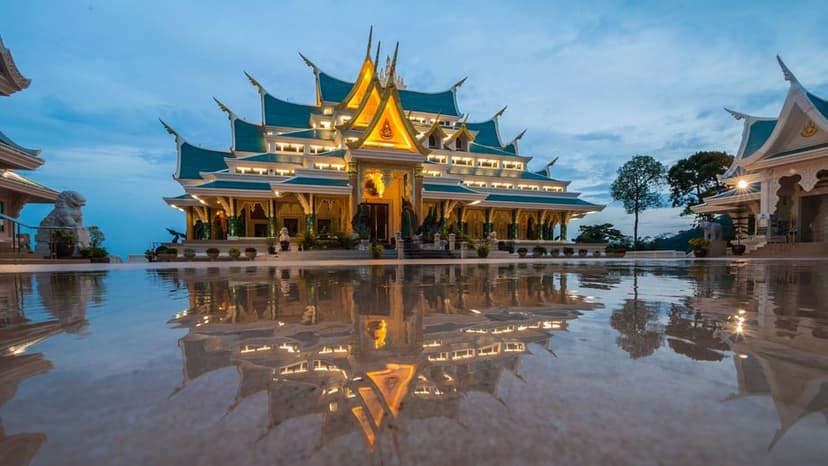
Isan, Thailand's vast northeast, is the part of the country most travellers never see, and Wat Pa Phu Kon is the strongest reason to go. The temple (วัดป่าภูก้อน) stands alone on a forested mountain in Na Yung district, in the far northwestern corner of Udon Thani province where three provinces meet, 125 km and about 1 hour 45 minutes by road from Udon Thani city. The reward for the journey arrives all at once: a white marble sanctuary with tiers of teal roof rising out of unbroken forest, and inside it, a 20-metre reclining Buddha carved from Italian Carrara marble, in the filtered mountain light.
Few international visitors know it, which is the opportunity. For a client or a group that has already done Bangkok's royal temples and Chiang Mai's mountain shrines, it is a first-rank temple off the classic circuit, in a region where daily life has not rearranged itself around tourism. The planning questions are whether the stage is worth the travel time, how to fit the visit to the vihara's hours and the drive, and what to build around it. Planning a private, tailor-made trip that reaches beyond the classics? See our luxury, tailor-made Thailand and Vietnam journeys.
A temple that grew out of a forest, not the other way around
Most great Thai temples accumulated their setting over centuries. Wat Pa Phu Kon inverted the order: the forest came first, and the temple exists to keep it standing. Its origin story begins in 1984 with a dhutanga pilgrimage, a group of lay devotees walking the ascetic wandering route through Sakon Nakhon and Udon Thani in the footsteps of the northeast's forest meditation masters. Moved by the degraded state of the reserve they crossed, they petitioned to protect it. In January 1987 the Royal Forest Department granted the first plot, the temple was formally registered that November, and in 1988 a Buddhist park of 1,000 rai was established around it. Today the monastery stewards roughly 3,000 rai, about 480 hectares, of the Na Yung and Nam Som national reserved forest at the meeting point of Udon Thani, Loei, and Nong Khai provinces, and in 2001 the Royal Forest Department named it the province's outstanding temple for forest conservation.
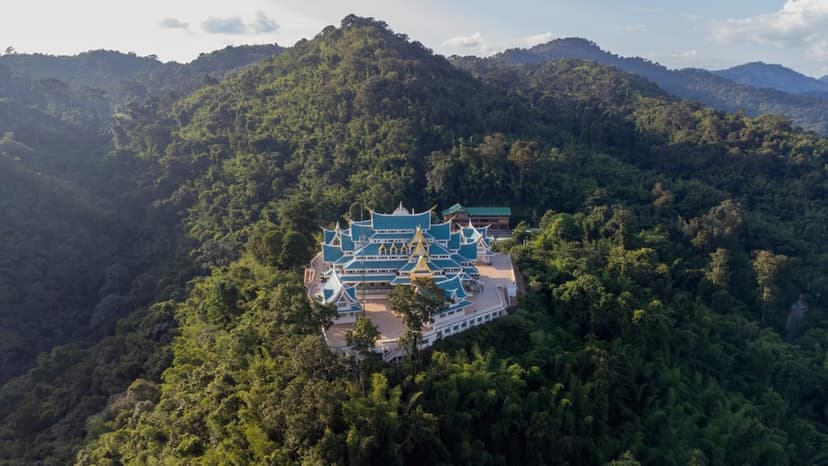
This is a living monastery in the Thai forest tradition, the austere meditation lineage descended from Ajahn Mun that shaped the spiritual history of the whole region. The conservation mission is why the mountain is still green, why the drive in passes through forest, and why the temple asks visitors to move quietly and dress properly. A good guide makes that story legible. Without it, you see a beautiful building; with it, you understand why the building is there.
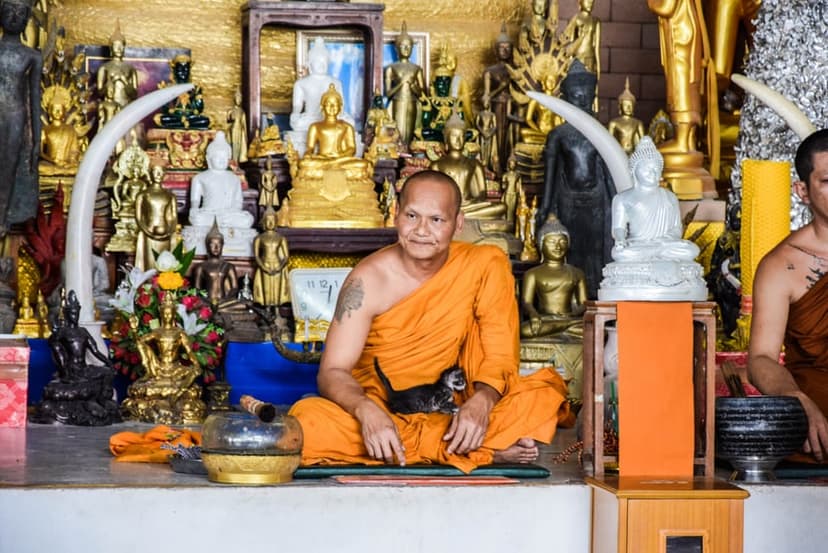
A reclining Buddha in Carrara marble
The centrepiece sits inside the great vihara, a sanctuary in applied Rattanakosin style, 39 metres wide and 49 metres long, its stepped roofs tiled in peacock teal and trimmed in gold. Within lies the temple's reason for pilgrimage: Phra Phuttha Saiyat Lokanat Sasada Maha Muni, a reclining Buddha 20 metres long, carved from white marble quarried in Carrara, Italy, the same stone country that supplied Michelangelo. The temple's own records describe 43 blocks, each weighing between 15 and 30 tonnes, with the single block that became the head weighing some 55 tonnes. The figure lies in the parinirvana posture, the Buddha's final passing, and the serenity of the pose in that cool white stone is what stays with visitors long after the photographs.
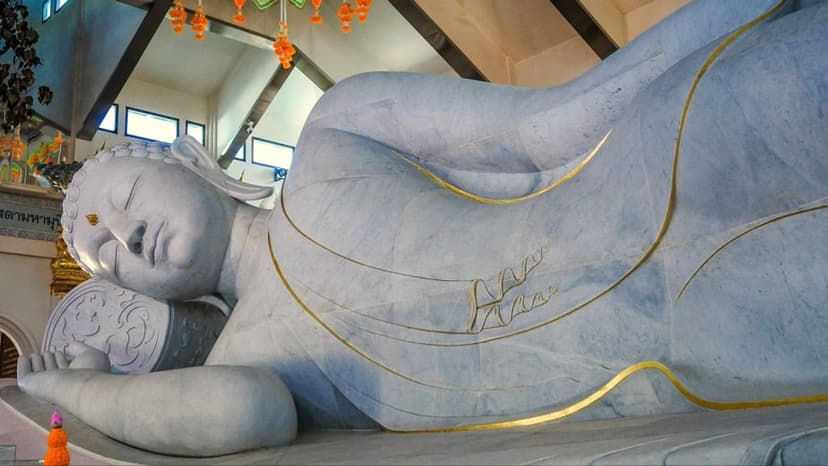
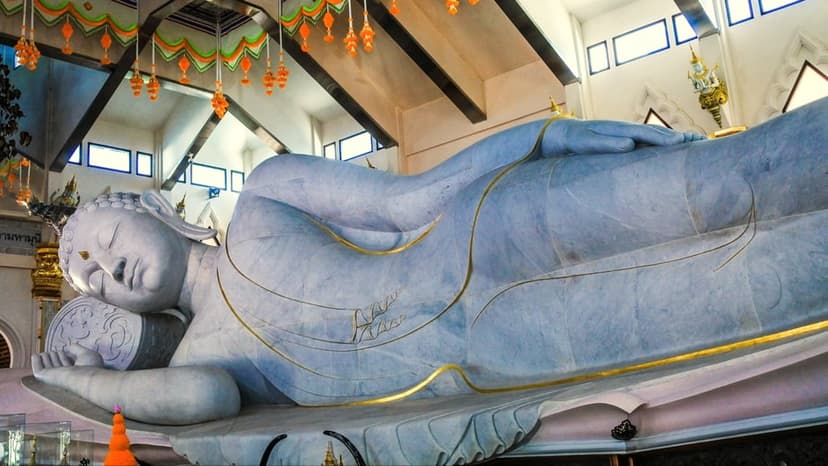
King Bhumibol Adulyadej granted the statue its formal name in 2009. The consecration followed in July 2010. The last royal regalia went on late in 2011, timed to the King's 84th birthday, and the whole work is an act of merit to him. The temple records a six-year build at just under 550 million baht, funded by donation.
Around the statue's base runs a band of bronze relief panels. They carry the Mahaparinibbana Sutta, the account of the Buddha's final days, each scene crowned with a verse of scripture. The past-life stories sit elsewhere: bronze Jataka reliefs line the vihara's interior walls. Both repay slow reading, with someone beside you who can translate the iconography as you walk.
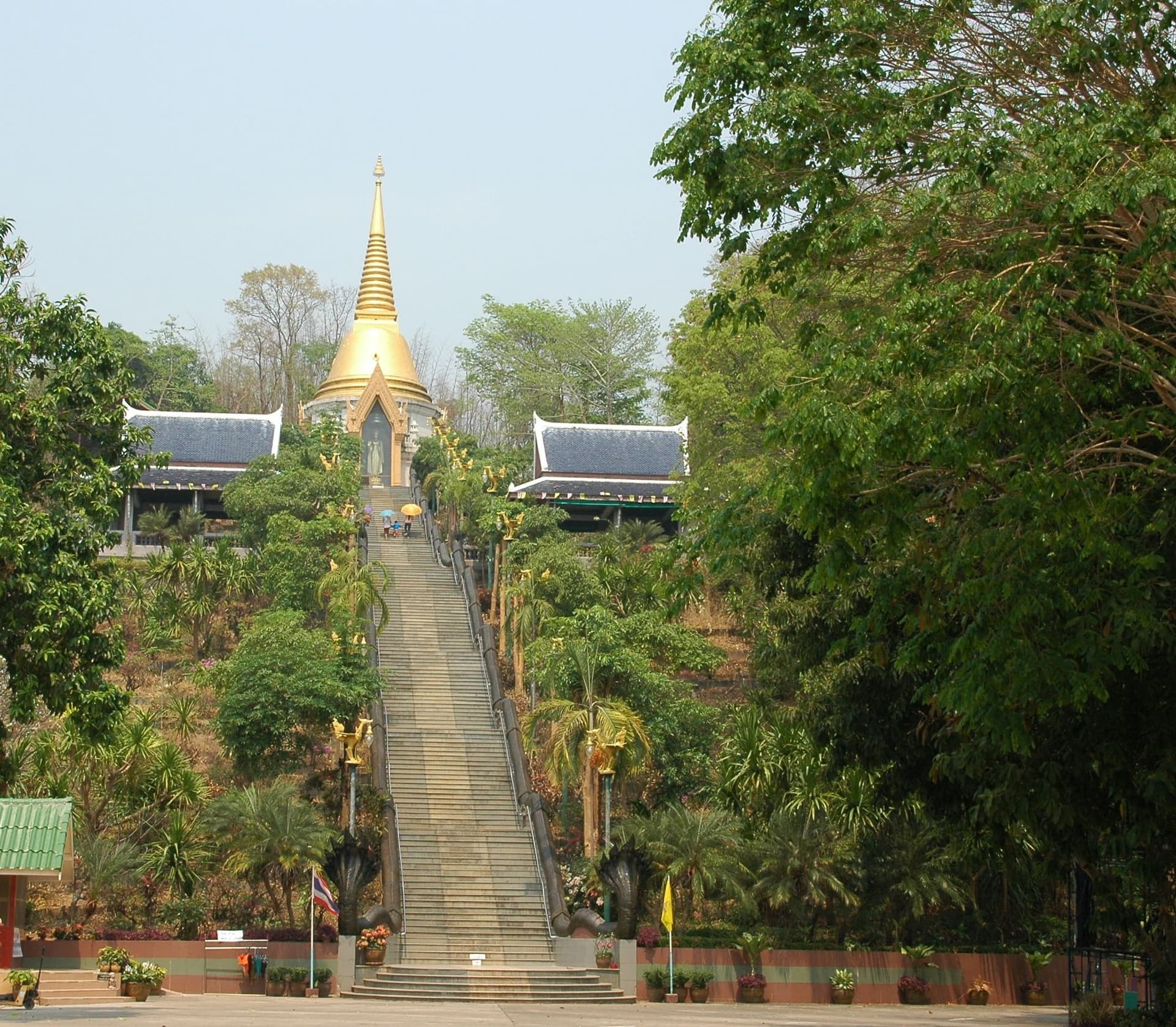
The vihara is the summit of a larger composition. A marble chedi rises on the grounds at the head of a long ceremonial stairway, flanked by bronze nagas. The courtyards, naga balustrades and pavilions are kept with the fastidiousness that distinguishes a monastery from a monument.
Visiting well: timing, dress, and the mountain road
The practical facts are simple. The temple gives the vihara's hours as 08:30 to 17:00, and the Department of Tourism's directory lists no admission charge. The temple asks visitors to dress appropriately: no sleeveless tops, no shorts, and no skirts above the knee. Anyone in shorts or a sleeveless top is not admitted to the vihara. The temple has Thai-style clothes to lend, so a client caught short should ask the temple staff. Souvenir photographs need no permission, but commercial photography, including pre-wedding shoots and paid photo tours, is not allowed. Drones and documentary crews need the temple's permission first, and photography after dark is no longer allowed.
The road is the other practical point. The approach to the vihara is steep, about 1.5 km. The temple asks buses to park in front of the temple kitchen, about 50 metres from the entrance gate, and runs a songthaew shuttle for vehicles without the power for the climb, at 20 baht a person for the round trip. Private cars need enough engine power to climb without trouble, and drivers are asked not to overtake on the way up or down. So book a vehicle with the power for the climb, and for a coach group, plan on the shuttle.
To be at the temple for the 08:30 opening, leave Udon Thani city by about 06:45. The drive takes about 1 hour 45 minutes through progressively emptier country. Clients on the overnight sleeper reach Udon Thani at about 05:39, which leaves time for breakfast first. In the cool season the valley below the temple can fill with morning fog, and watching it burn off from the terrace is one of Isan's quieter pleasures. Weekdays are calmer than weekends, when Thai families and merit-making groups arrive in numbers, and that rhythm matters more here than at temples built for through traffic.
The day around the temple: tractors, waterfalls, and forest lunches
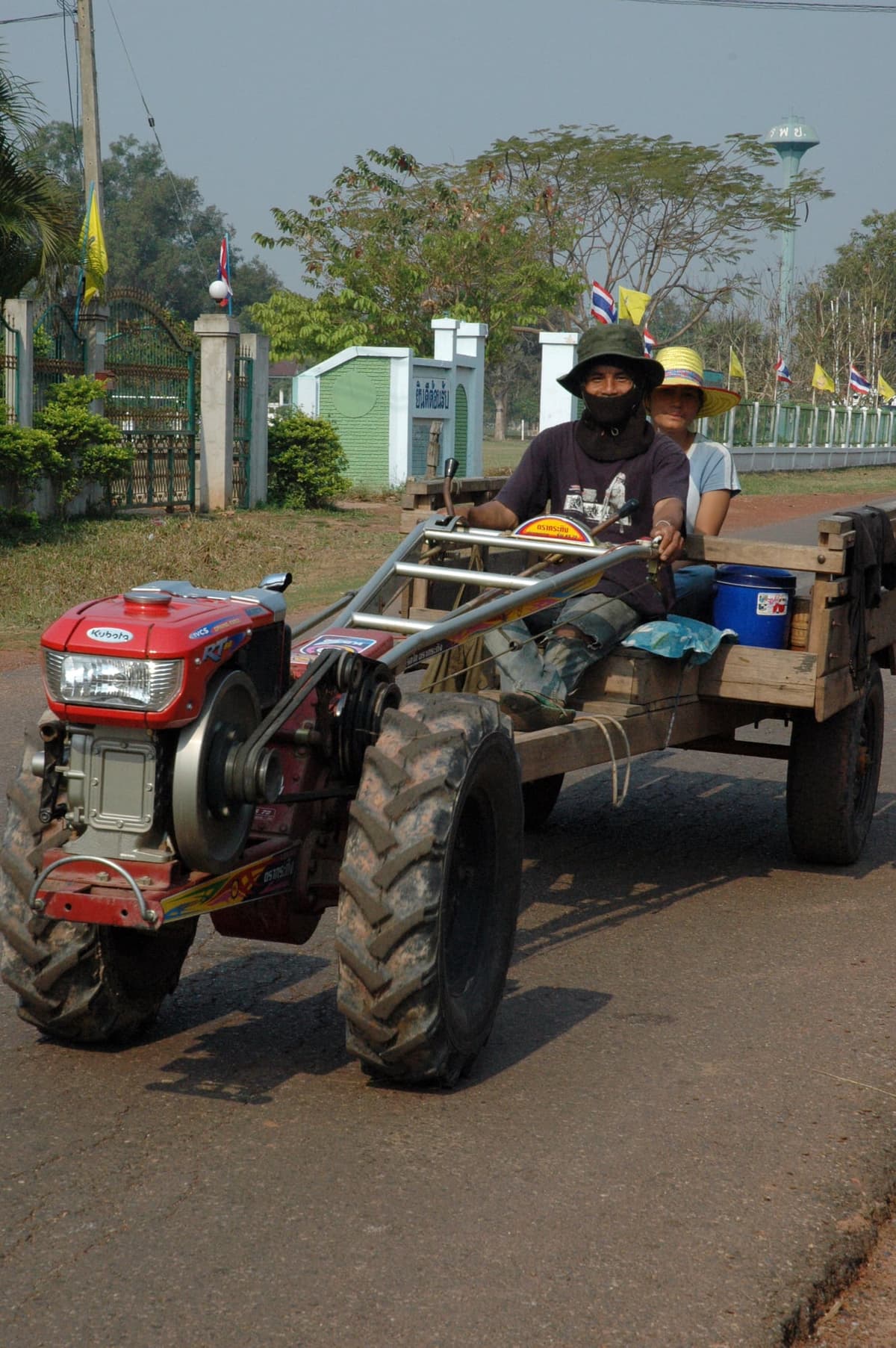
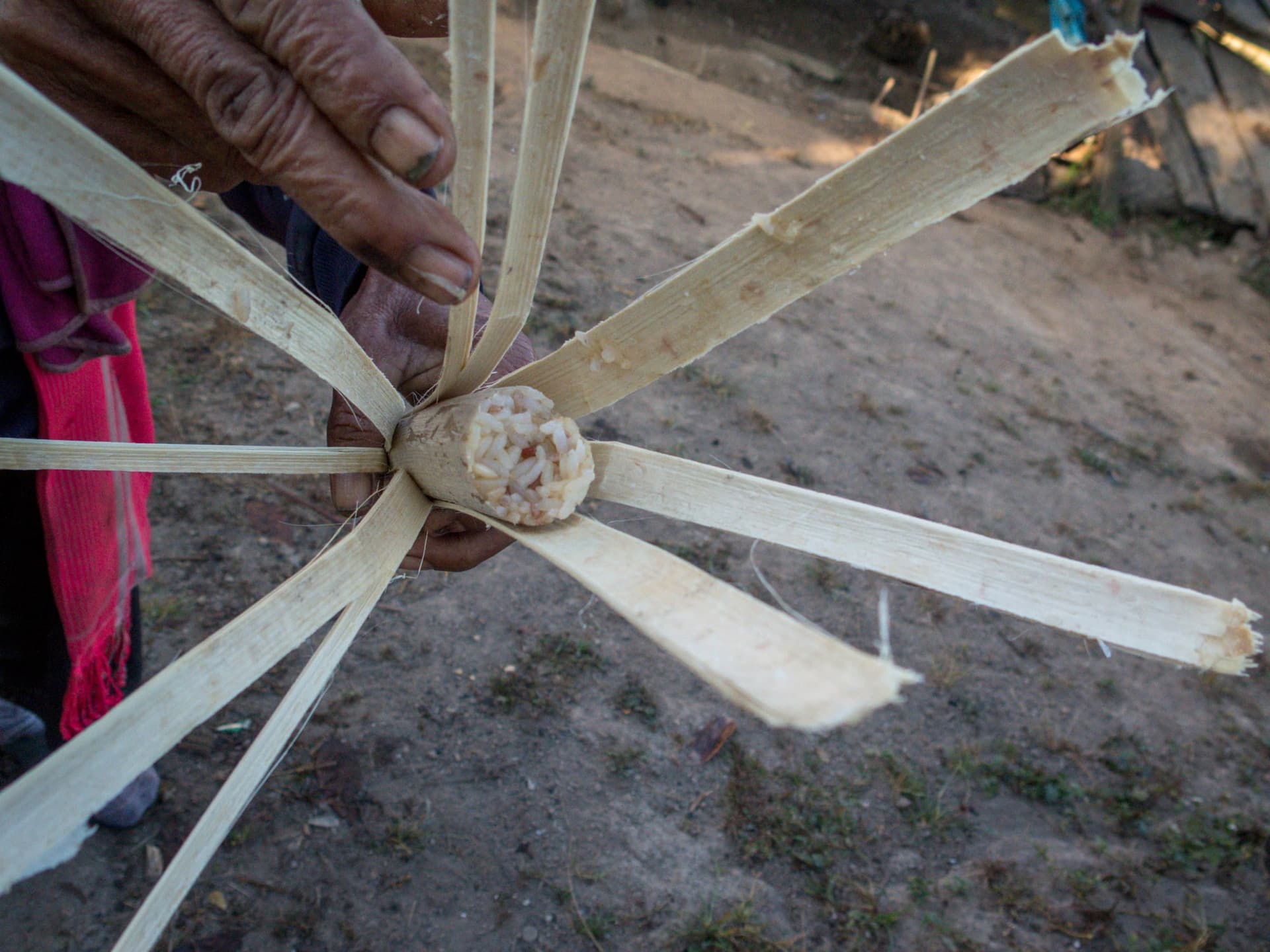
What makes Wat Pa Phu Kon more than a photo stop is the district around it. Na Yung is upland farm country, and a short drive from the temple, the community of Ban Khiri Wong Kot hosts visitors. The village's signature is the e-taek, the Isan farm tractor. Fitted with bench seats, they run in convoy along farm tracks, fording shallow streams and passing upland rice and cassava on the way into the forest toward a waterfall. Lunch waits at the end of the track, laid out the local way in lengths of split bamboo: som tam, grilled chicken, grilled river fish, and a sour curry of banana stem, eaten to the sound of running water.
It fills a half day. Book the visit with the community ahead, and confirm the route, the group size, the menu, access in wet weather, the price and who is paid.
Down to the Mekong: an evening in Nong Khai
From the temple's district, the Mekong lies to the northeast. Nong Khai, the little border capital opposite Vientiane, sits about 53 kilometres from Udon Thani city, roughly 45 minutes by road, and its riverfront makes a fine evening. The promenade runs some three kilometres along the water, past temples and naga statues. The long covered lanes of Tha Sadet market open off it, trading goods from across Indochina. Dinner is grilled Mekong fish and som tam, with Laos on the far bank and river traffic sliding past in the dusk.
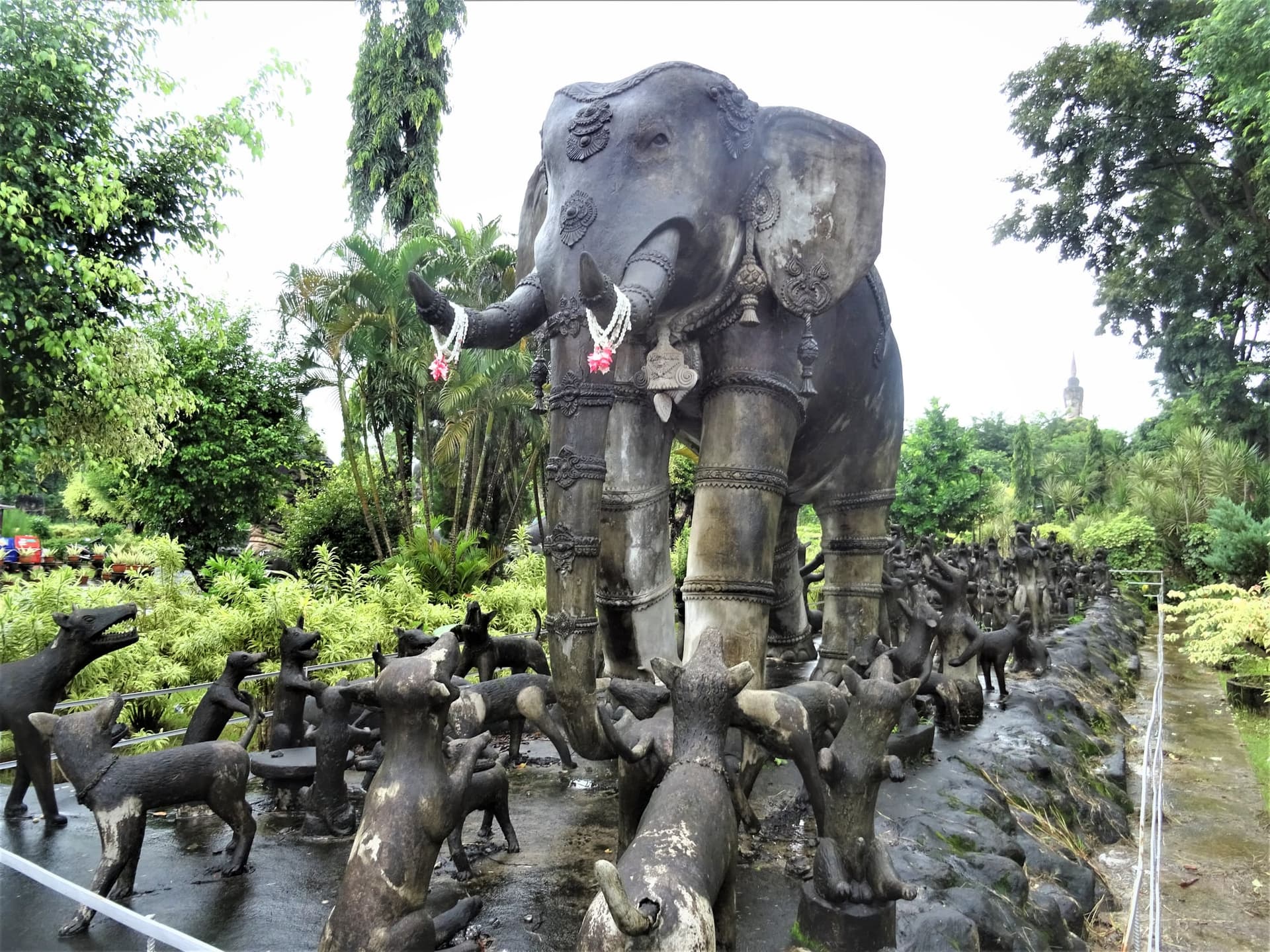
Nong Khai also holds one of the most unusual sights in Thailand. Sala Kaeo Ku is a sculpture park of more than a hundred giant concrete figures, Buddhas and many-headed nagas and hybrid creatures up to 25 metres tall, built from 1978 onward by the mystic artist Luang Pu Bunleua Sulilat, who had earlier raised a sister park across the river in Laos. Paired with Wat Pa Phu Kon on the same stage, it shows two very different sides of Isan's spiritual imagination.
Building it into a Thailand programme
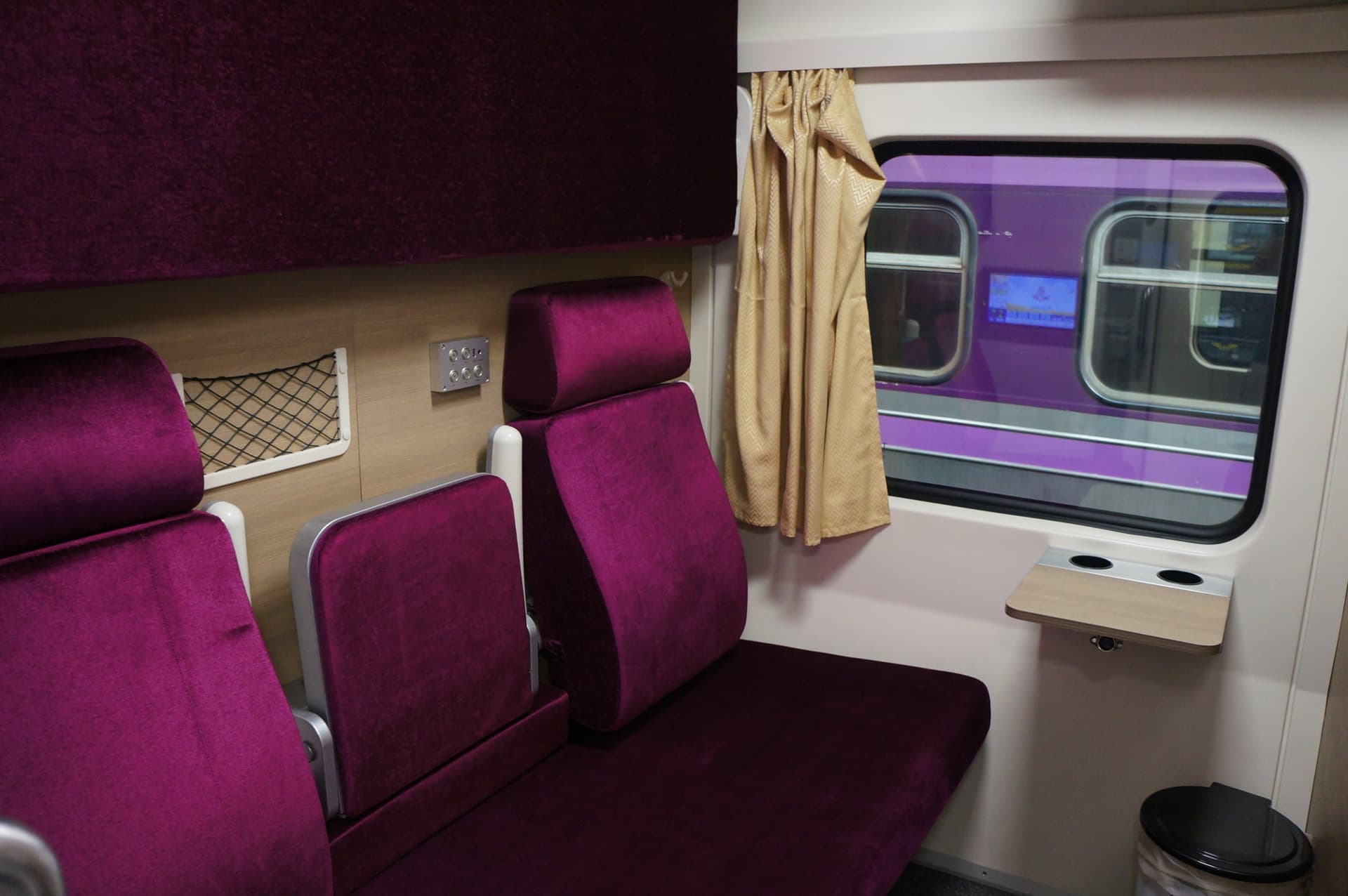
Isan works as a stage of its own, and the logistics are simpler than the distance suggests. The classic approach is the overnight sleeper: Special Express 25 leaves Bangkok's Krung Thep Aphiwat Central Terminal at 20:25 and reaches Udon Thani at about 05:39, then continues to Nong Khai. Check the State Railway of Thailand timetable for the travel date (SRT hotline 1690). The modern air-conditioned stock carries first-class two-berth compartments and second-class curtained berths, and the early arrival leaves the whole cool morning for the temple. Flying is the easier alternative. Several daily flights of about an hour link Bangkok with Udon Thani; check schedules at booking. Either way, an Isan extension of two to three nights fits even a tight two-week programme.
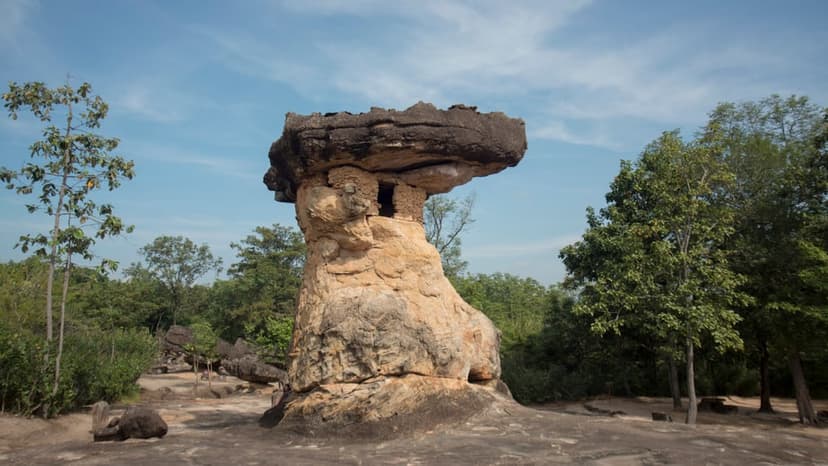
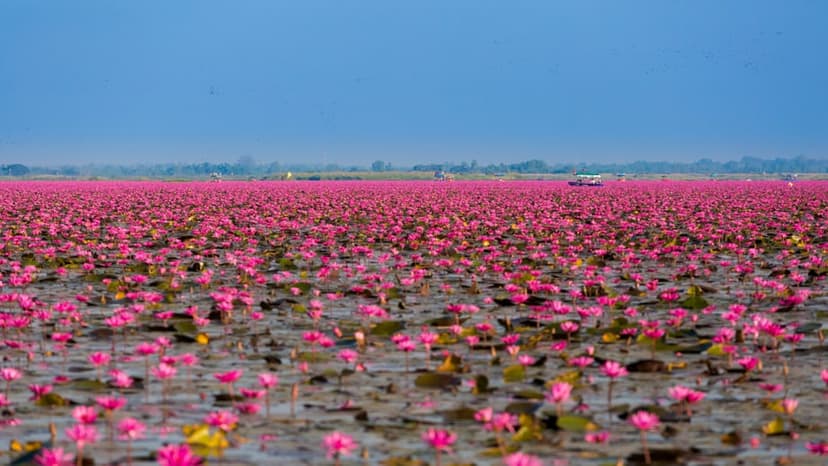
The province holds more than most itineraries can use. Ban Chiang, east of Udon Thani city, was inscribed by UNESCO in 1992. Its red-on-buff painted pottery and early bronze work reshaped how archaeologists read the prehistory of Southeast Asia. Phu Phra Bat followed in 2024: Dvaravati-era boundary stones and rock shelters scattered across a sandstone hill forest. And from mid-December into February, the Red Lotus Sea at Nong Han Kumphawapi blooms into one of Thailand's great natural spectacles: a lake surfaced in pink, best seen by longtail boat in the first hours after sunrise.
On timing: the cool season runs from mid-October to mid-February and is the prime window, with clear skies, crisp mornings, and the lotus bloom in its heart. Mid-February to mid-May runs hot in the northeast. The green season, mid-May to mid-October, brings short heavy afternoon rains that a well-sequenced day absorbs without drama. For how Isan's calendar sits against the rest of the country, our region-by-region guide to the best time to visit Thailand sets it in context.
Why plan Isan with a DMC
Thailand's northeast took about 4 per cent of the country's tourism revenue in 2025, according to an analysis by former TAT governor Yuthasak Supasorn reported in March 2026. The flip side of that quiet is thin tourist infrastructure. English signage is sparse, the village visits have to be booked with the communities ahead, and the distances between the good things are real. The difference between a good day and a frustrating one is sequencing: the temple at opening, the village at midday, the Mekong at dusk. Test that one-day combination against the route and the drive times before you sell it.
Isan is in none of our published itineraries, the Thailand Cultural Circuit included, so we build it to order as an extension to a Thailand programme. The quotation confirms which parts can be arranged for the dates: the village visit, the boat on the lotus lake, the hotels, the train berths and a licensed guide.
For agents and tour operators, this is also a portfolio answer. Clients who have already done Thailand's main circuit get a fresh chapter, and Wat Pa Phu Kon gives the region a flagship image that sells it on one photograph. Our guide to what European agents should know about selling Thailand and Vietnam covers how we support that conversation. If you are shaping a trip or a programme with an Isan stage, send us the dates, the group size and a preference for the sleeper train or a flight, and we will reply with an outline that fits.
FAQ
Where is Wat Pa Phu Kon and how do you get there?
Wat Pa Phu Kon stands in the Na Yung and Nam Som reserved forest in Na Yung district, the far northwestern corner of Udon Thani province, where Udon Thani, Loei, and Nong Khai provinces meet. It is 125 kilometres from Udon Thani city, which the temple itself puts at about 1 hour 45 minutes by road. Most visitors reach Udon Thani first, either on the overnight sleeper from Bangkok's Krung Thep Aphiwat terminal or on one of the several daily flights of about an hour, then continue by private car.
What is the reclining Buddha at Wat Pa Phu Kon made of?
The 20-metre reclining Buddha, named Phra Phuttha Saiyat Lokanat Sasada Maha Muni, is carved from white Carrara marble imported from Italy. The temple's records describe 43 blocks weighing 15 to 30 tonnes each, with the head carved from a single 55-tonne block. The statue was dedicated in honour of King Bhumibol Adulyadej's 84th birthday and consecrated in 2010.
Is there an entry fee or a dress code at Wat Pa Phu Kon?
The Department of Tourism's directory lists no admission charge, and the temple's songthaew shuttle up the steep approach costs 20 baht a person for the round trip. The temple asks for no sleeveless tops, no shorts and no skirts above the knee, and anyone in shorts or a sleeveless top is not admitted to the vihara. The temple lends Thai-style clothes; ask the temple staff. The vihara is open 08:30 to 17:00, and quiet, respectful behaviour is expected because this is a working forest monastery.
When is the best time to visit Udon Thani and Isan?
The cool season, mid-October to mid-February, is the prime window: comfortable days, crisp mornings, the chance of a sea of fog below the temple, and the Red Lotus Sea in bloom from mid-December into February. Mid-February to mid-May is hot. The green season, mid-May to mid-October, brings short afternoon downpours that a flexible day plan works around comfortably.
Can Wat Pa Phu Kon be combined with Nong Khai and the Mekong?
Yes, as a combination to test against the route and the drive times. One plan runs the temple at the 08:30 opening, the Ban Khiri Wong Kot village visit or Phu Phra Bat in the middle of the day, and the Mekong riverfront at Nong Khai for the evening, with the night spent by the river. Nong Khai is about 45 minutes from Udon Thani city, and the overnight train from Bangkok continues there after its Udon Thani stop.
Is Isan worth adding to a luxury Thailand itinerary?
For first-time visitors racing through a single week, the classics still come first. For returning travellers, incentive groups, and programmes that value distinctiveness, Isan is a strong option: a first-rank temple off the classic circuit, two UNESCO World Heritage sites, village experiences, and the Mekong, all within reach of Udon Thani city. It adds two to three nights, built to order as an extension to a Thailand programme.
Official sources
About the author
Wanwisa Puengsawang
CEO, Pai Dai DMC
Wanwisa Puengsawang, known as Sally, is the CEO of Pai Dai DMC. She leads the company's ground operations across Thailand and Vietnam, working directly with wholesale operators, MICE planners, and private clients.
More about Pai Dai DMCFor travel agencies
Planning Thailand or Vietnam for a client?
After we receive a complete brief, we provide a costed quote by the same time on the next business day. Complex multi-country or peak-season requests may take longer; we state the revised deadline when we acknowledge the request.