Mekong Delta Day Trip from Ho Chi Minh City: How Far and How Long


Alice
Operations Manager, Pai Dai DMC Vietnam
My Tho is about 70 kilometres from central Ho Chi Minh City, 1.5 to 2 hours by road; Ben Tre is about 85, and roughly 2 hours. Either is about nine hours door to door, so it is a full day whichever you pick.
One correction first. The Mekong does not flow through Ho Chi Minh City. Saigon sits on the Saigon River and the Delta proper begins to the southwest, so the Delta is never something a client glimpses from a rooftop bar. Most Delta days to My Tho and Ben Tre start with a road transfer of an hour and a half or more. A few speedboat tours leave from the city centre by water. Our private Delta day by boat and sampan is paired with the Cu Chi tunnels; for clients who want more than a day on the water, see our guide to Vietnam, Cambodia and the Mekong.
Does the Mekong reach Ho Chi Minh City?
No. Ho Chi Minh City stands on the Saigon River, a separate waterway that reaches the sea through the Dong Nai system. The Mekong comes in from Cambodia in two arms, the Tien and the Hau. They fan out through the mouths that give the Delta its Vietnamese name, Cuu Long, the Nine Dragons, and meet the coast well south and west of the city.
So a client who pictures stepping onto the Mekong in Saigon will usually start with a road transfer, then board a boat once they reach the Delta. Set that expectation at the planning stage: the day is an excursion into a different landscape, and the drive is part of it.
How far, and how long the day actually runs
The drive times below are plan-on figures for a private vehicle on a normal weekday, measured from central Saigon, the area most people still call District 1.
| Destination | Distance from central Saigon | Drive each way | Door to door |
|---|---|---|---|
| My Tho | about 70 km | 1.5 to 2 hours | about 9 hours |
| Ben Tre | about 85 km | about 2 hours, longer when the Dong Tam junction is congested | about 9 hours |
| Can Tho (for Cai Rang) | about 150 km by expressway, 170 by the old highway | 2.5 to 3 hours | overnight |
Day to day, most of the variation is not the highway. It is the first 20 kilometres getting out of Saigon, which is where a morning departure either works or does not. The highway is where the rare bad day comes from.
Two things have changed on this corridor recently, and both matter to a day plan. The expressway now runs continuously from the edge of Ho Chi Minh City to the Hau River at Binh Minh, completed in December 2023, leaving only the last ten kilometres into Can Tho on the old national highway. And the Rach Mieu 2 bridge opened in August 2025, which means the road to Ben Tre no longer threads through My Tho town. Clients going to Ben Tre now bypass My Tho entirely, so a day that takes in both is a deliberate detour, not a natural sequence.
A Ben Tre day has to be planned around one junction. Dong Tam, on the approach to the new bridge, is often congested, especially at weekends and holidays, so we plan to leave by 7am. A flyover at the junction is due by the end of 2027.
We also publish these as ranges on purpose. Beyond Trung Luong the expressway narrows to four lanes with no continuous hard shoulder, only stopping bays every four or five kilometres, so one minor accident closes it. That stretch is on the Can Tho run, not the My Tho or Ben Tre one. The expressway from Ho Chi Minh City to My Thuan is being widened, with completion planned for 2028, so allow for roadworks. Around public holidays, and Tet in particular, add hours and not minutes. We build the buffer into the day instead of quoting a best case.
Which province are they in now?
Worth a line, because a planner cross-checking supplier paperwork will notice. Vietnam reorganised its provinces in 2025, cutting sixty-three down to thirty-four. My Tho now sits in Dong Thap province and Ben Tre in Vinh Long, and the old district tier is gone.
Nothing about the trip changed. The place names on the ground are the same ones your driver, your guide and your hotel use, and the Delta tourism authorities market them unchanged. If an address or a permit comes back naming a province you do not recognise, that is why.
What a Delta day includes
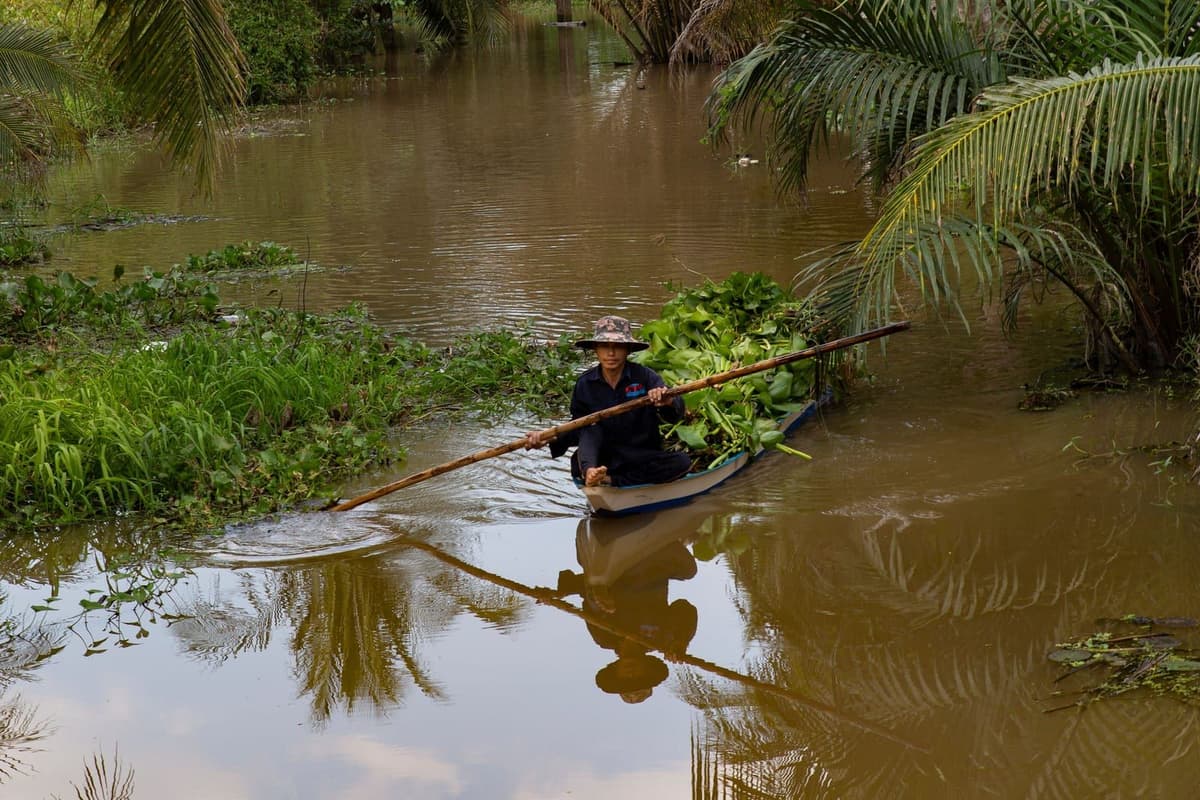
A well-run Delta day is a sequence of small, sensory stops, not one headline sight. Clients board a motorboat on the river, land on an islet such as Thoi Son, then swap the big boat for a hand-paddled sampan through narrow, palm-shaded canals. That canal section is the image most people actually have in mind when they picture the Delta.
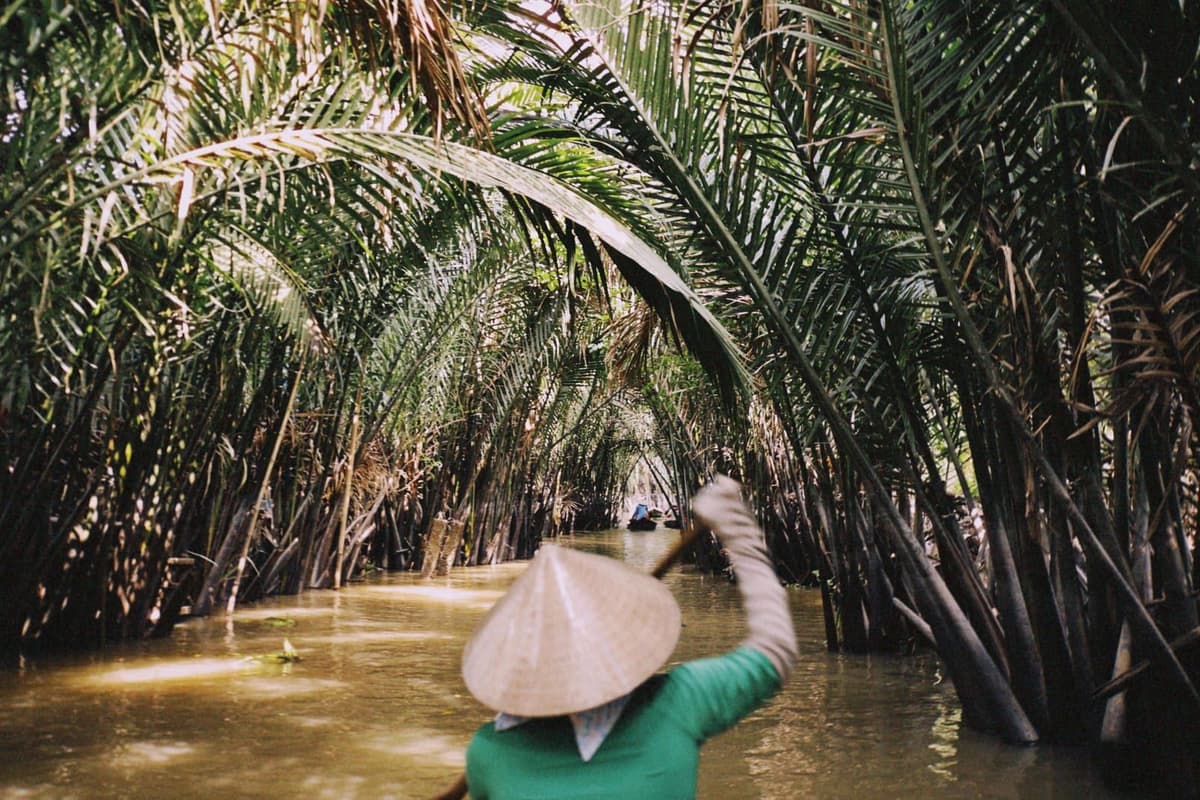
Along the way the classic stops are a coconut-candy workshop, where the sticky sweets are cut and wrapped by hand, a beekeeping garden with honey tea, and a fruit orchard where a few musicians perform don ca tai tu, the southern Vietnamese chamber music inscribed on UNESCO's Representative List in 2013. Near My Tho, Vinh Trang Pagoda makes an easy cultural addition.
None of these are grand monuments. The appeal is rhythm, river light and everyday Delta life. Which is exactly why the quality of the boat, the guide and the route matters here more than the list of stops does.
Cai Rang is a different trip, and the reason has changed
The Cai Rang floating market, the big photogenic one, is in Can Tho, about 150 kilometres away by expressway, or 170 by the old national highway. The market trades from before dawn and the worthwhile window is roughly 5 to 7am, reached by a thirty-minute boat run out from Ninh Kieu wharf.
Until recently the answer was simply that a day trip could not get there in time. That is no longer true. The government put the new drive at just over two hours when the expressway opened in December 2023, against the 3.5 hours it took before. From a central Saigon hotel to Ninh Kieu wharf we plan on 2.5 to 3 hours each way. So a same-day return is physically possible. It takes a 2am hotel pickup.
We do not sell it, and we will talk a client out of it. What you buy for that departure is a client asleep on the boat at the one moment the market is worth seeing. Cai Rang is an overnight in Can Tho. The reason is the client's morning, not the map.
And there is no floating market at My Tho or Ben Tre to stand in for it. The nearest was Cai Be, which has effectively stopped trading. So when a client asks for the floating market in a day, they are describing two different trips: a My Tho or Ben Tre day excursion, or a Can Tho overnight for Cai Rang itself. We set that choice out before anyone books.
What Cai Rang is now
Cai Rang is still the largest working floating market in the Delta, and it is still worth the overnight. It is also a fraction of the market in the photographs.
Local officials put the regular trading fleet at about 200 boats in 2024, against 500 to 600 at its peak. On a July 2024 morning, reporters counted a little over 100 traders' boats, outnumbered by tourist boats. The cause is prosaic: the roads got good, and lorries now collect fruit at the orchard gate.
The market has not been left to die. Its culture has been national intangible cultural heritage since 2016, and Can Tho funded a conservation programme that year. Sold as a living heritage market, Cai Rang delivers. Sold as the postcard, it disappoints. We brief clients on the first version.
Making it feel authentic, not canned
The standard My Tho circuit is high-volume tourism, and on a busy day it can feel like a conveyor belt of coach groups moving between the same stops. That reputation is fair. It is also avoidable.
For premium clients we change the variables that matter: a private boat instead of a shared one, an earlier start to stay ahead of the crowds, a route weighted toward Ben Tre's quieter canals, and a guide who can turn the coconut-candy stop into a conversation instead of a sales pitch. The Delta is worth seeing. The difference between a forgettable morning and a memorable one sits entirely in how the day is built, which is the part a ground operator controls and a generic booking does not.
How we build it into a trip
We treat the Delta as a component to place well, not a box to tick. For many clients one full day from Ho Chi Minh City is exactly right, slotting between the city's sights and a flight north or to the coast the following morning. For travellers who want to go deeper, ask for a Can Tho overnight in the brief.
We size the boat, the start time and the route to the group. We are also candid about when the Delta will reward a client and when their days are better spent elsewhere. Send us the dates and group size for a private Delta day, and read our how many days guide as you balance the Delta against the rest of Vietnam.
FAQ
How far is the Mekong Delta from Ho Chi Minh City?
My Tho, the nearest practical gateway, is about 70 kilometres southwest of central Ho Chi Minh City, roughly 1.5 to 2 hours by road. Ben Tre is about 85 kilometres and roughly 2 hours. Can Tho, home to the Cai Rang floating market, is about 150 kilometres by expressway and 2.5 to 3 hours each way since the expressway was completed in December 2023.
Does the Mekong River flow through Ho Chi Minh City?
No. Ho Chi Minh City sits on the Saigon River, not the Mekong. The Mekong breaks into its delta branches well to the south and west of the city. Most Delta days to My Tho and Ben Tre start with a road transfer of an hour and a half or more; a few speedboat tours leave from the city centre by water. Clients who expect to see the Mekong from the city are picturing the wrong river.
How long is a Mekong Delta day trip from Ho Chi Minh City?
Plan on a full day. My Tho or Ben Tre both run about nine hours door to door. Of that, 3 to 5 hours is driving in total, depending on the gateway and the traffic, and the rest is on the ground for the boat, the sampan canals and the workshop stops. For Ben Tre we plan to leave by 7am, because the Dong Tam junction near the Rach Mieu 2 bridge is often congested, especially at weekends and holidays.
Can you see a floating market on a day trip from Saigon?
Not one worth doing. The Cai Rang floating market is in Can Tho, and since the expressway opened in December 2023 a same-day return is physically possible, but it needs a 2am hotel pickup for a market that is only worth seeing from about 5 to 7am. We do not sell that day trip and we will talk a client out of it, because what you get is a client asleep on the boat at the one moment the market is worth seeing. Seeing Cai Rang properly means an overnight in Can Tho; there is no floating market at My Tho or Ben Tre, so a day trip there is about canals, orchards and river life. If your client wants Cai Rang, send us the dates for a Can Tho overnight.
What does a Mekong Delta day trip include?
A typical day combines a motorboat on the river, a stop on an islet, and a hand-paddled sampan through narrow coconut-palm canals. Common additions are a coconut-candy workshop, a beekeeping garden with honey tea, a fruit orchard with traditional don ca tai tu music, and, near My Tho, Vinh Trang Pagoda. The pleasure is in the rhythm and the river light, not in grand monuments.
My Tho or Ben Tre, which is better?
My Tho is the busiest and most established Mekong Delta gateway, with the most infrastructure and the largest crowds. Ben Tre is quieter, greener and feels more like working countryside, though it is a little further from Ho Chi Minh City at about 85 kilometres against about 70. For premium clients who want the canals without the coach-tour feel we usually recommend Ben Tre, often with a private boat and an early start, while My Tho still suits groups wanting the classic, well-oiled circuit.
Official sources
- Government of Vietnam: inauguration of the My Thuan 2 bridge and the My Thuan to Can Tho expressway (24 Dec 2023)
- National Assembly Resolution 202/2025/QH15 on the merger of provincial administrative units
- UNESCO Representative List: Art of Don ca tai tu music and song in southern Viet Nam (2013)
- Tuoi Tre: congestion at the Dong Tam junction and the planned flyover towards the Rach Mieu 2 bridge (27 Mar 2026)
- Tuoi Tre: congestion at the Dong Tam junction at weekends and holidays, and a flyover due by the end of 2027 (23 Sep 2026)
- Nhan Dan: work starts on widening the Ho Chi Minh City to Trung Luong to My Thuan expressway, completion planned for 2028 (19 Dec 2025)
- Nhan Dan: the Rach Mieu 2 bridge opens to traffic (Aug 2025)
- Mekong Eye: about 200 boats now trade regularly at Cai Rang (19 Aug 2024)
- Tuoi Tre: a morning count of traders' and tourist boats at Cai Rang (14 Jul 2024)
About the author
Alice
Operations Manager, Pai Dai DMC Vietnam
Alice is Operations Manager for Pai Dai DMC in Vietnam. She looks after supplier relationships with hotels, restaurants, and guides, and the on-tour operations team.
More about Pai Dai DMCFor travel agencies
Planning Thailand or Vietnam for a client?
After we receive a complete brief, we provide a costed quote by the same time on the next business day. Complex multi-country or peak-season requests may take longer; we state the revised deadline when we acknowledge the request.