Thailand Cultural Circuit
9 Days · Backwards Through Siam, Forwards Into Lanna
Overview
Most Bangkok to Chiang Mai programmes are a list of stops. This one is an argument about a line. The route runs backwards through the Siamese capitals, from Bangkok founded in 1782 to Ayutthaya in 1350 to Sukhothai in 1238, until it reaches the oldest one. Then it crosses a border that no longer exists into Lanna and runs forwards again, ending in the city Mangrai moved his capital to in 1296. Wat Phra That Lampang Luang stands on the seam between the two kingdoms, and the group sleeps beside it. Eight nights across five bases, never fewer than one full day in any of them, because the driving on this corridor is longer than the market usually admits and we would rather build the days around that than around a brochure. A licensed Thai guide stays with the group from the arrivals hall to the departure gate, and the middle of every hot afternoon is deliberately left empty.
9 days · 8 nights
- The overnight route
- Bangkok2 nights
- Ayutthaya1 night
- Sukhothai2 nights
- Lampang1 night
- Chiang Mai2 nights
- Best months
- November – February
The Line, Base by Base
2 nights
Bangkok
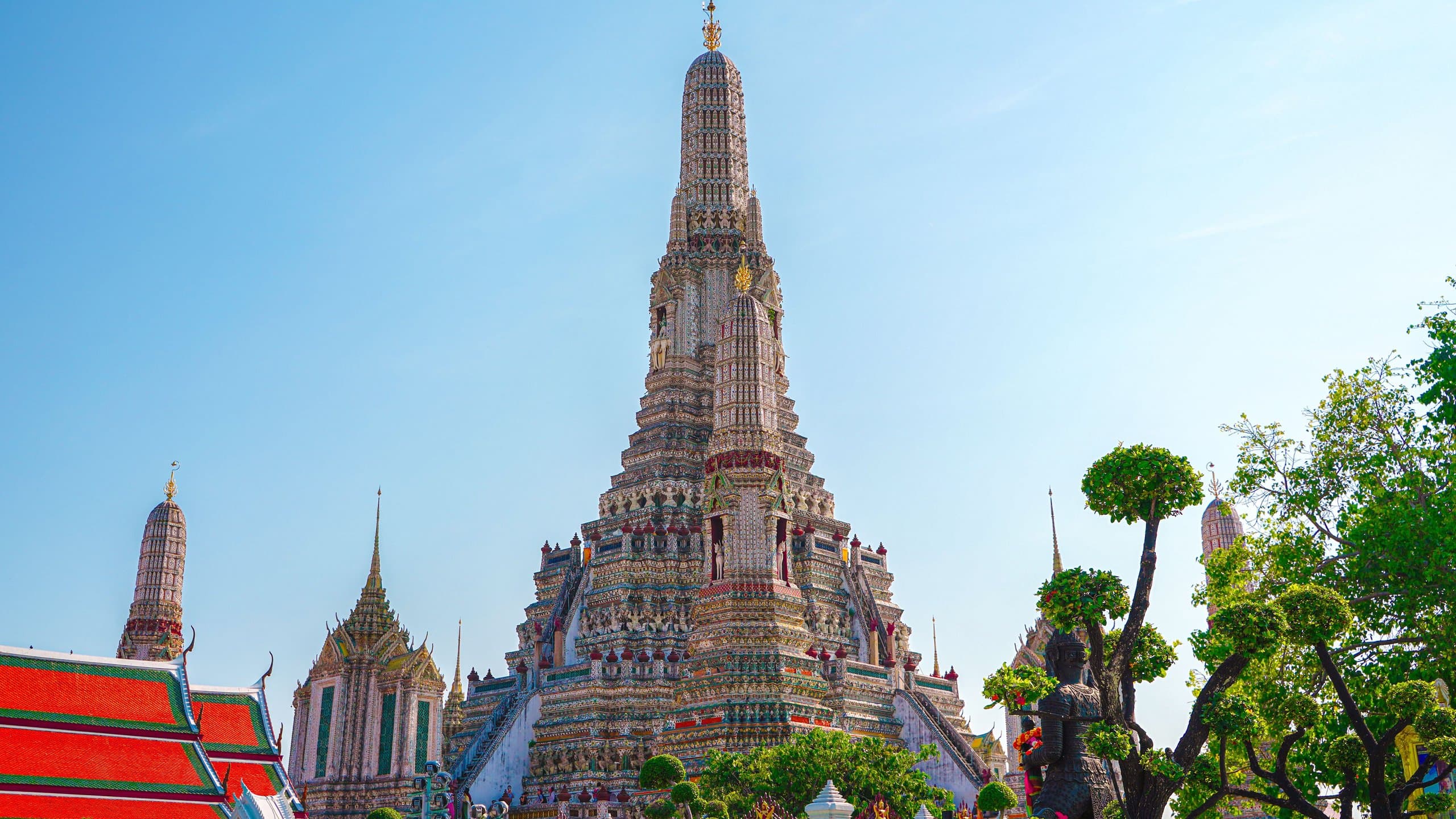
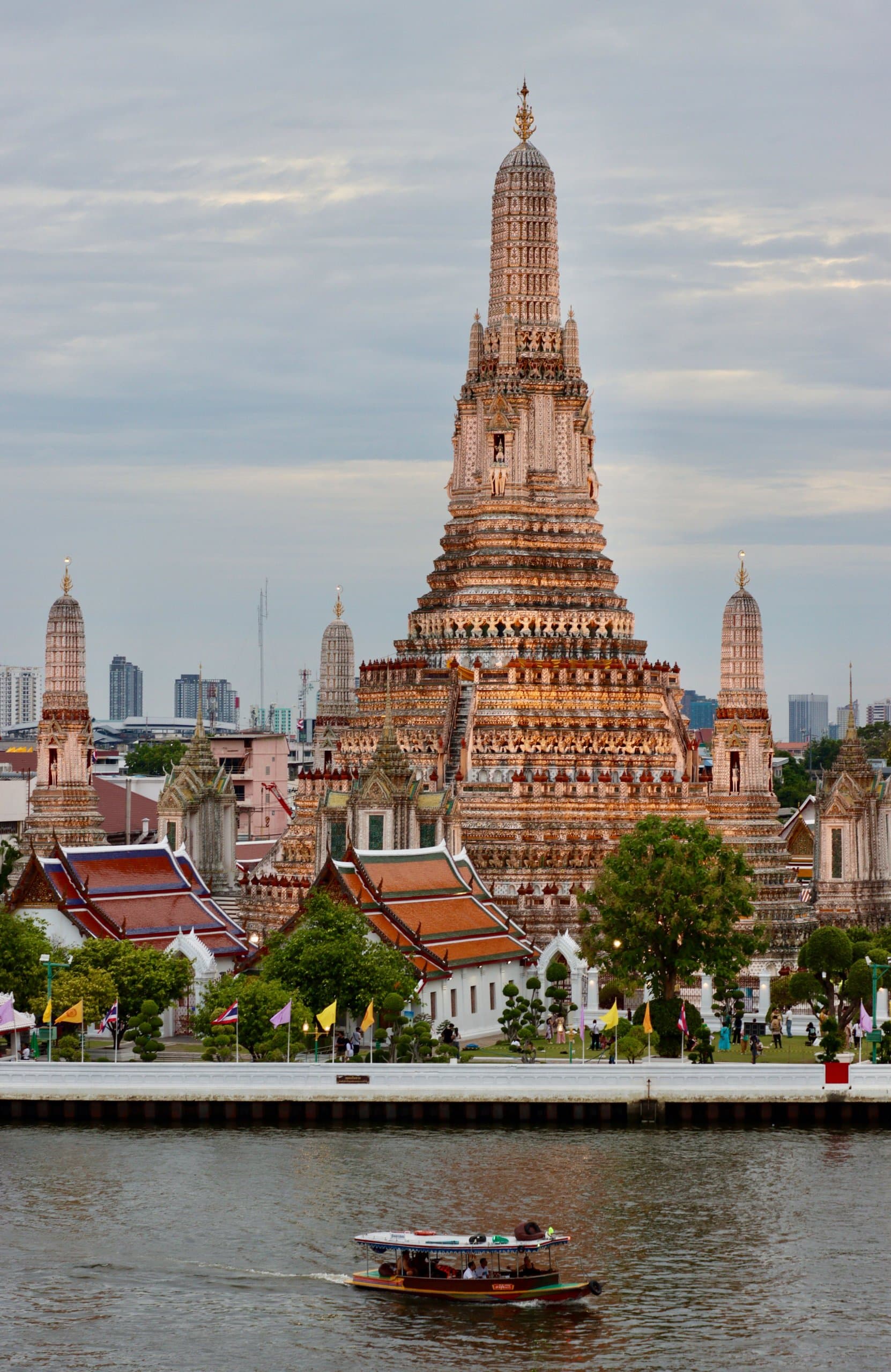
The newest capital, and the only one still working. Wat Pho at opening before the coaches, the cross river ferry to Wat Arun, the gold Buddha of Wat Traimit that spent two hundred years disguised under plaster, and Yaowarat after dark. The Grand Palace is left out on purpose.
1 night
Ayutthaya
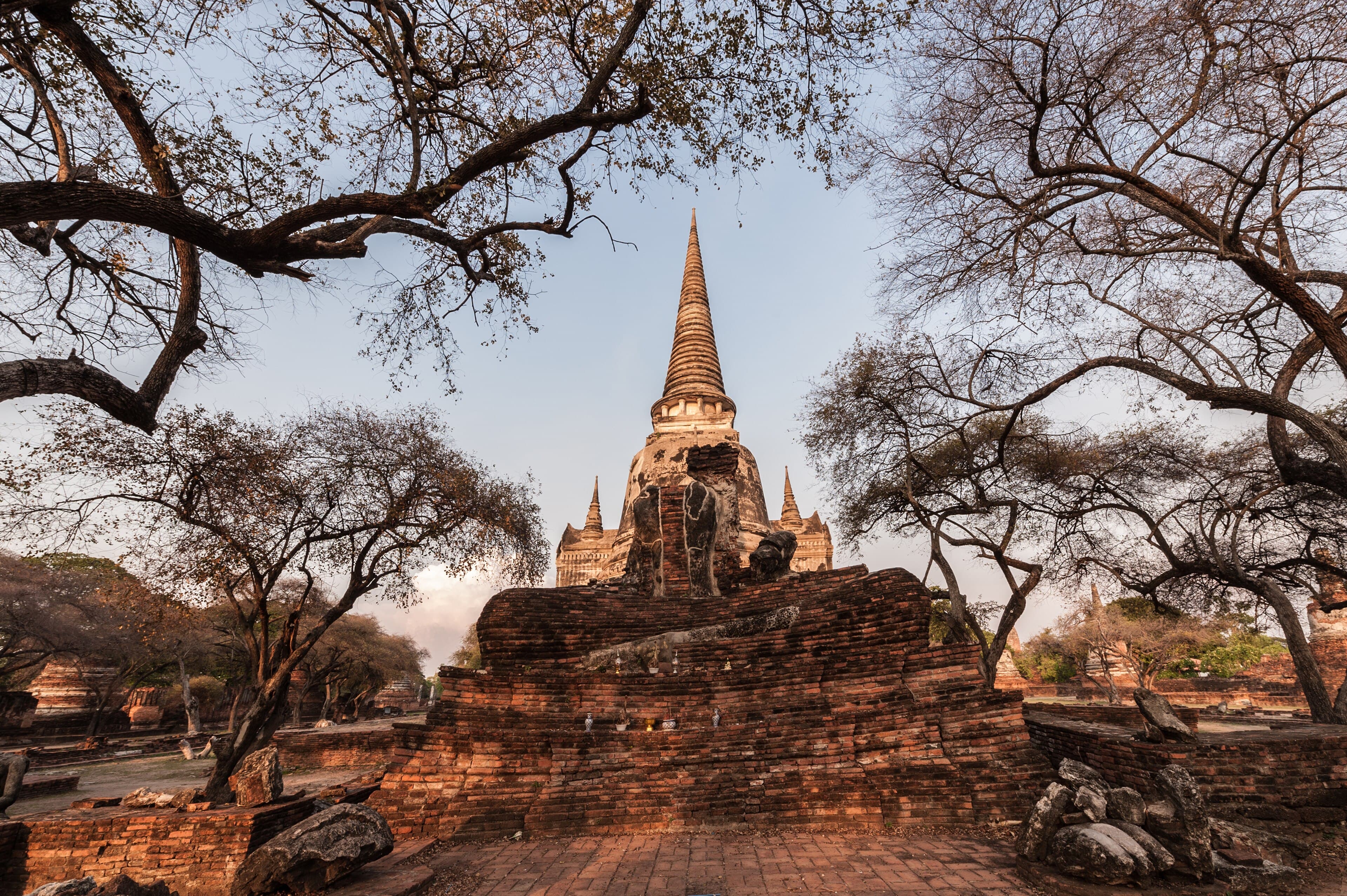
Ninety minutes north and four hundred years back. The sandstone Buddha head held in bodhi roots, the royal chedis of Wat Phra Si Sanphet, then four hours off and a return to Wat Chaiwatthanaram for the last of the light on the river.
2 nights
Sukhothai
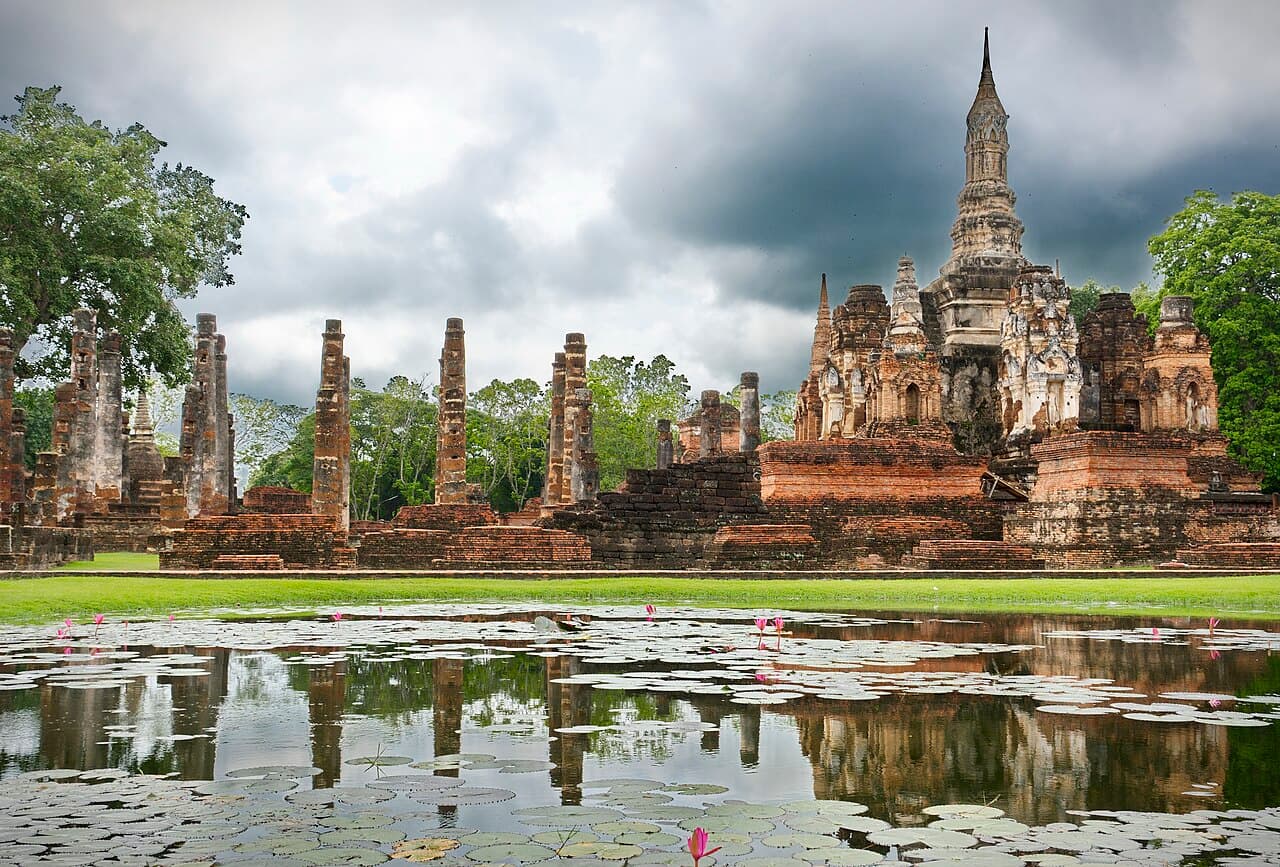
The oldest capital and the turning point of the route. Bicycles into the historical park at quarter to seven, the great seated Buddha filling the roofless mondop at Wat Si Chum, the hot hours free, and the island temples at half past five when the ponds go still.
1 night
Lampang
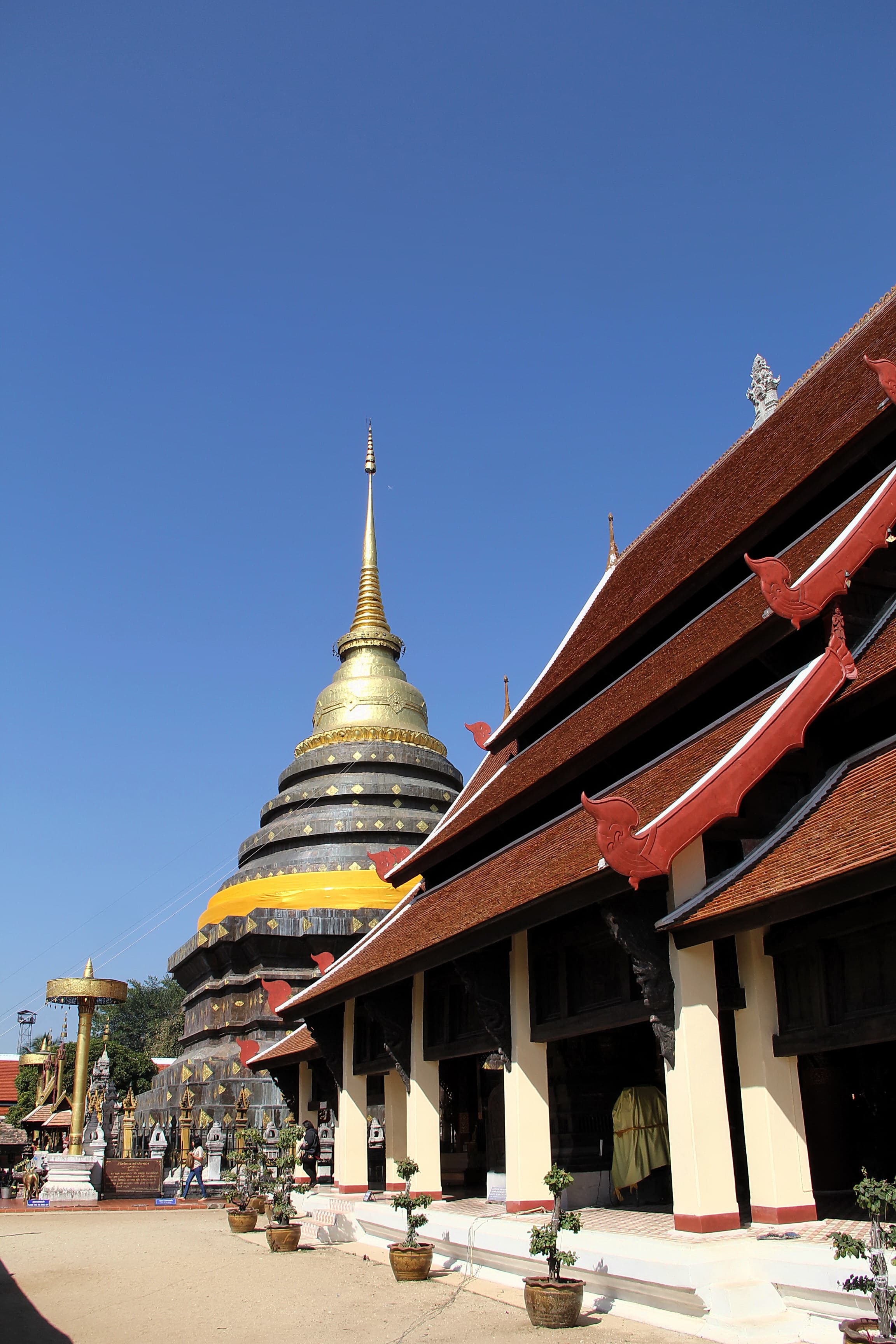
The seam between two kingdoms. Si Satchanalai in the morning with its elephant based chedi and almost nobody else there, then Wat Phra That Lampang Luang, the oldest wooden hall in Thailand, where the roofline stops being Siamese and starts being Lanna.
2 nights
Chiang Mai
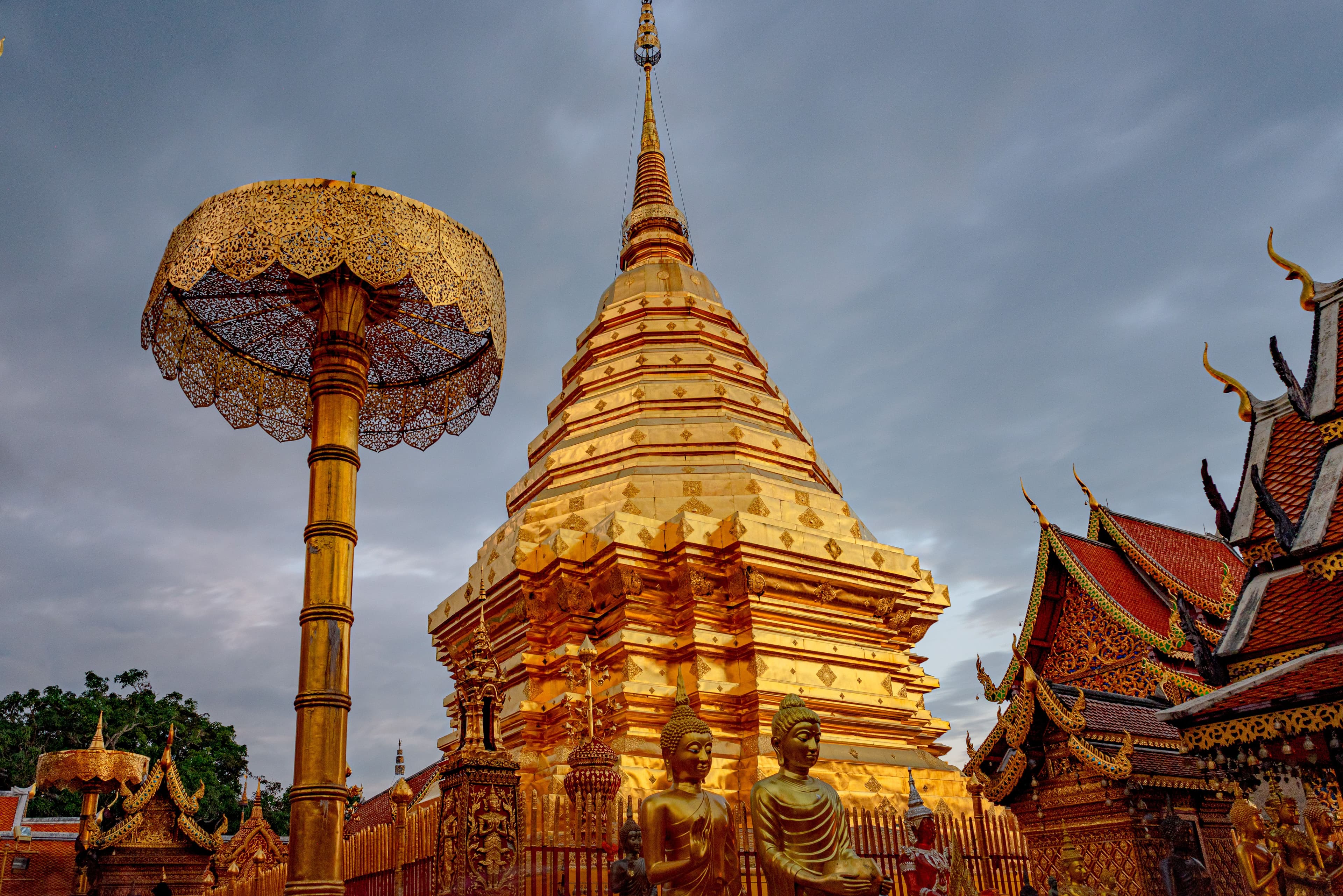
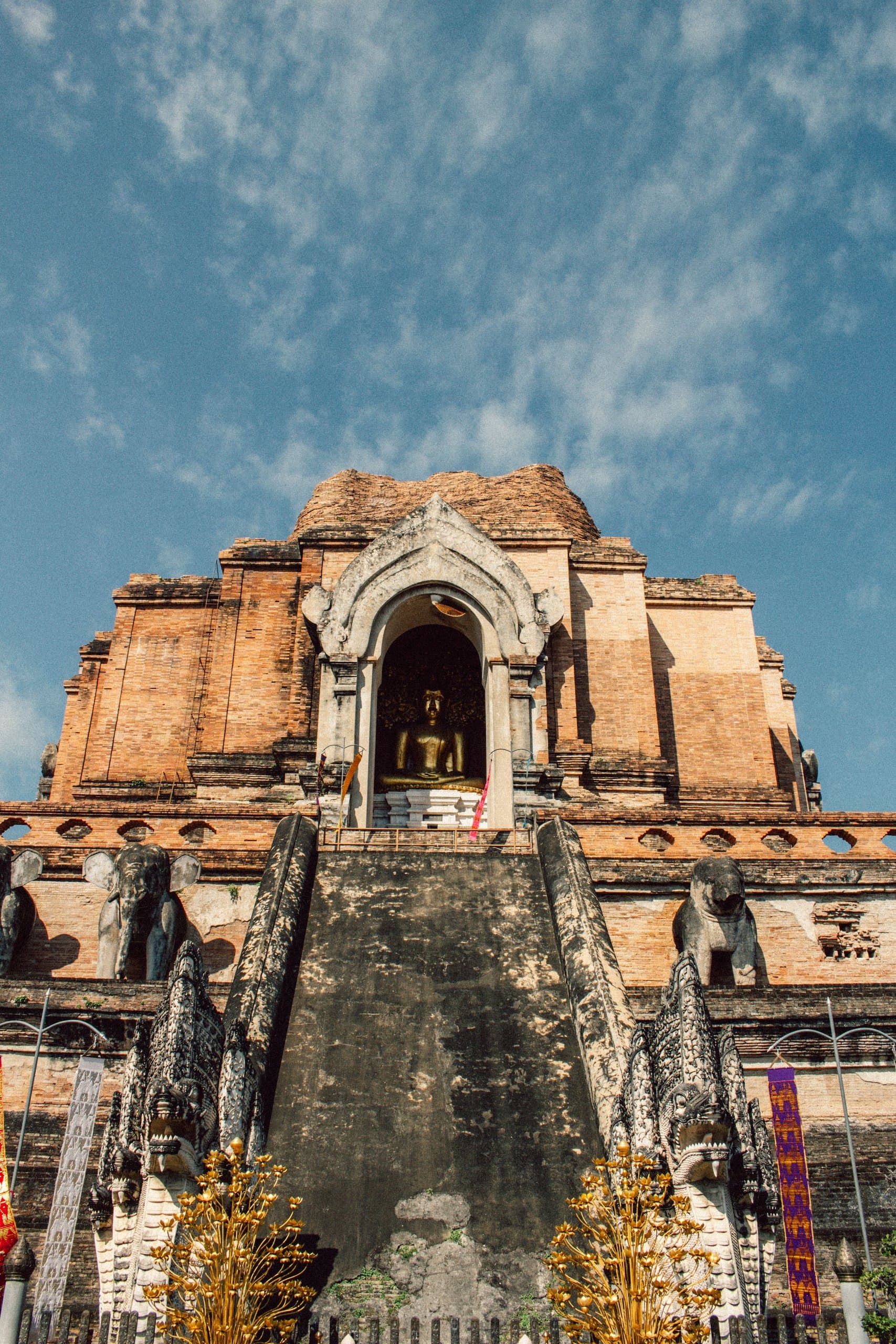
Mangrai's second capital, founded 1296. The broken royal chedi that housed the Emerald Buddha for eighty four years, Wat Phra Singh at golden hour, Doi Suthep at quarter past six before the buses, and an afternoon in a northern kitchen.
Nine Days, Five Centuries, Two Kingdoms
1Bangkok
Arrival, and Nothing Else
 Morning
Nothing is scheduled. European long haul into Bangkok lands between early afternoon and half past seven in the evening, so the day is built around that fact, not against it.
AfternoonYour guide meets the group inside the arrivals hall at Suvarnabhumi and stays with it for the next nine days. A private coach runs into the city, about forty five minutes when the traffic behaves and closer to ninety when it does not.
EveningCheck in on the river, then a welcome dinner with Wat Arun lit across the water. No ticket, no monument, no coach after dinner.
Meals - / - / D
2Bangkok
Rattanakosin Before the Queue
 Morning
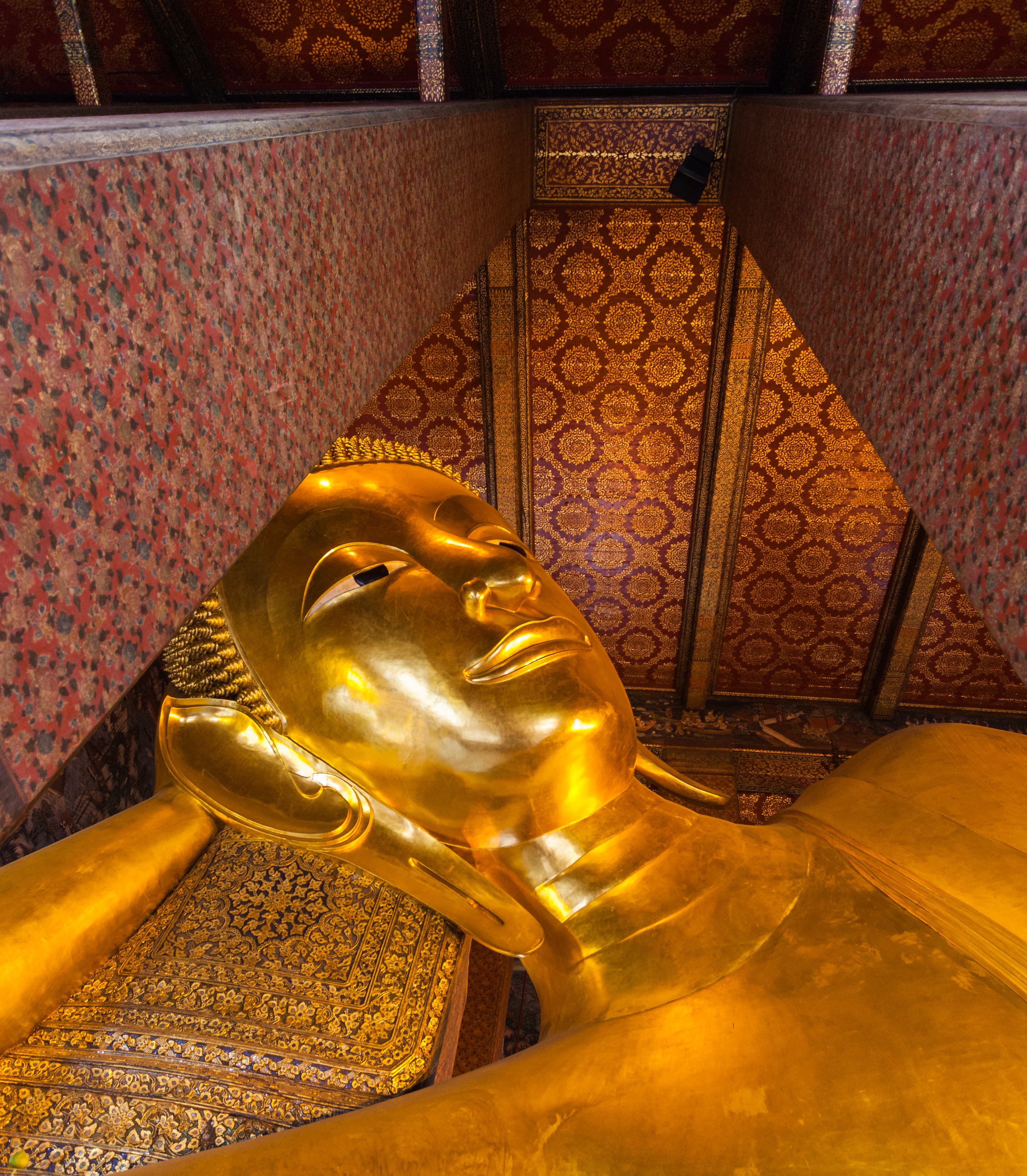
On the road at eight, which is when Wat Pho opens and roughly ninety minutes before the first coaches reach it. The reclining Buddha runs forty six metres end to end, and the massage school in the side halls has been teaching since the eighteenth century. From the pier behind the temple the cross river ferry takes four minutes to Wat Arun.
AfternoonLunch, then back to the hotel and the middle of the day is left alone. Bangkok between one and four is a bad place to walk a group and a good place to sit by a pool. Pick up again at half past four.
EveningWat Traimit and the five and a half tonne solid gold Buddha that spent two centuries hidden under plaster, then a walk into Yaowarat as the stalls light up, and dinner in Chinatown. The Grand Palace is not on this route by default; what replaces it is on Day 7. We will put it back as a Day 2 morning for any group that wants it.
If the season shiftsFrom March into early May the late afternoon stays hot well past five. In those months the Chinatown walk starts at six instead of half past four, and the group eats later.
Meals B / L / D
Diego Delso, delso.photo · CC BY-SA 3.0 3Ayutthaya
Ayutthaya, and the Hour Before Sunset
 Morning
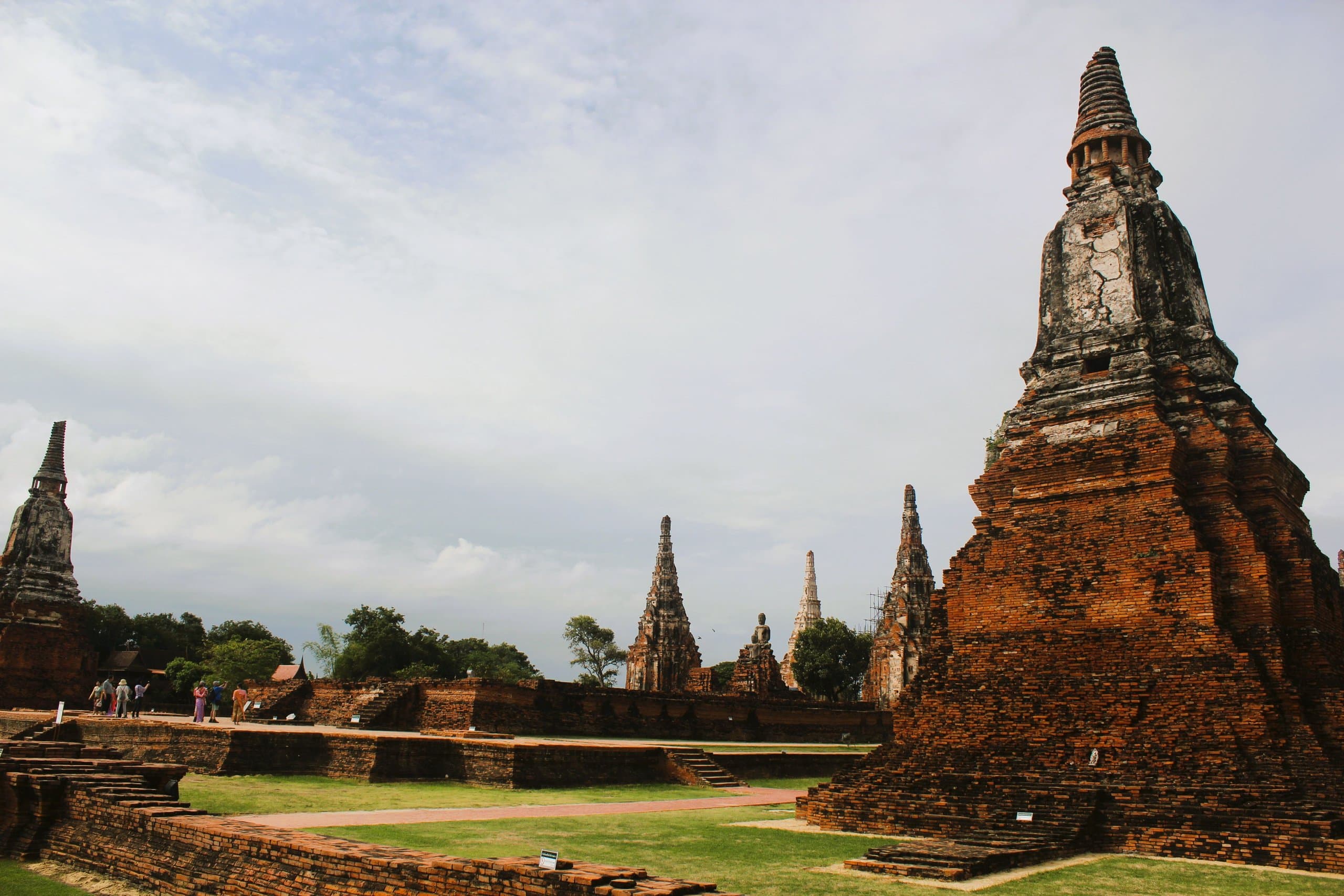
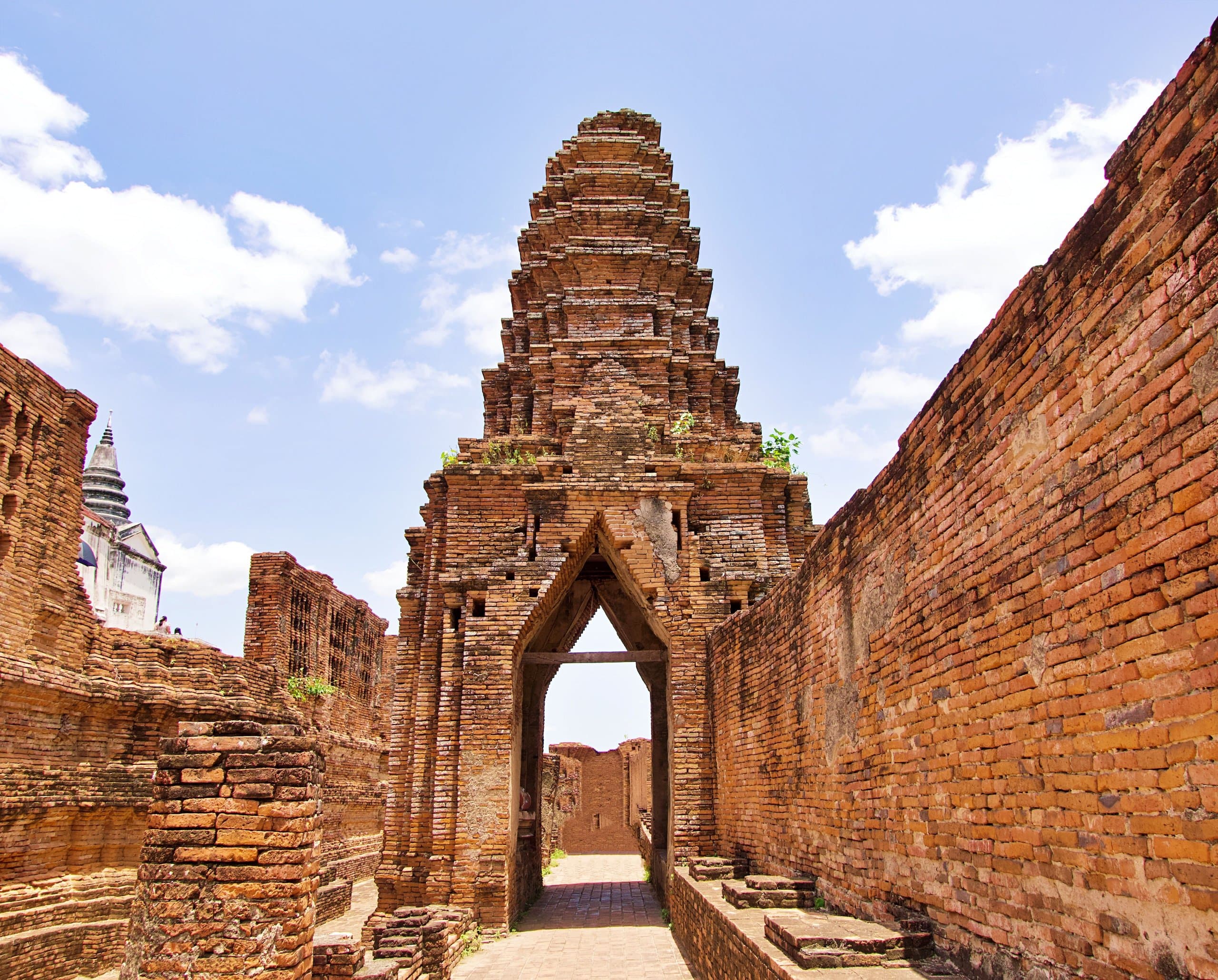
Half past eight out of Bangkok, ninety minutes north, at the hotel in Ayutthaya by ten. Wat Mahathat first, where a sandstone Buddha head sits inside the roots of a bodhi tree that grew around it in the centuries after the Burmese burned the city in 1767, then the three restored royal chedis of Wat Phra Si Sanphet on the old palace ground.
AfternoonLunch, and then four hours off. The open ruins are brutal between noon and four and there is nothing premium about walking twenty four people through them at that hour.
EveningBack out at four for Wat Chaiwatthanaram on the river, which is the reason the day is shaped this way. The Khmer style prang and the chedis around it take the last of the light with the water running gold behind them. Dinner at the hotel afterwards, on the river, away from the main road.
Meals B / L / D
4Sukhothai
The Long Drive, With One Reason to Stop
 Morning
Half past eight out of Ayutthaya. This is the longest driving day on the route, about five hours of road in total, and it is the only thing on the schedule. The coach runs north through the rice plains of the central basin with a comfort stop on the way.
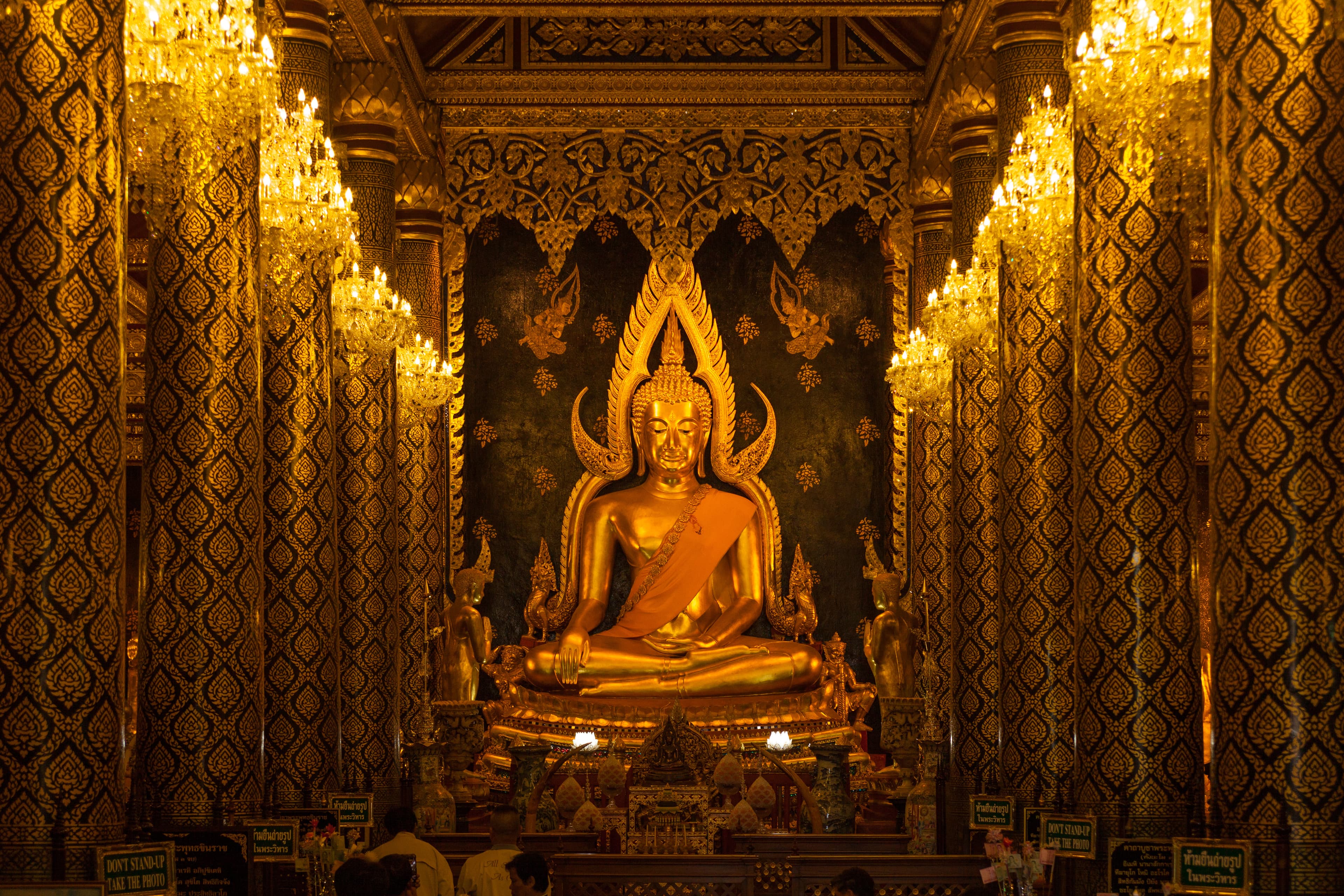
AfternoonLunch in Phitsanulok and one stop, Wat Phra Si Rattana Mahathat, for Phra Buddha Chinnarat. Cast in the fourteenth century, the most copied Buddha image in Thailand, and the bridge into everything the group will look at tomorrow. An hour more and the coach is at Sukhothai by four.
EveningCheck in within cycling distance of the historical park, at a low rise resort built in the local style. Dinner on site. Nothing else, on purpose.
Meals B / L / D
5Sukhothai
Sukhothai at Quarter to Seven
 Morning
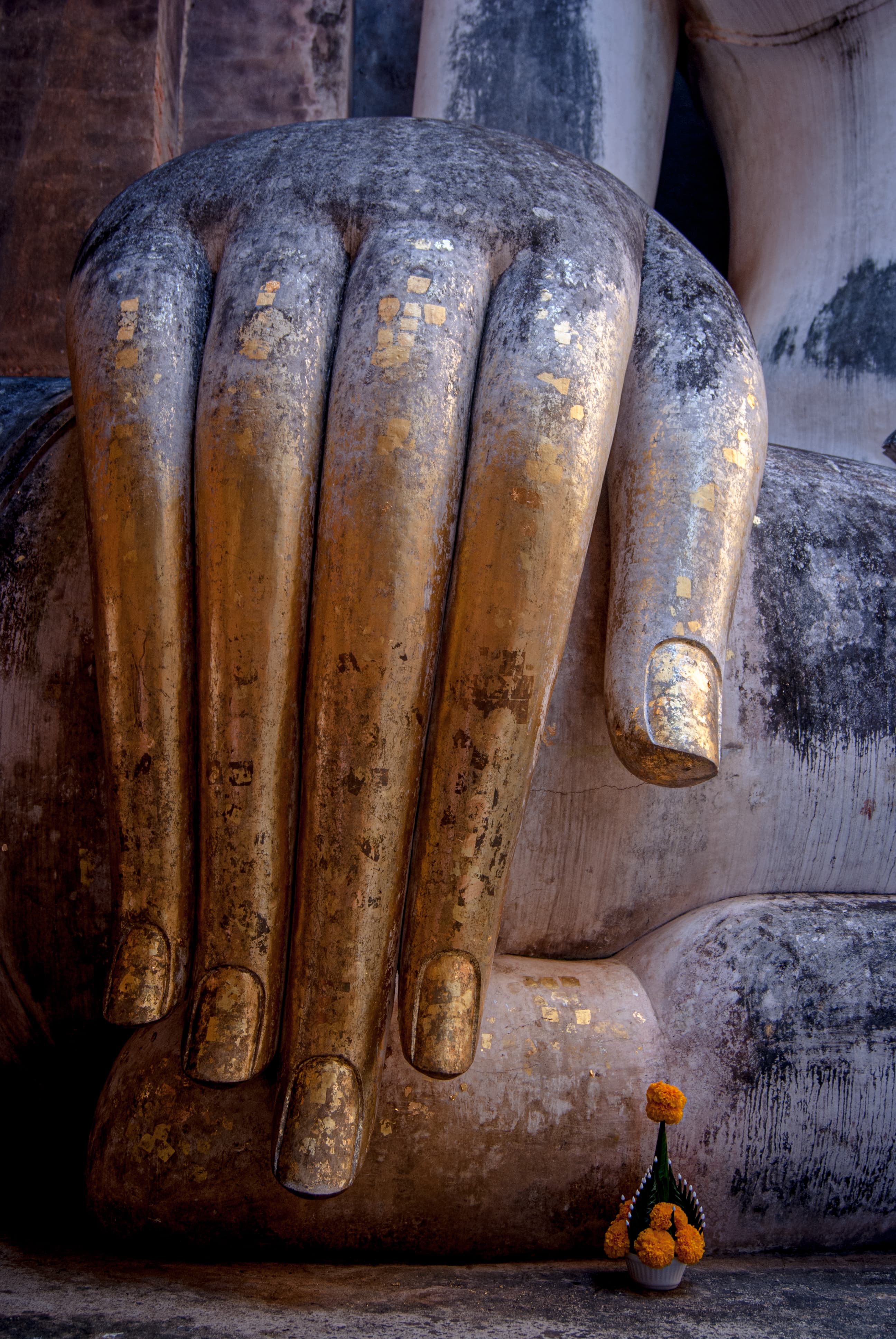
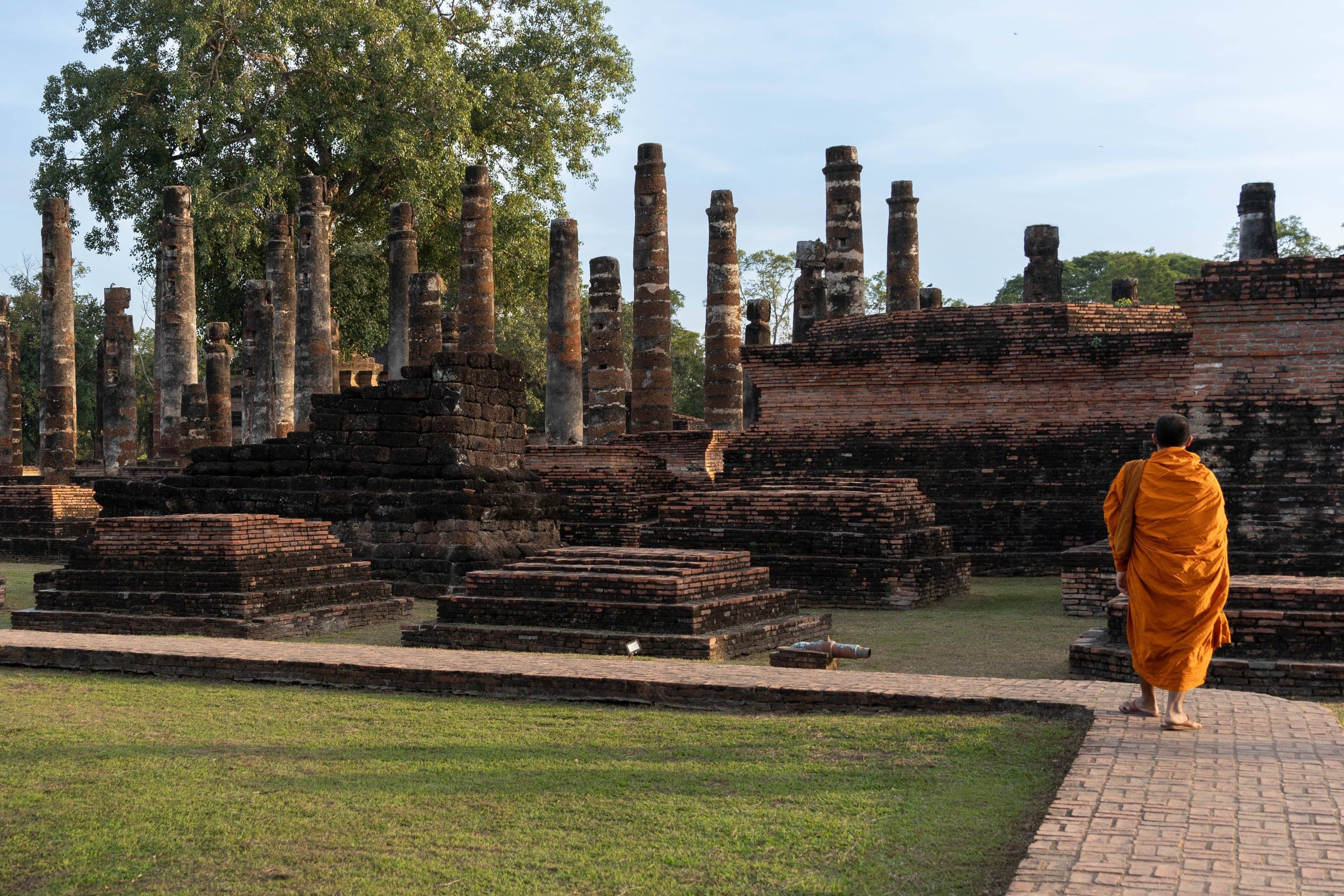
Breakfast at six and on the bicycles by quarter to seven, which puts the group inside the historical park while the light is still low and before the first bus reaches the gate. Wat Mahathat, Wat Si Sawai, then Wat Si Chum, where a seated Buddha fills a roofless brick mondop and one finger of one hand stands taller than a person. Back at the resort by half past ten.
AfternoonThe heat of the day is free. The Ramkhamhaeng National Museum and the Sangkhalok kilns are there for anyone who wants them, and nobody is required to go anywhere.
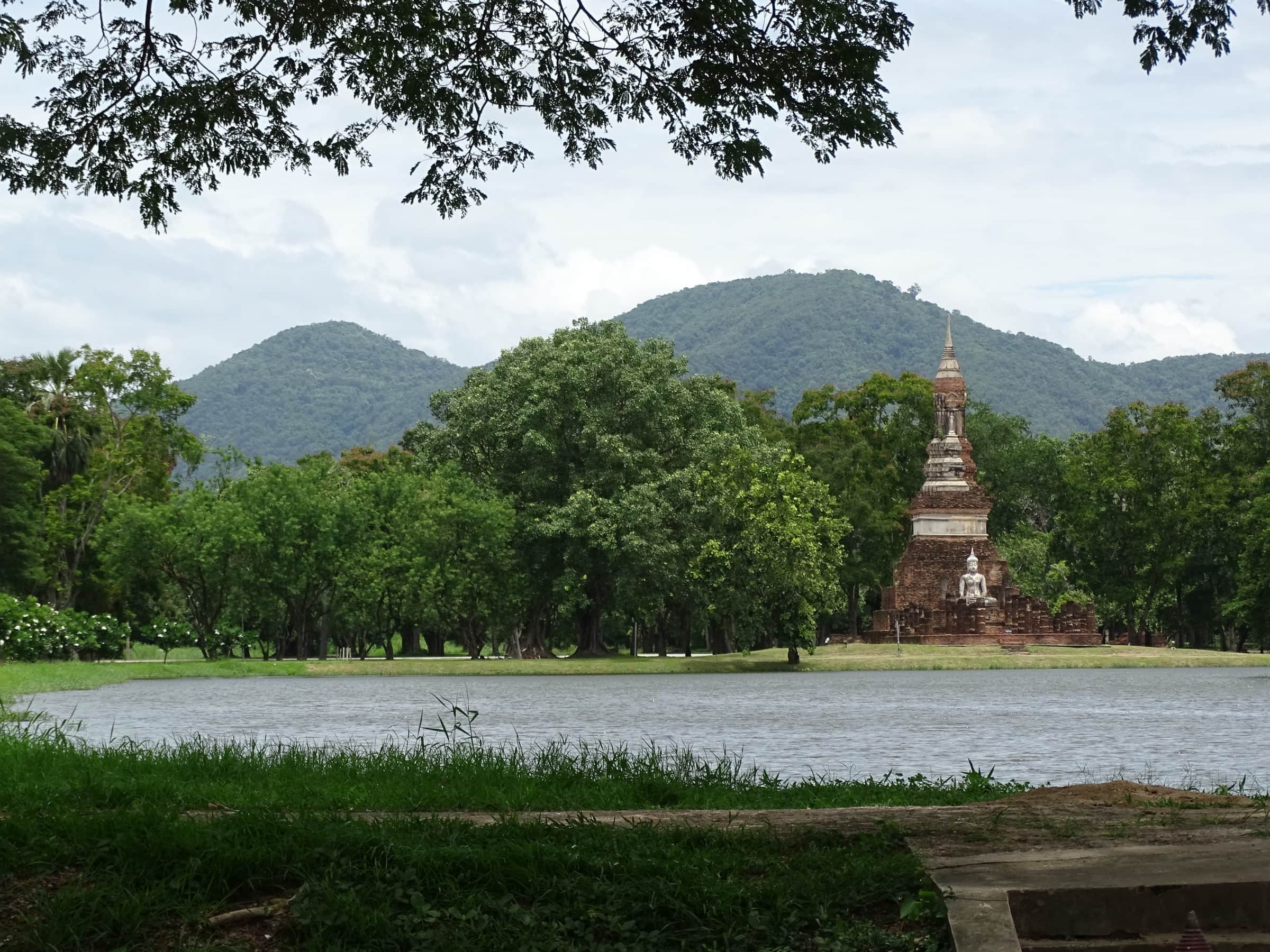
EveningOut again at five for Wat Sa Si and Wat Traphang Ngoen, the two temples standing on islands in the park's lotus ponds. Both are ordinary at noon and neither one is at half past five. Loi Krathong was born in this park, so a November full moon departure sees it lit. Dinner in town.
If the season shiftsIn the wet months from June to October the park floods in patches and the bicycles are swapped for a private tram, which reaches the same temples on the same schedule.
Meals B / L / D
6Lampang
Si Satchanalai, and the First Lanna Roof
 Morning
An hour north to Si Satchanalai, the sister city Sukhothai built and the part of this landscape almost nobody visits. Wat Chang Lom stands on a base of thirty nine elephants and Wat Chedi Chet Thaeo holds the tombs of the city's rulers. On most mornings the group has the ruins to itself.
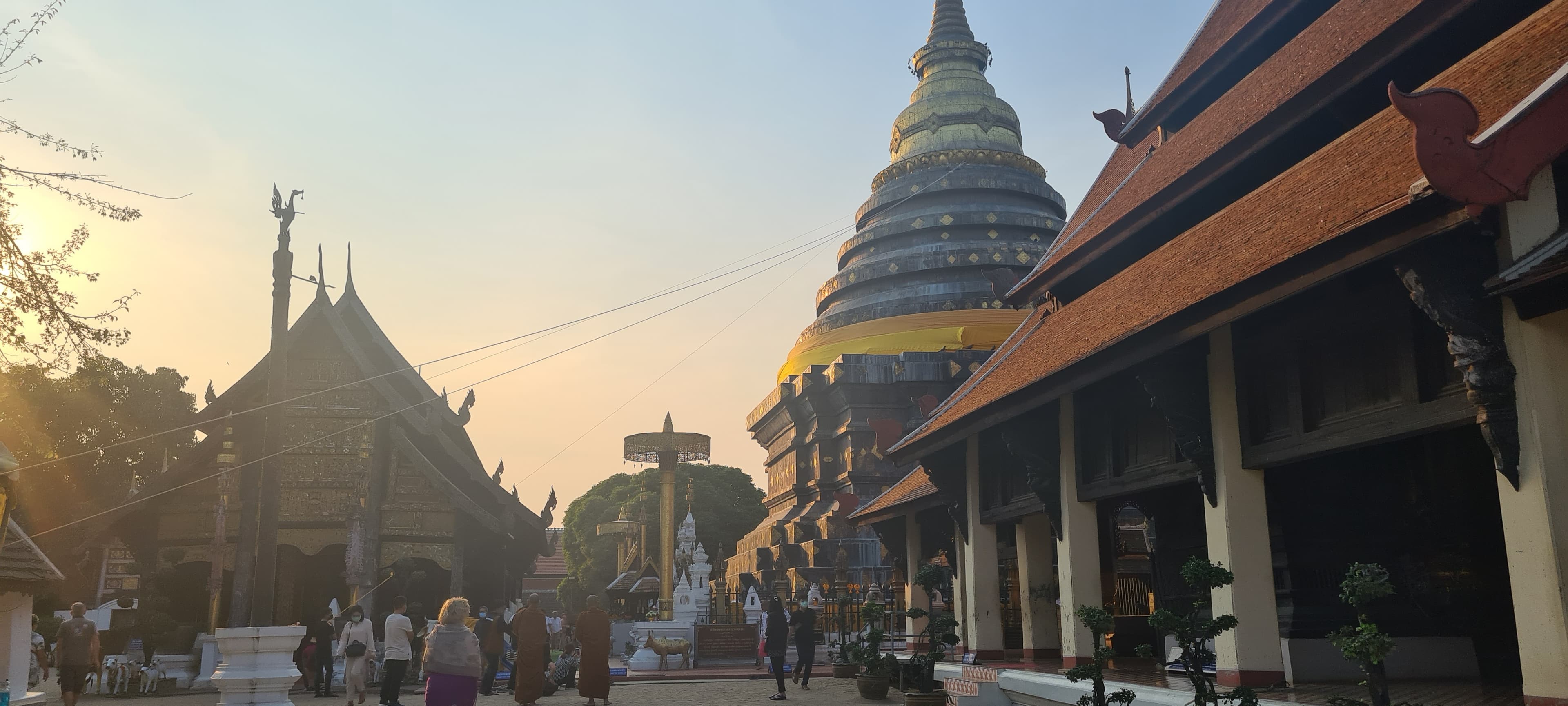
AfternoonLunch, then about two and a half hours to Lampang. The coach stops before town at Wat Phra That Lampang Luang, a walled temple on a mound holding the oldest surviving wooden hall in the country, with a camera obscura in the monks' quarters that throws the golden chedi upside down onto a sheet. This is the seam in the route. Everything before it belongs to Siam and everything after it belongs to Lanna.
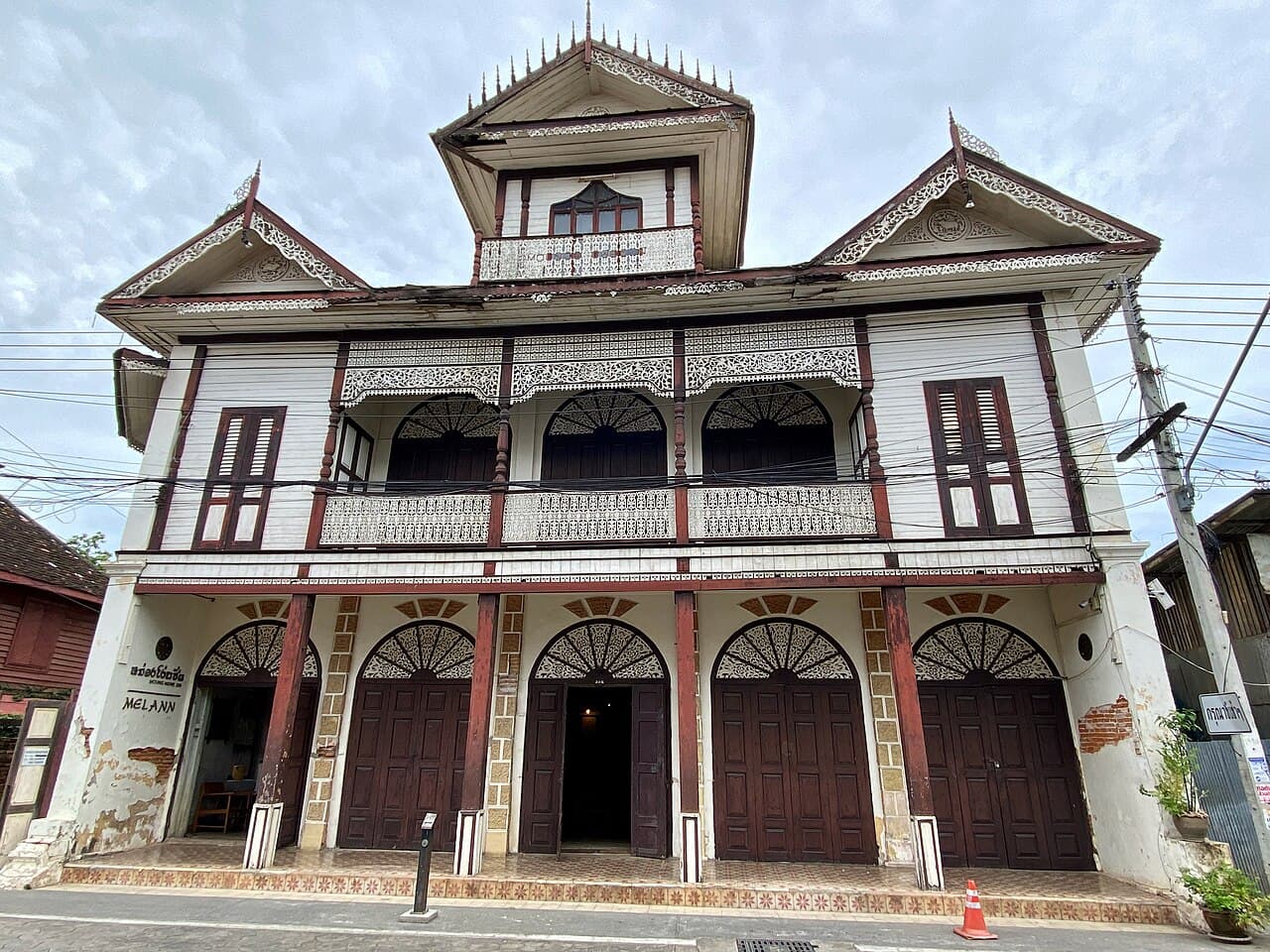
EveningInto Lampang and check in. This is a working night on the road and we say so plainly. Horse carriages, teak shophouses along the Wang river, and no luxury hotel in the province, which is exactly why the days on either side of it are kept light.
Meals B / L / D
7Chiang Mai
Into the Capital Mangrai Moved To
 Morning
An unhurried breakfast and an hour on foot through the teak quarter by the river before the coach loads at half past nine. Nothing is booked and nothing needs to be.
AfternoonTwo hours north to Chiang Mai, the shortest driving day on the route. Mangrai founded Chiang Rai in 1262 and moved his capital here in 1296, so this is the one leg that runs forwards in time. Lunch on arrival, check in, and the afternoon is left alone.
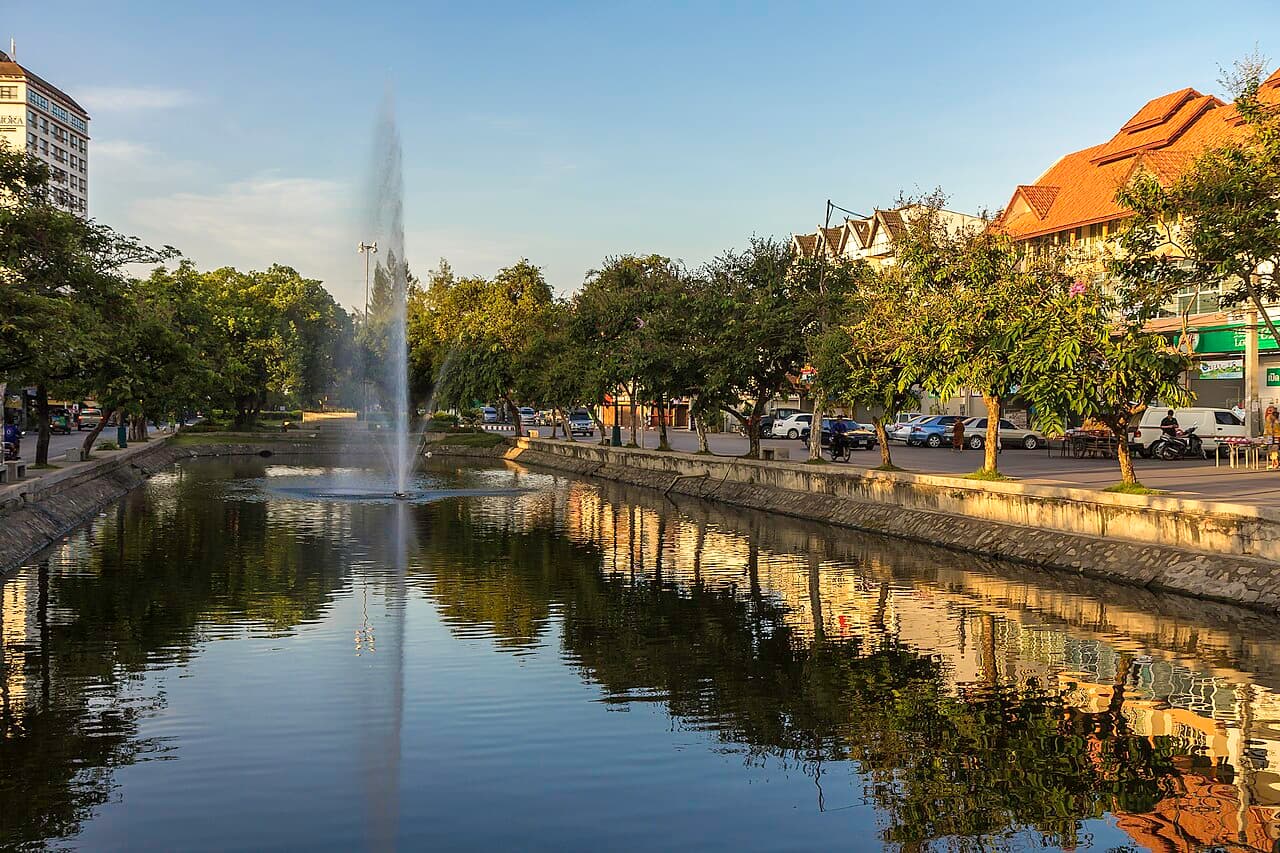
EveningAt five, a walk inside the moat. Wat Chedi Luang first, whose royal chedi lost its top to an earthquake in 1545 and which held the Emerald Buddha for eighty four years before it went on to Luang Prabang, Vientiane and finally to the Bangkok temple this route deliberately did not enter on Day 2. Wat Phra Singh is fifteen minutes further and takes the last of the light on its gilded gable. Dinner in the old city.
Meals B / L / D
8Chiang Mai
Doi Suthep Before the Buses
 Morning
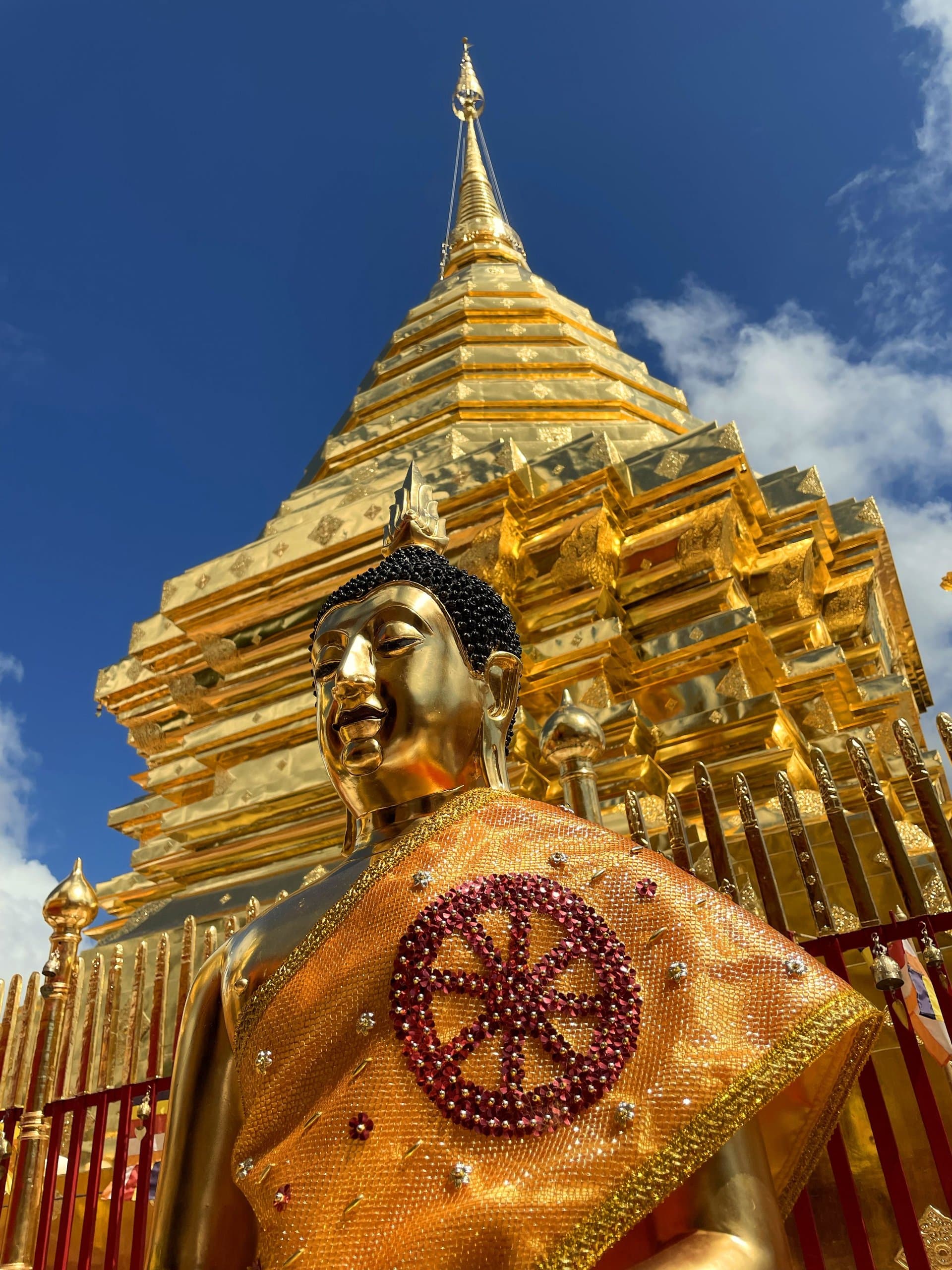
Quarter past six up the mountain. Doi Suthep is a different building at that hour, cold and quiet and empty enough to hear the bells over the terrace. Three hundred and six steps up the naga staircase, and a funicular for anyone who would rather not. Back down for a late breakfast by half past nine.
AfternoonThe middle of the day is free, and that is deliberate. Eight days of temples has earned an afternoon that asks for nothing.
EveningAt half past three the group walks a market with a northern cook, buys what the kitchen needs, and spends the rest of the afternoon making the dishes of the Lanna table. Dinner is what the group cooked. Groups who would rather be outdoors swap this for Mae Kampong, a highland village an hour out that grows miang and coffee and receives visitors on its own terms. There is no elephant camp and no staged village stop on this route.
Meals B / - / D
9Chiang Mai
Departure
 Morning
Breakfast, and late checkout wherever the flight allows.
AfternoonPrivate transfers to Chiang Mai International, each vehicle timed to its own flight so nobody sits in a terminal for four hours.
EveningThe route ends in the north instead of doubling back to Bangkok, which is why there is no domestic connection built into it. Groups continuing to the islands, or across the border into Laos, are routed onward from here.
Meals B / - / -
The seam. Behind you, four hundred years of Siamese capitals falling one after another. Ahead, a kingdom that was never Siamese at all until the nineteenth century. Between them, a walled temple on a mound with the oldest wooden hall in the country, and a camera obscura in the monks' quarters that throws the golden chedi upside down onto a bedsheet.
Where You Stay
Five bases across eight nights, chosen for where they let the itinerary breathe, not for a star rating alone. Bangkok and Ayutthaya sit on the water because both days hand the group back their afternoon. Sukhothai is within cycling distance of the park because the quarter to seven start is the whole point of staying two nights. Chiang Mai is inside the moat so the evening temple walk needs no vehicle. And Lampang is a plain town hotel, because Lampang province has no luxury property and we would rather say so than dress it up.
Bangkok
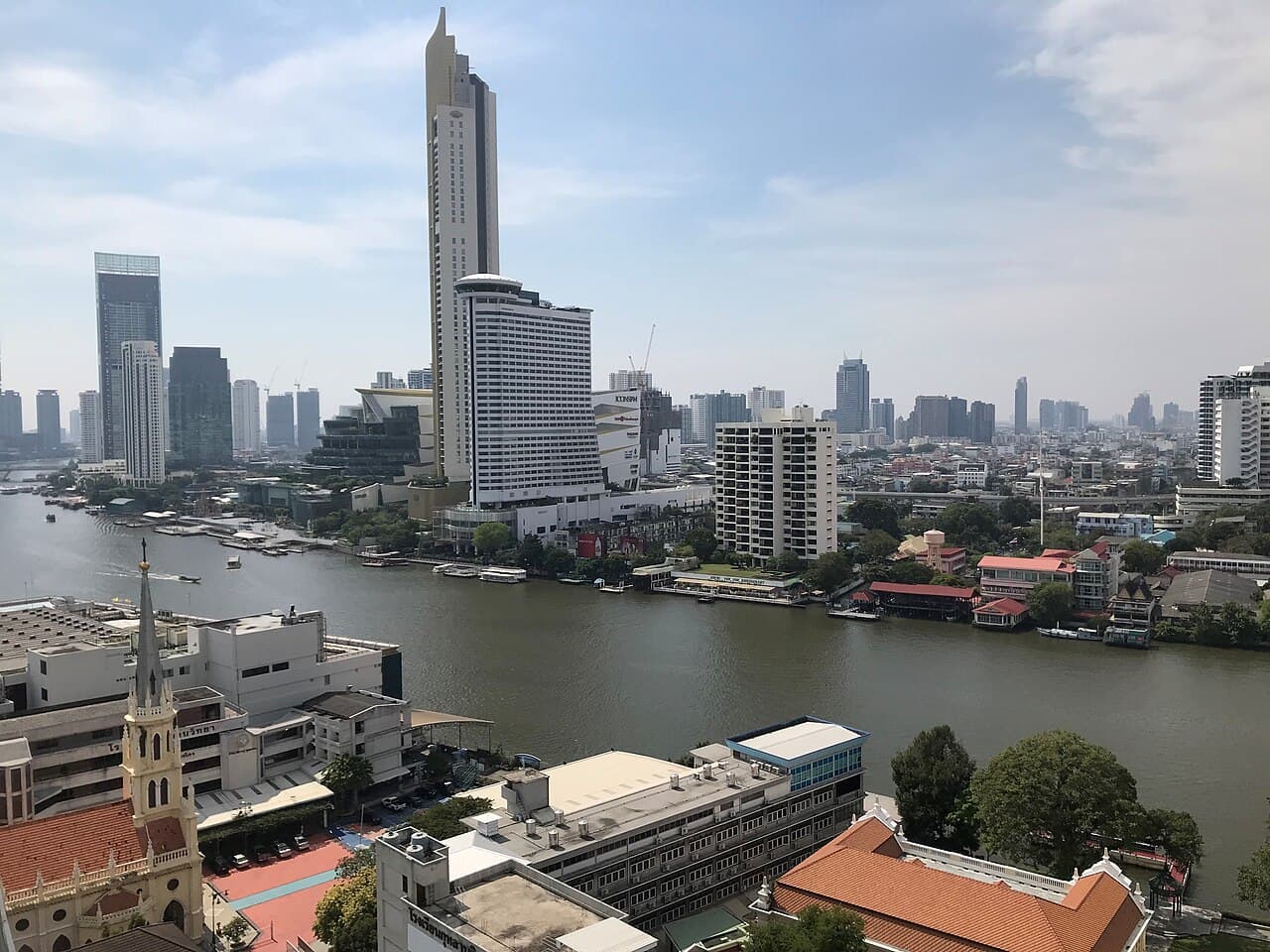
Riverside hotel on the Chao Phraya, two nights
- On the river, so the welcome dinner and the ferry to Wat Arun are both walkable, not another coach movement
- A pool that is genuinely usable, because the itinerary hands the group back the middle of both Bangkok days
- Group check in arranged in advance, since the coach may arrive as late as nine in the evening
- Rooms held on the higher floors where the river view exists
Ayutthaya
Riverside hotel by the historic island, one night
- Close enough to the historical park that the four hour break in the middle of the day is spent at the hotel and not on a coach
- On the water and off the main road, so the evening after Wat Chaiwatthanaram stays quiet
- Pool and garden for the hot part of the afternoon
- An early breakfast laid on for the long northern leg the next morning
Sukhothai
Low rise resort in the local style, within cycling distance of the park, two nights
- Bicycles on site, which is what makes the quarter to seven start possible at all
- Northern style grounds built low and wide instead of stacked into a block, and the reason two nights here does not feel like a stopover
- Breakfast served from six on the park morning
- Close enough to return at midday and go out again at five without a transfer either way
Lampang
Town hotel, one night
- We say this plainly: Lampang province has no luxury property, and this is the one honest night on the route
- Central for the teak quarter and the Wang river walk that opens the next morning
- Group dining arranged, since the town is quiet after dark
- The days on either side are deliberately light to pay for it
Chiang Mai
Old City property inside or beside the moat, two nights
- Walking reach of Wat Chedi Luang and Wat Phra Singh, so the evening temple walk needs no vehicle
- A courtyard worth sitting in, because the whole middle of Day 8 is unscheduled
- Breakfast held late on the Doi Suthep morning, after the group comes back down
- Late checkout arranged wherever the outbound flight allows
Your Guide
One licensed Thai national guide travels with the group for all nine days, from the arrivals hall at Suvarnabhumi to the departure gate at Chiang Mai. Local site guides are added at the Ayutthaya and Sukhothai historical parks, at Si Satchanalai, and on Doi Suthep.
English and Spanish are the working languages on this route. French, German or Italian are arranged on request, confirmed at the time of booking so the right national guide and matching site guides can be assigned.
The same guide for the full nine days, never handed over at a city boundary, with a separate professional driver and coach.
- Eight nights' accommodation, twin share with daily breakfast, across Bangkok, Ayutthaya, Sukhothai, Lampang and Chiang Mai
- Lunches and dinners as listed in the day by day
- All scheduled sightseeing and entrance fees, including Wat Pho, Wat Arun, Wat Traimit, the Ayutthaya Historical Park, Phra Buddha Chinnarat at Phitsanulok, the Sukhothai Historical Park with bicycle hire, Si Satchanalai, Wat Phra That Lampang Luang and Wat Phra That Doi Suthep
- Private air conditioned coach for every overland leg, with the driving days scheduled as driving days, not hidden inside sightseeing days
- A northern Thai cooking class with a market walk in Chiang Mai, or the Mae Kampong village day in its place
- One licensed national guide for the full route, English and Spanish, with local site guides at the historical parks
- Airport meet and greet on arrival in Bangkok and individually timed departure transfers in Chiang Mai
- International flights into Bangkok and out of Chiang Mai
- Thailand visa or visa on arrival, where it applies to the traveller's passport
- Travel and medical insurance, which is required
- Meals not specified in the day by day, and drinks beyond those provided
- The Grand Palace, which is off the default route and quoted separately when a group asks for it
- Optional activities and anything listed as available on request
- Personal expenses such as laundry, minibar and spa
- Gratuities to guides and drivers
When to Travel
November to February is the window this route was built for. The central plains are walkable, the northern mornings are cold enough for a jacket on Doi Suthep, and the light in Ayutthaya and Sukhothai at either end of the day is the reason those two days are shaped the way they are. A November full moon departure catches Loi Krathong in the park where the festival began, which is worth planning a year out. December and January are the peak weeks for the northern properties, so we ask for sixty to ninety days on those dates, more for a full coach.
March and April turn very hot, and from roughly February to April, usually worst in March, agricultural burning across the upper north can leave haze over Lampang and Chiang Mai that softens the long views and affects air quality. For haze sensitive groups we hold the route in the November to January window. The rainy season from May to October brings heavy afternoon showers that pass quickly and rarely disrupt a temple day, though the Sukhothai park floods in patches and the bicycles are swapped for a private tram in those months. This route carries no domestic flight, so no day depends on a connection holding.
Before you ask
Why does the route run backwards through the capitals?+
Because that is the order the country makes sense in. Bangkok was founded in 1782, Ayutthaya in 1350, Sukhothai in 1238, so travelling north from Bangkok is travelling backwards in time until you reach the oldest capital. After Sukhothai the route crosses into what was Lanna, a separate kingdom until the nineteenth century, and starts running forwards again to Chiang Mai in 1296. Wat Phra That Lampang Luang sits on the seam. Most programmes on this corridor visit the same places in the same order without ever saying why the order matters.
Why is the Grand Palace not included?+
It is the most crowded site in Bangkok, its last ticket is sold at 15:30 which forces it onto an arrival afternoon that no European long haul schedule reliably supports, and the Emerald Buddha that lives there is a better story told at the other end of the route, in the Chiang Mai chedi that housed it for eighty four years. It stays available as a Day 2 morning for any group that wants it, quoted separately.
How much of this is spent on the road?+
Less than the route looks, because the long legs are given their own days instead of being hidden inside sightseeing days. Bangkok to Ayutthaya is ninety minutes. Ayutthaya to Sukhothai is the longest at about five hours including the lunch and temple stop at Phitsanulok, and it is the only thing on Day 4. Sukhothai to Lampang by way of Si Satchanalai is about three and a half hours of driving spread across a full day with two stops in it. Lampang to Chiang Mai is two hours. Nothing on this route is a five hour push with a temple bolted on the end.
Eight nights and only five bases. Why not more cities?+
Because the corridor punishes it. The version of this route with a night in each of five or six cities means packing every morning, and it means understating drive times to make the days fit on paper. This is the shape that holds. Sukhothai gets two nights because the park is worth a dawn and a dusk, not one hurried afternoon, and Chiang Mai gets two because Doi Suthep is only worth doing before the buses arrive.
Can the route be shortened, extended or reversed?+
It can be reversed where flight schedules favour flying into Chiang Mai and out of Bangkok, and it extends naturally into the far north around Chiang Rai and the Mekong, into Laos across the border, or south to the islands from Chiang Mai. Shortening it below eight nights means dropping a base, not compressing days, and we would rather tell you which base to drop than quietly speed up the driving.
What group size does this run at?+
It is built and priced around twenty four travellers, which is what a full size coach seats comfortably on these roads with luggage for nine days. It runs for smaller parties in a minivan on the same itinerary and the same guiding model. Pricing is quote based and moves with group size, season and hotel tier, so tell us the party size and the dates and we will build the sheet.
Are there elephants on this route?+
No. Our welfare standard is: Observation only. No riding, no bathing or washing, no hand-feeding, and no performances. We have not yet verified a venue on this corridor that meets this standard. We also do not run staged hill village photo stops. The northern day is a cooking class with a market walk, or a visit to Mae Kampong, a highland village that receives visitors on its own terms.
Photos
Want a similar programme?
After we receive a complete brief, we provide a costed quote by the same time on the next business day. Complex multi-country or peak-season requests may take longer; we state the revised deadline when we acknowledge the request.